
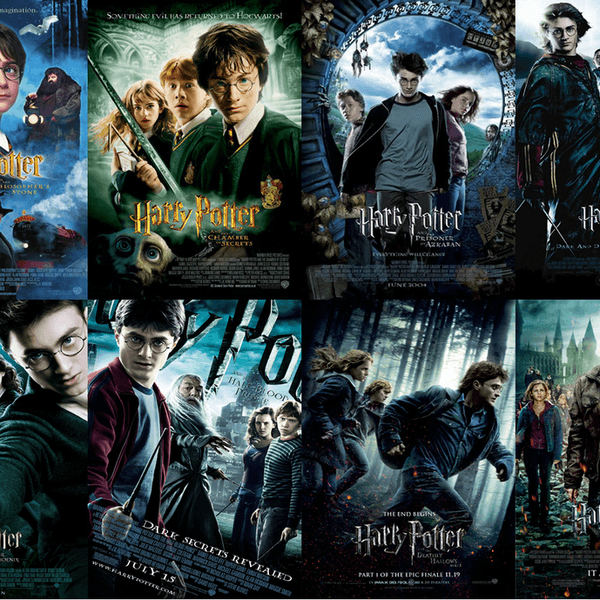

Nine long-awaited years after the last book, we pick up nineteen years after the Battle of Hogwarts. The beloved characters are all present, poignant losses are felt, and the children are boarding the Hogwarts Express once again to kick off another school year at Hogwarts School of Witchcraft and Wizardry, thrilling every hardcore fanatic into a reading frenzy.
As a fellow Harry Potter enthusiast, I was completely thrilled when I heard there was going to be an eighth edition to the celebrated series. My siblings and I pre-ordered our copy and had every intention to brawl when it arrived to see who would read it first. However, when we all first read it, we were disappointed and confused. I was the only one out of the three who finished it, and I, sadly, confessed to my brother and sister, “You’re not missing much.”
Why? Why was this all-anticipated, nail-biting, “push people over to grab your copy” book so horribly disappointing? The rating for "Harry Potter and the Cursed Child" on Amazon.com is a 3.6 out of 5, and a majority of the comments echo my family’s disappointment. In my opinion, it all boils down to four main aspects: the authorship, the structure, the language, and the characterization. *WARNING* This will contain spoilers.
1. Rowling didn't write.
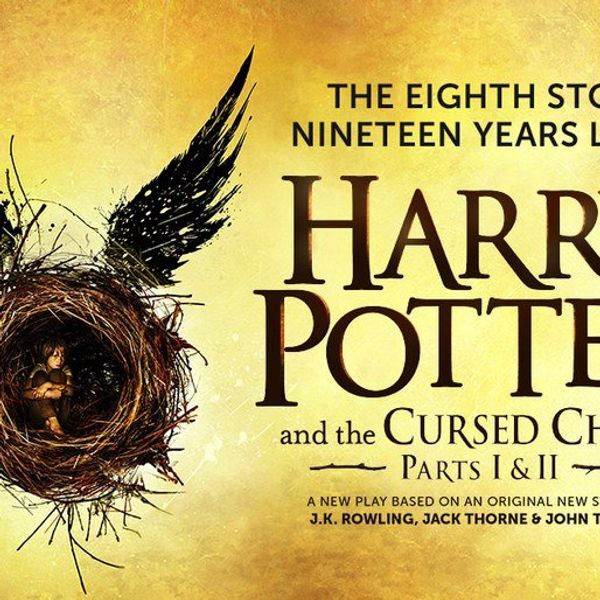
First and foremost, J.K. Rowling didn’t write any aspect of the story, as some were led to believe when the hype first began. The Cursed Child has only based on the “original new story” by the great lady herself, according to the jacket cover. The real author is a man by the name of Jack Thorne. Never heard of him? This is because he isn’t a novelist, he writes for “theater, film, television, and radio,” as said in his short biography in the book. Yes, J.K. Rowling might have had some type of influence in developing the storyline, but the actual hard-copy seems to be just Mr. Thorne’s work. This fact, in my opinion, makes the play read much like a published fan-fiction.
2. The structure.
Wait a moment. Did I just write “play?” In fact, I did. That brings me to my second issue: the structure. As one can gather by just opening the book, the plot is written in script form, meaning that there are primarily lines of dialogue with a few stage directions thrown in there as well. For most people who aren’t used to reading this style of writing, a script could be a major turn-off from the get-go. I personally missed reading Harry’s inner monologues, which I had in the original series courtesy of the third person narrator.
3. The language.
Third, the language used in the play doesn’t parallel what is used in the original series at all. J.K. Rowling did an amazing job writing the Harry Potter series in many ways, but particularly in the way that she wrote it to appeal to all ages. A 10-year-old would have just as wonderful time reading the books as a 100-year-old, which makes it incredibly effective. Reading The Curse Child, I got the distinct impression that it was geared toward young adults, particularly 15- to 25-year-olds. This is all well and good, as I’m supposing that’s the intended audience; however, I feel like it really limits the potential impact the play could have had if the characters weren’t using words like “friggin.’”
4. The characterization.
Finally, I felt the characterization was completely different from the original series in several, incredibly disappointing ways. Harry, for instance, is a workaholic who can’t/won’t connect with Albus, his Slytherin son and forbids him from seeing his only friend simply because of a stupid rumor? Absolutely not. The Harry Potter J.K. Rowling developed in the original series knew the ultimate value of seemingly unconventional friendship (with choosing to befriend a somewhat Wizarding world outcast, Ron, instead of a privileged and well-connected boy, Draco). I don’t believe for a second that Harry would even think about separating them.
The character portrayal with whom I had the biggest problem, however, was Voldemort. One of the incredibly major plot points (as in the story literally can’t happen without it) is that he had a child (Providing the Cursed Child part of the title). This idea begins as a rumor in the story, saying that Scorpio is the son of Voldemort and Astoria Malfoy. It’s then found out that Delphi is the daughter of Voldemort and Bellatrix. How can either of these ideas be successful in the progression of the plot?
Voldemort would not have had a child regardless for several reasons. First, Voldemort’s primary drive is power in the sense that he wants to be the ultimate wizard ruling over all, not at all in the sexual sense. In short, Voldemort aimed to be the best of the best of the best with honors, and he. cared. about. nothing. else. After he “killed” Harry Potter in the seventh book, did he rush off with Bellatrix for a celebratory jaunt in the bushes? No, he went and lorded over everyone else, because that’s who he was. Simply put, sex didn’t even register as a want/need to him whatsoever. Next, one of the main reasons to procreate is to continue one’s legacy. Since Voldemort believed himself to be immortal, there would be no reason to continue his legacy, making the idea of a child completely pointless.
Was I thrilled to discover an amazing friendship between Albus and Scorpius? Yes. Did I ship Rose and Scorpius from the get-go? Absolutely. However, I really felt like a continuation of the series that has over 500 million copies sold worldwide and is translated into about 70 different languages would have followed the original story a bit more. I can’t speak for the whole of Harry Potter fans, but I was quite happy with J.K. Rowling’s Epilogue, and if it ain’t broken, don’t fix it!

















