Today’s global and political atmosphere is just as racially and sexually charged as ever. With elections around the corner and drastically different candidates coming from all sides, social justice issues are leading the forefront on hot-button debates. The death of Harper Lee on February 19th served as a stark reminder of the racial problems still plaguing our nation. The great racial divide is continuous and unfortunately, very prevalent in several aspects of life, as certain groups continue to fight for equality. In some ways, these groups are doing nothing about injustice in another area. Yes, I’m talking to you feminists. In the most loving and unapologetic way, I am forced to call out not all, but a few, of my peers: white southern feminists.
Feminism has had three great waves in United States culture. From the 1890s to the 1920s with the suffragists to the 1960s and 1970s with the problems of workplace norms and reproductive rights, things seemed to be making progress. Now we stand in the face of the third wave, where the forces of feminism have been powerful but ever changing. As women have gained tiny plots of ground in the legal and social world, we have found that there is much more land to grasp. However, with life in the south, there have been several cultural backslides toward rights for all women.
In the south, racial tensions can be stereotypically high. The deep-rooted and never forgotten days of plantations and slave trading are constantly in view. Unfortunately, the feminist movement in the southern states, after fighting to be noticed, is caught on this large and foreboding obstacle. Feminism in the south can often resemble the first wave of feminism because of a focus on white, upper and middle-class women taking the lead and serving as all of the supporting actors, too. White feminism still retains its hold on the Old South.
Everyone loves a strong southern belle with an attitude to rival.
However, some southern women who endorse “feminism," or women’s rights if they have an aversion to the name, will speak of an equal playing field in public and speak ill of women of color or transgender women behind closed doors. Some of the southern women who are independent, strong and sassy in the streets are racists in the sheets, so to speak. Hypocrisy seems to run rampant in the south. Which begs the question, is this really feminism?
Feminism is a broad term for the ideology that the genders face an imbalance due to the patriarchal backbone of American society. The patriarchy is a social construct that practices and facilitates men’s power over women in our society. Feminists wish to break from this barrier and level the playing field to build a stronger society. So how, if women are knocking down women of color, is a stronger, more equal playing field being developed? Within southern white feminism, women of color are being marginalized because of their sex within their own ethnic community and from women outside of their community. Women of color are facing aggression and judgment from white feminists, the women who are supposed to be their allies. Women of color are therefore facing more obstacles when they need face none. Whether they know it or not, white southern feminists who make these judgments are setting women of color even further back. Instead of being second class citizens, these women are becoming third- or fourth-class citizens.
Transgender women in the south arguably have the largest challenges facing them. They are struggling within their own skin and as a feminist, it is your responsibility to lift them up, to encourage them, to reassure them that they are respected on an equal platform.
It’s time to wake the Old South.
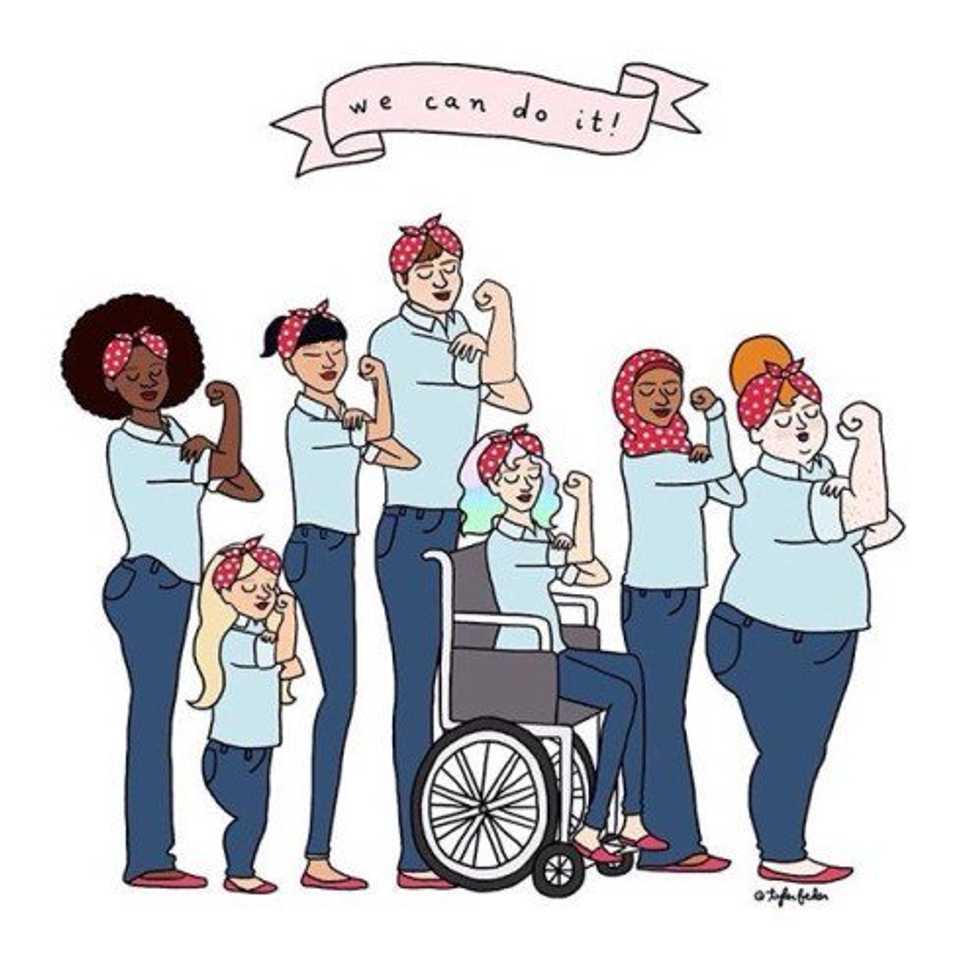
Where gender is a socially constructed barrier, so is race. Intersectionality is a term used to understand how one person is not confined to one socially constructed determiner. Race, sexuality, class and gender all combine to create the person. Intersectional feminism aims to take into account all of these aspects and notes that the challenges of women within different neighborhoods, religions, ethnicities and cultural backgrounds are all different but valid. How one group of women is oppressed can be different from another. Women of color in the United States, regardless of their nationality or ethnicity, are facing the discrimination of their skin color so why are other so-called feminists joining that bandwagon? If white southern feminists continue to buy into this discriminatory practice, women of color have another obstacle to overcome within a group that should stand together.
This great divide is weakening the potential force of women within the movement. It is weakening every woman within the movement. Distancing women from the "action" based on race could weaken the movement enough to make it obsolete. For a movement that is only half taken seriously, but with rising approval in society, why would white feminists attempt to lessen their scope? All women are facing struggles as women. Some face more struggles due to race, class or disability, but all women are, at a base level, facing the same gender prejudices. Are women of color less valuable for the fight? Less valuable as people in general? In short, no.
If Old South white feminists continue to buy into this discriminatory practice, they cannot call themselves feminists. Tearing other women down is not feminism. Listening to the troubles of only one race of women is not feminism. Holding Beyoncé in high regard as a feminist icon and then using derogatory language toward a woman in Wal-Mart is not feminism. Buying into social constructs of oppression such as race does not fit the feminist agenda. Racial bias and judgment is doing more harm than good and splitting forces that could be stronger than anyone imagines.
Feminism is about equaling the political, social and professional playing fields for women and men. The championing of women’s rights should transcend race. It should transcend sex. It should transcend class. The Old South cannot remain in the first wave of feminism for the rest of this hot, humid eternity. A woman who considers herself a woman, regardless of race or sex, is a woman, and we, the feminist community, have an obligation. If we plan to build a more equal society for women and men, let us not forget our sisters of color.
Let us not forget whom we are fighting for: all women.