

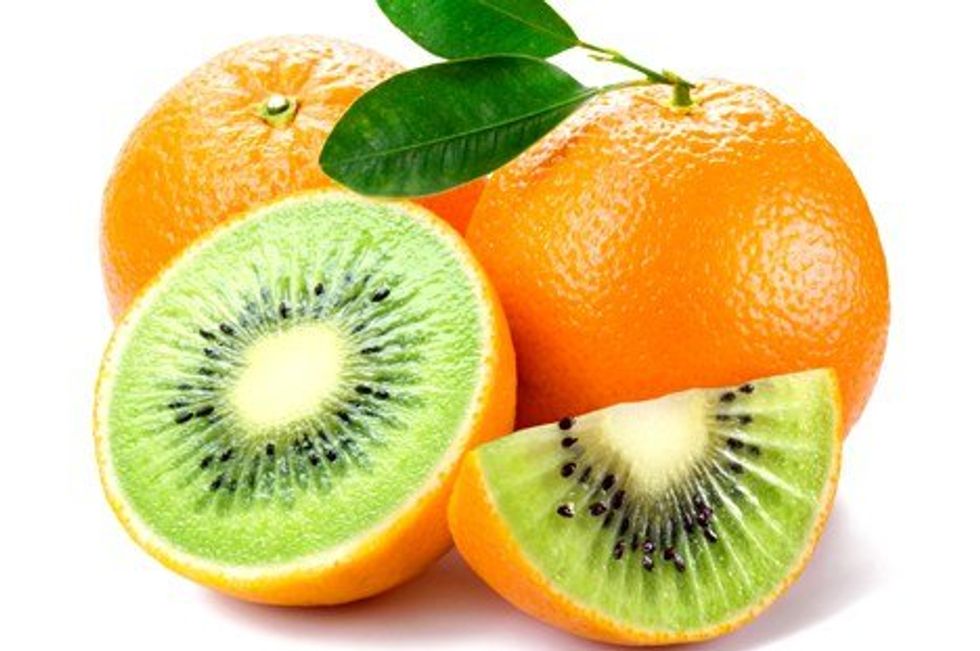
Have you ever thought about exactly what kind of chemicals go into your food? Of course you have not, because 100 percent of the time our food is not labeled with all of the Genetically Modified Organisms (GMOs) that are essentially in almost all of what we eat. GMOs are any living organisms whose genetics have been unnaturally changed by chemicals in a laboratory. When applied to the food us humans eat, it brings about a lot of trouble because it is unhealthy for our bodies, as well as the environment.
As more and more GMOs are used in our food, the chain reaction of horrible events create a domino effect that may be irreversible. For example, these chemicals have been shown and proven to manipulate our own DNA, creating a host of health problems such as an increased risk of cancer, Alzheimer's, and even autism amongst many others because of the fact that our bodies are not used to genetically modified food yet in the long run. Many countries all over the world have taken it upon themselves to either restrict or even ban the use of GMOs in farms and food, noting the unnecessary dangers that surround it.
Another risk factor that not only deteriorates our health is the unfortunate implications that GMOs have on our environment. One of the main uses for GMOs are to protect foods against herbicides and pesticides that regular organic foods cannot withstand. These pesticides are sprayed through the air continuously, and the strong and unhealthy chemicals are starting to reek havoc on the nearby and global environment. One good example of this would be the diminishing honey bee population that is so vital to the human race's existence because these important and hardworking bees pollinate almost 90 percent of the world's food population[1]. Since the introduction of GMOs and pesticides in our food over the last few decades, the bee population has declined rapidly because of how these chemicals are polluting the pollen that is an imperative step in the pollination and natural food growth process that the bees' bodies just are not use to. Without these bees helping to pollinate, our food simply cannot grow.
So why does America use GMOs in our food? Because of how many politicians are profiting off of the biggest GMO manufacturing company, Monsanto. Last year, Monsanto made almost $3 billion[2] in profits, and oddly enough, they were the ones to conduct a national study stating that GMOs were “safe," but of course, they have to say that or else their business would be no more. However, the World Health Organization (WHO) has stated that GMOs have active ingredients that ultimately lead to deadly diseases such as cancer, and actually reported over 20,000 farmers in places such as Central America who have died of an extreme form of kidney disease that used GMOs and pesticides in the land that they farmed. This produce gets shipped to the United States every day[3].
The potential risks of GMO foods in correlation to our bodies should not be profited off of and we as a country can actively make a change and follow in the wise footsteps of our friends in other counties that are taking a strong stance against GMOs. In many places, the battle to label our food of GMOs has been rapidly increasing with bills starting to spring up on ballots to have the government force companies such as Monsanto to label produce and packaged foods when they include GMOs. Organizations such as "Just Label It" have done a great job marketing and bringing to light the dangers of GMOs in our food and what we can do in their detailed website that can be found here: http://www.justlabelit.org/. We must have an active part in our own health and environment, making sure that our mistakes do not translate into a worsening future because of our actions.
[1] http://www.greenpeace.org/usa/en/campaigns/genetic-engineering/Bees-in-Crisis/
[2] http://news.monsanto.com/press-release/financial/monsanto-first-quarter-milestones-reinforce-foundation-growth-fy15-and-confi
[3] http://america.aljazeera.com/articles/2015/3/21/monsanto-roundup-probably-carcinogenic-to-humans.html

















