


College students these days seem to be really obsessed with "adulting," a term that basically encapsulates all activities that a fully-matured, real-life adult is expected to do. Such activities can include something as major as landing an actual 9-to-5 job or as minor as calling and scheduling your own dentist appointment. At least as I've experienced them, stories about adulting are often shared and received with a strange mixture of awe, applause, and solidarity.
Adulting is something college students love to talk about in a manner somewhere between a true horror story and a humblebrag. I myself have uttered the phrases, "I adulted so hard today," and "Look at you, adulting all over the place," with reckless abandon. I'll applaud my own adulting skills after performing menial, essential tasks like cooking my own meal with the same enthusiasm with which I praise my friends for doing much more impressive things like presenting at a research conference or landing a dream job, completely overlooking the varying levels of impressiveness between the two.

Being home for the summer, for me at least, has included a lot of adulting: scheduling my own doctors appointments, cooking meals for myself and my parents, planning for my actual future, etc. And after completing each one of those things, I'd stop and think to myself, "Well aren't I adulting so well today!" before planting myself on the couch for three hours straight to watch the latest season of Orphan Black (a slightly obscure show about clones; Tatiana Maslany, the star, plays like nine different people and she's amazing -- you should watch it). As I finished my third forty-minute episode last week, I felt a bit of school-brain shame wash over me. Was there something else I should have been doing instead of watching TV? I still haven't figured out what I'll do with my life after college. Shouldn't I be figuring that out instead of transforming into a literal couch potato? I promptly reminded myself of all the adulting I'd done earlier that day, settled back into my couch-nest, and happily clicked "next episode." And so the cycle continues.
I wonder how beneficial it is for us to think about adulthood in this way. Adulting as a concept separates the more responsible things we do from who we actually are as people, convincing us that no matter how maturely we may act, at our core, we will always be petulant little children wearing pajamas all day and stealing cookies before dinner. I'm all for maintaining a sense of innocence and preserving our inner children, but the way we've started to think about adulthood doesn't quite give us the credit we deserve.
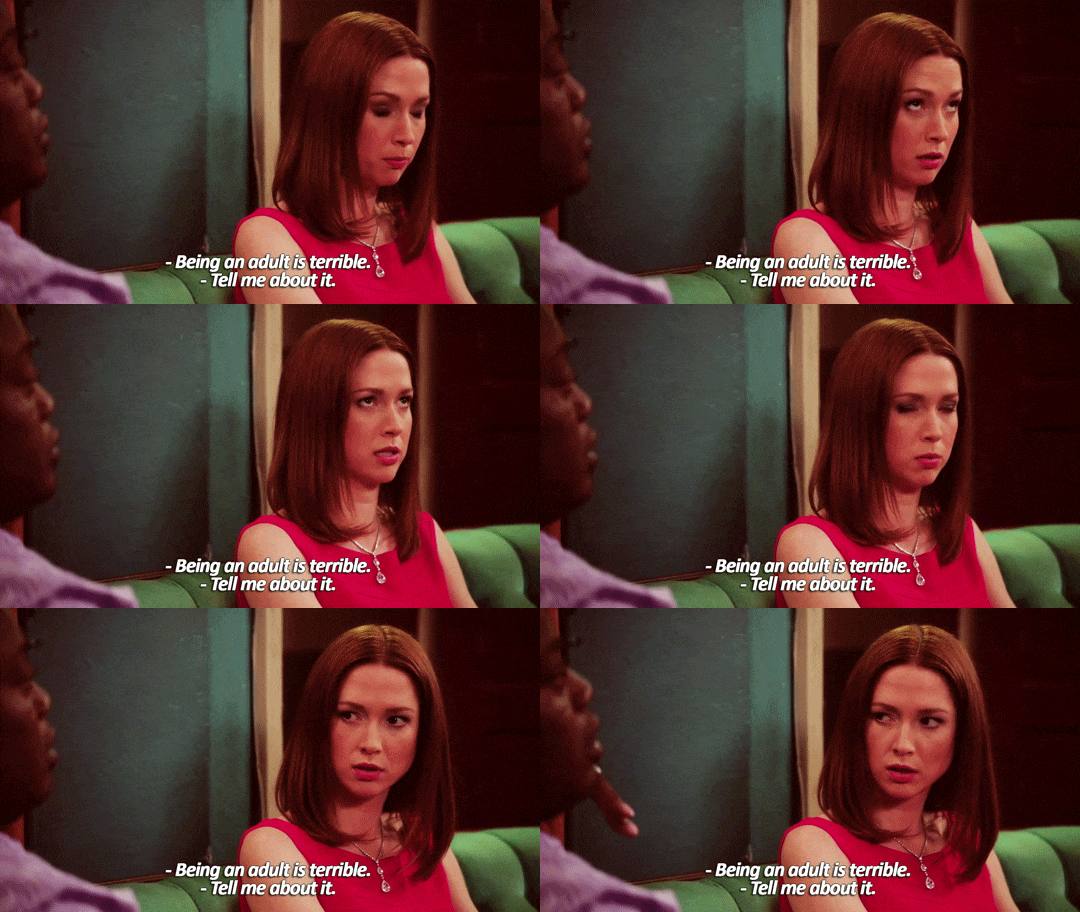
Growing up is hard. The transition into adulthood is a rocky one, often marked by a lot of trial-and-error and learning from mistakes. And college is this weird, transitory time of half-responsibilities. For many students, it's the first time they've ever lived away from their parents. Suddenly we have all this freedom to make decisions on our own without the kinds of restraints we'll have after we graduate. Not only are our bodies running better than they ever will again (get ready to kiss our metabolisms goodbye in our thirties), but mortgages and retirement funds aren't really even on our radar yet. There are so many parts of adulthood that don't even factor into college life, it's no wonder we're so amazed and impressed when we start to show signs of acting like an adult. But instead of thinking of those actions as separate from who we are and how we live our lives, it might help to think about them as developing good habits for later on in life. Becoming an adult might not be as fun as we hoped it would be when we were little, but we don't have to make it harder by refusing to see the strides we take in the right direction.