

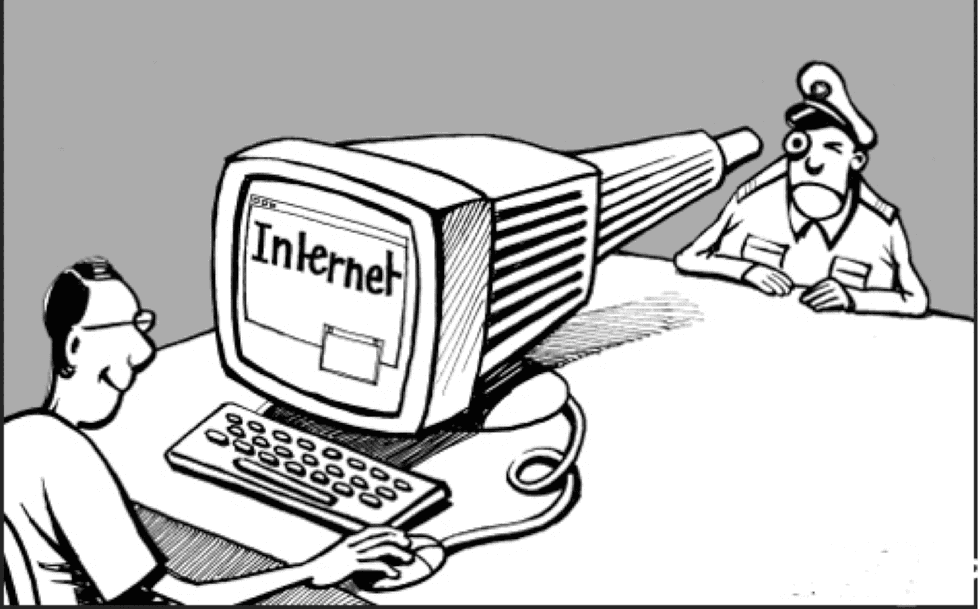
In today's society, we are surrounded by various forms of technology that could be used for many different purposes. There are many theories that the government monitors our use of technology to gather information about citizens and to keep track of any suspicious activity. Although this may invade personal privacy, it provides more safety for citizens.
On the other hand, there is a large controversy about whether or not the government should have access to our personal lives even if it provides for the greater good. Some believe that the government should be allowed to access to information such as phone data and computer usage histories in order to prevent crime and investigate criminal activity, but there are some who believe that this would be an invasion of the First Amendment of the Constitution.
This became a highly discussed topic last year during the court case between Apple and the FBI. The FBI asked Apple to unlock the iPhone of a suspect of a mass shooting, but Apple refused to do so on the grounds that unlocking the iPhone would cause future security problems and cause the company's software to be more susceptible to hacking. The FBI needed access to the phone to see who the suspect had been in contact with prior to the shooting in order to prevent future incidents. However, Apple refused to unlock the phone and the FBI eventually gained access to it through a third party.
Many people believe that Apple should have unlocked the phone since this was a time sensitive issue and preventing further violence was top priority at the time. However, others support Apple's decision and believe that this was essential to keep the software secure and privacy intact.
Greater concerns are raised when we start to consider the possibility of being monitored without consent. For example, web servers use search history to choose the ads that are presented on your web pages based on prior interests that your recent searches have shown. It is controversial whether or not the government should have access to such histories.