

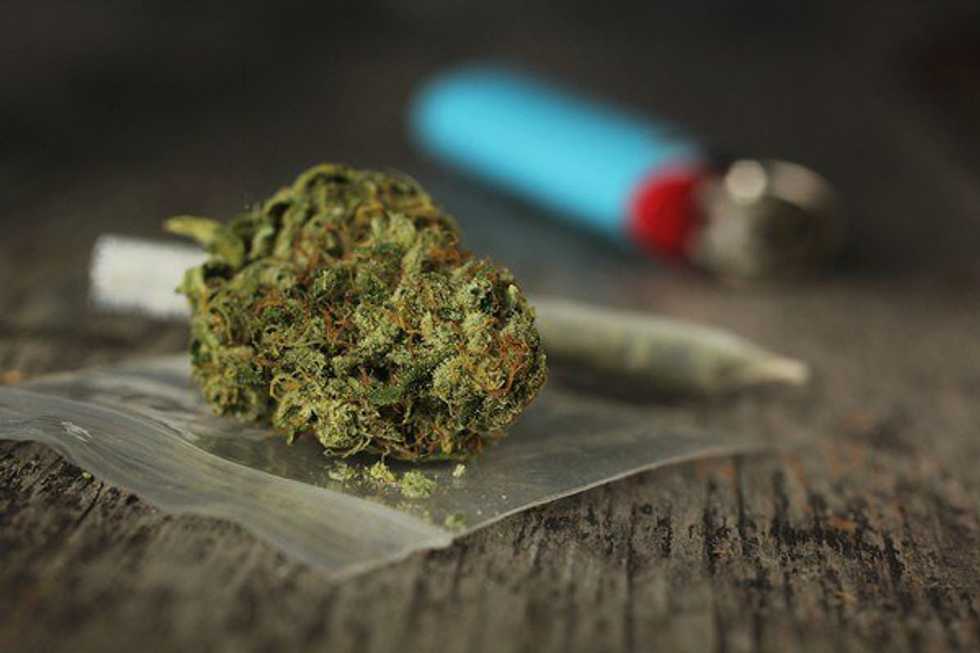
I wouldn't begin to address this topic solely in the hopes to convince others that a national legalization of pot should happen* (*has happened 35+ years ago). Partially, because there are a slew of people more educated, well known, and resourceful than I doing so, and also because frankly, it's not the most pressing matter.
I wholeheartedly back the urge of this movement, I do not feel it is more concerning than issues such as say loving whomever you please, international conflict, or finding an end to racial divide. I would, however, love to raise the question: How on God's green (lol, prepare for puns) earth, is tobacco legal and marijuana not?
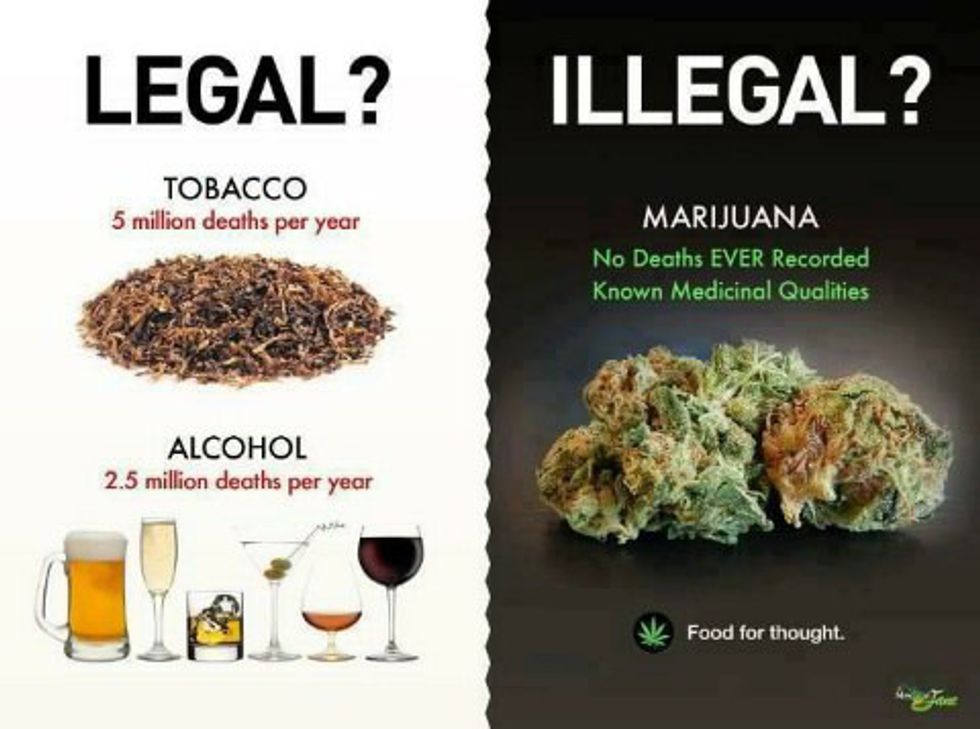
Fun facts: Tobacco is extremely addictive, responsible for 87% of all patients who develop Lung Cancer, and medically tied to at least fifteen other types of cancers.
Most fun fact: Tobacco is a highly (lol) advertised staple of the United States that we are currently economically reliant upon.

Since the talk of legalizing weed commenced, there has been a rise of alleged cannabis-related deaths. Searching through Google News just now, I was able to find 15 articles, with minimal overlap, all circling marijuana related deaths. Each and every one of these articles failed to make a direct causation between doing the drug and fatal consequence. In the first article I read, the deceased was killed with a bullet.
While kill-factors identified in each case differed, they were all the result of anything besides marijuana ingestion. Nearly all of these aforementioned marijuana deaths stemmed from conjunction with one of three things: violence, poor decision making, or money. To paraphrase: the three main causes behind the alleged marijuana-deaths are simply three main causes of death.
"Erin, are you suggesting that legalizing marijuana would aid drug-related violence?" Yes, yes I am.
There is an argument that legalization could backfire; removing the underground market could rob many current dealers of their jobs, causing a large shift into the distribution of alternative, actually dangerous drugs.
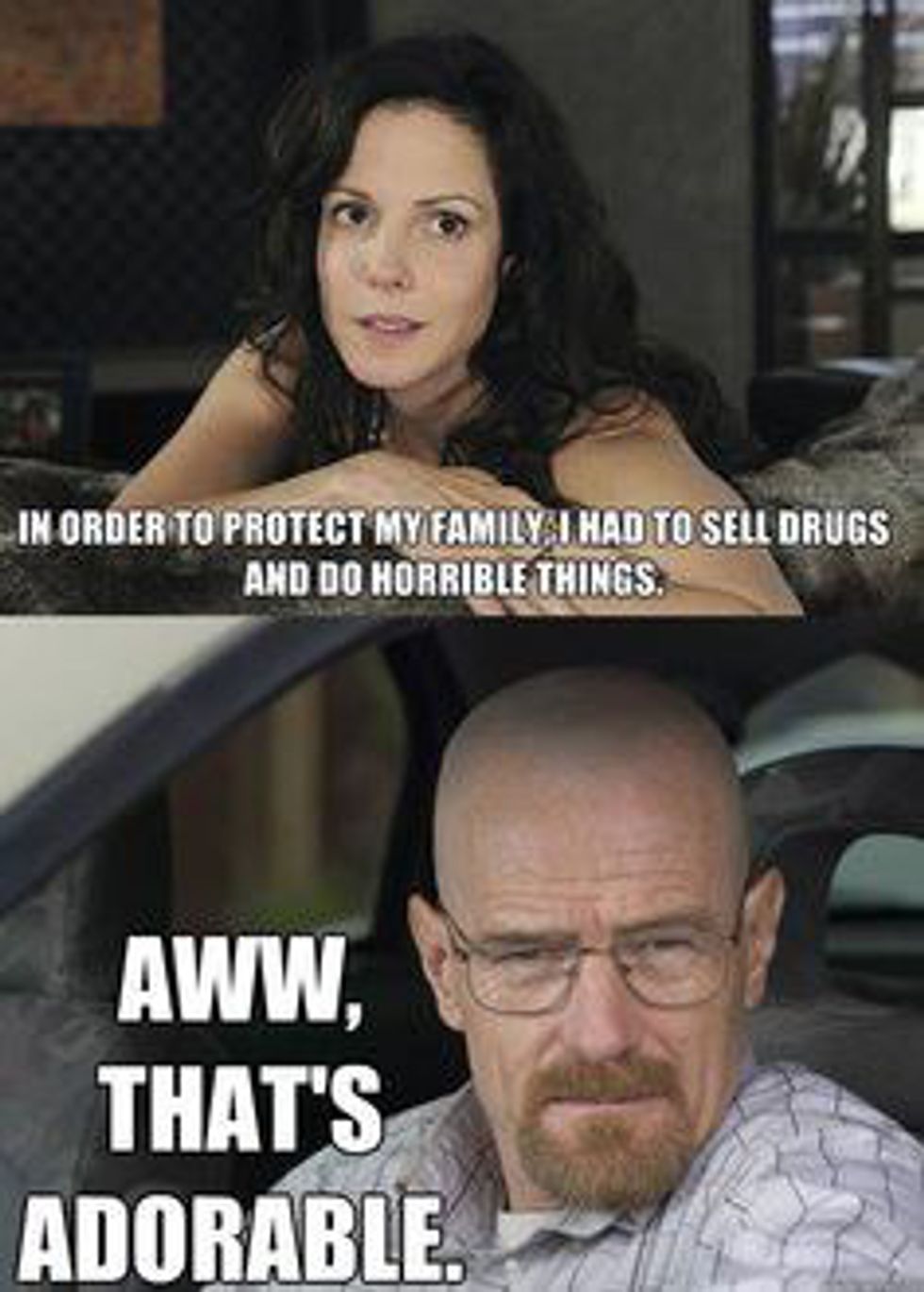
While I agree it could potentially cause a refocus and surplus of dealers within other drug industries, that would not automatically generate a newfound interest in hard-core drugs. Masses of people will not suddenly turn to cocaine, heroin, or prescription pills simply because they are increasingly accessible.
Drugs will always be accessible to those who seek them. The only foreseeable impact this surplus of dealers would have is on those who already find themselves involved in heavy drugs. Users will simply have more options, and the competitive market might even save them some money (to spend on more drugs). So really, it's a win-win for all.
Being blunt (lol): our lack of government structure surrounding this industry is what forced the development of a fluctuating, crime-ridden, thug-enforced system.
Keep in mind as you pack your adorable and unique mini elephant bowl, the weed you're smoking most likely came from a longstanding powerful and corrupt mob or gang.
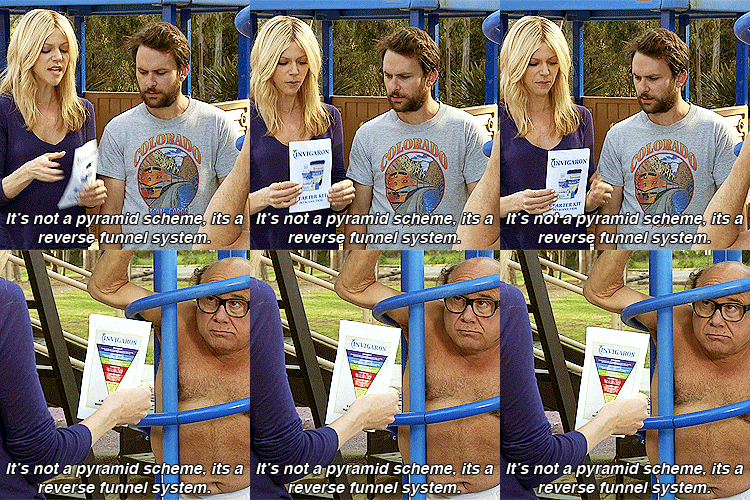
Weed distribution is a pyramid scheme. Weed is harvested and then distributed, in unimaginable bulk, to the top of the pyramid. Then it is divided and sold separately, in smaller units, by the next level of distributors. This goes on until eventually, the same strand that once was sold in kilos by a man with more tear drop tattoos than teeth, is being sold in dimebags (who actually buys dimebags!? Lmk) by an acne-riddled teen in a cushioned suburban town.

"Erin, are you suggesting that legalizing marijuana would be cost-efficient for everyone?" Yes, yes I am.
If marijuana were handled like any other consumer good, and serviced to all at a national level, life would be grand. By grand, I mean you pot-purchasers would save a grand, thanks to marginalized pricing! Unlike painting or dancing, selling drugs is not a hobby. The dealer does not do so to fulfill his inner passions or satisfy your need, he does so to turn a dope (cheapshot) profit. Remember that pyramid scheme? The dealer you're buying from is trying to make a profit, as his supplier is, as his supplier's supplier is, and so on.

So come on, let's joinTogether (sorry) and puff-puff-pass (so sorry) along some common sense.