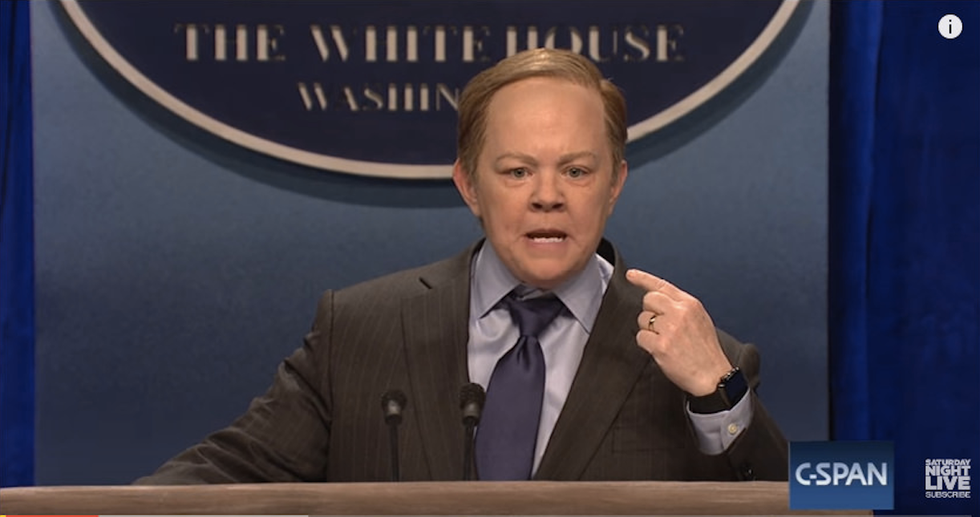
Last week, Sean Spicer resigned from his position as White House Press Secretary. That day, the networks filled most of their time discussing the reason he resigned and the political fallout. The first thing I thought was this: “I guess this means no more Melissa McCarthy on Saturday Night Live.”
If you’re not sure what I’m referring to, comedic actress Melissa McCarthy recently had guest spots on SNL parodying the former press secretary. And if you’re not sure why this was the first thought to enter my mind... well, I wasn’t really sure either, but it made me think about the impact that comedy has had on the public’s perception of politics.
We can really trace modern political humor back to the Watergate scandal. The scandal made the public realize that not every politician is as noble and honorable as they once thought, and that some politicians truly believe they are above the law. This collective realization opened up the U.S. government to increased public scrutiny, and eventually open mockery. Comedians now felt a new freedom: to be able to comment on the absurdity of American politics without fear of consequence.
When you look at successful TV comedians—such as Jon Stewart and Stephen Colbert—it’s clear that political humor is incredibly popular and marketable among American audiences. Some sketches or jokes are so well known that they become synonymous with the person or institution it mocks. For example, during the 2008 election, Tina Fey’s portrayal of Sarah Palin became Sarah Palin. The general perception of the former vice presidential candidate was that she was as dim-witted as she appeared on SNL (which isn't entirely off-base). The comedic elements of politics get a bit jumbled with politics itself, and the lines get somewhat blurred.
In the simplest of terms, comedy establishes what is funny and what is not. It speaks to what is right, what is wrong, and most importantly, what is absurd. So it isn’t that revolutionary a statement to imply a connection between the way media influences our thinking, but it is interesting how an art form that thrives on unrealistic exaggeration moves us to think about our government in very real ways. And during the endless shit storm that is the Trump Administration, there’s a lot of fun yet to come.