There's a chance that this issue is more relevant to me and to Odyssey readers than it is to most other Americans. Yet I find myself coming back to the issue enough to think that I should write about some contrasting perspectives. I try to find the middle-ground for most polarizing issues, because I think that seeing everything from one side is ineffective, and quite frankly, lazy. Failing to acknowledge an opposing viewpoint with respect only weakens your own stance on salient issues. That being said, I believe shedding some light on the "political correctness" issue may do readers some good.
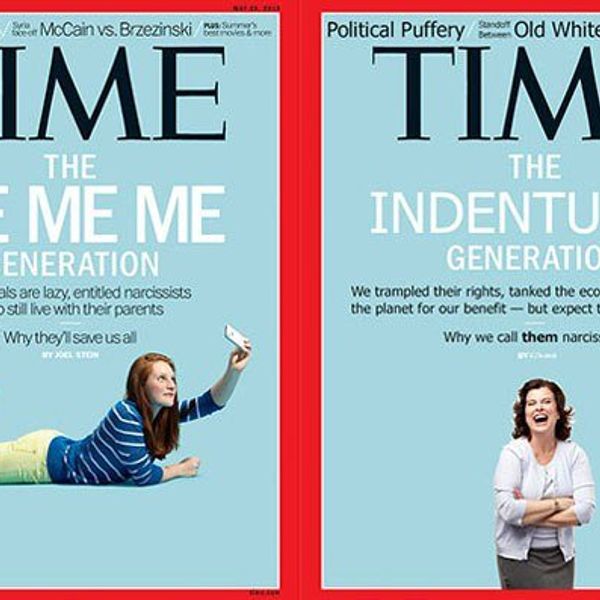
Uproars among the U.S., including on and off college campuses, have caused a nationwide debate about being politically correct versus ignoring tenets of such correctness in an effort to make actual progress. One aspect of political correctness I believe we all must understand is that there is a spectrum. One issue that offends one person may not offend another or one issue may offend a slew of people. As such, there are certainly issues with which there are grounds for being offended, and issues which some may question are actually offensive, or whether we're perpetuating a generation of "whining millennials."
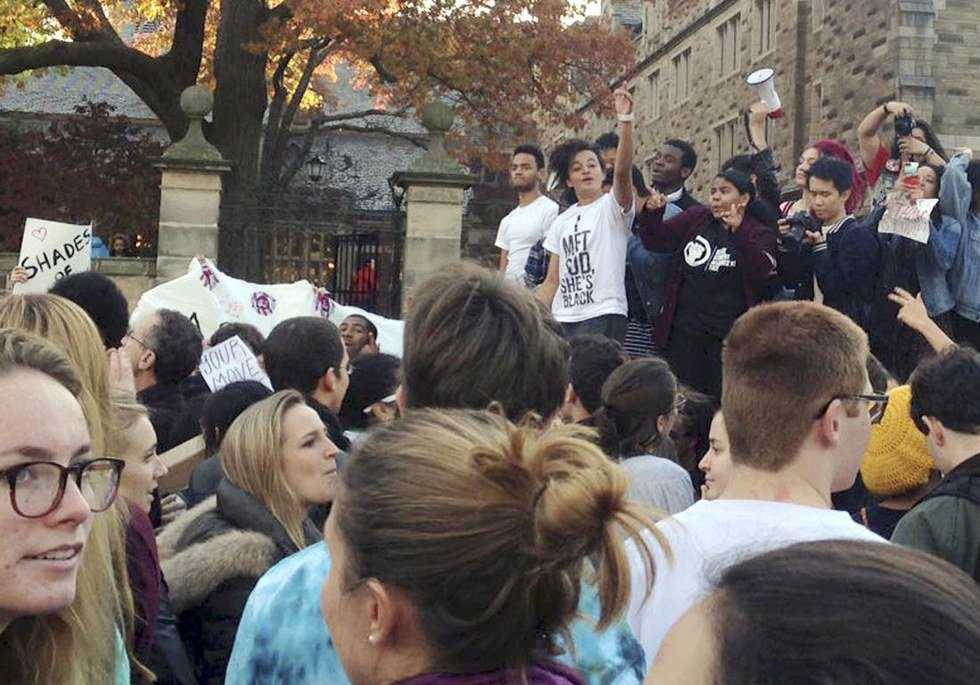
I take issue (but I also understand, and to some extent, agree) with both sides of this argument. Recently, a Yale professor decided to end her time as a lecturer after she sent an email suggesting that Yale should not be responsible for telling students to not wear offensive, or as she puts it, "provocative" costumes. Now, as a young white woman, I cannot say I would understand the way it feels to have someone dress up as a minority of which I am a part. That's the first part of the argument I believe a lot of people are missing. White students, white people, do not and cannot understand what it is like to be appropriated by a costume, simply because we constitute a majority of a nation whose foundation was created by the discrimination and appropriation of minorities.
That being said, this debate surrounding the professor's words, which I believe were not all that controversial, escalated to the point where the professor ceased working as a lecturer because her words angered many students. Take the email for what you will, and even if you are offended by the idea that someone may not be assessing your opinion or feelings with respect, can't we progress as a people without forcing people from giving up and falling silent?
This leads us to the idea that I've heard a lot about -- the idea that we are a generation of whiny millennials. I take issue with this idea as well, mostly because I don't appreciate being classified as a generation whose "whininess" defines it. In case one is not learned on modern American history, I can summarize by saying that we've lived in a century of "whininess" if by whininess, you mean complaining about the status quo and the majority's power over our nation's minorities. That's not to say that changes like the Civil Rights Movement came from whining, but rather that if it weren't for us taking issue with the way our nation or our institutions operated, we would not be where we are today.
All I'd like to express is that I think both sides of the political correctness argument have some remarkably accurate claims. It is possible for two sides of an argument to be right, and it is possible for us to progress into an age of equality without continuing to call each other whiners or racists.