If it wasn’t for the Planned Parenthood, I probably would not be alive today, although not for the reason that so many people would like to imagine. I did not experience a dangerous pregnancy nor did I approach the possibility of an illegal abortion. In fact, it is not just my life that would not be possible without the help of the Planned Parenthood organization, but my entire branch of the family would cease to exist.
In the late 1920s, my great-grandmother experienced a miscarriage, and in the aftermath was sent to what was then called the American Birth Control League to receive her very first contraceptive device, a diaphragm, which Margaret Sanger had brought to the United States just four years prior. Almost a decade later, after recovering from her miscarriage, she was able to safely give birth to my grandmother. The birth of my grandmother led to the birth of nine other people. My grandmother’s three daughters contribute to society every day with their work as a teacher, a nurse, and a dedicated mother and bookkeeper. Her six grandchildren are either working or in the process of furthering their education so that they can make their own contributions. Without the help of one diaphragm in 1929, none of this would be possible. More importantly, without the Planned Parenthood organization (it was renamed in 1942) my family would not exist.
If you are of the belief that my family’s story is old and outdated, you’re wrong. But first, let’s start with the very basic facts. Since its conception, the Planned Parenthood organization has been committed to providing communities and especially but not exclusively the women within those communities with quality health care and information about how to keep themselves healthy. In their 2013-2014 annual report. Planned Parenthood claimed that about 34 percent of their services were providing contraceptives to the people that need them. Nowadays, we can imagine that this includes anyone from married women with health issues (like my great-grandmother) to young women who would prefer to live independently from tradition.
The other services include about 42 percent going towards STI and STD testing and treatment, 11 percent for general women's health services, 9 percent for cancer screening and Prevention, 1 percent for other services, and yes, 3 percent goes towards abortion. And this is a good thing considering that in the late 1920s, approximately 15,000 women died every year from botched abortions because they had neither the access nor the right to safe healthcare. Considering that had the American Birth Control League not provided her with the contraception she needed, my great-grandmother could have been one of the many within that statistic, I’m quite pleased that there is a place in the modern world for women to get both safe contraceptive devices and safe abortions.
Although my family’s story is old, it is not outdated. The women of the United States still need quality healthcare just as much as they did in the 1920s and thankfully, women’s healthcare has come an exceedingly long way since the inception of the American Birth Control League. Sadly, there are still many, many women who lack both the funds and the education that are needed to get good healthcare. This is why we still need organizations like Planned Parenthood -- so that women without the necessary funds can get the help they need for themselves and for their children.
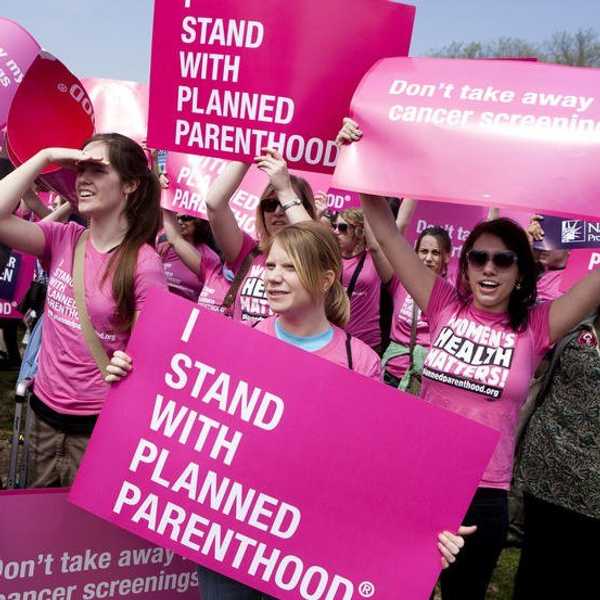
Each time a Planned Parenthood is closed or its funding is drained, it takes away something important from communities across the nation. It takes away women’s ability to understand, empower, and take care of their bodies and in some extreme cases, it can take away lives. As women in the modern world, it is important to remember our past and keep in mind that it took a lot of hard work and sacrifice from many people to get where we are today. Now, as we once again face the old challenge of our government stripping women of their agency we need to educate ourselves about our past, stay prepared within our present, and fight, as others once had to, for our future.