1. 2015 was the hottest year on record
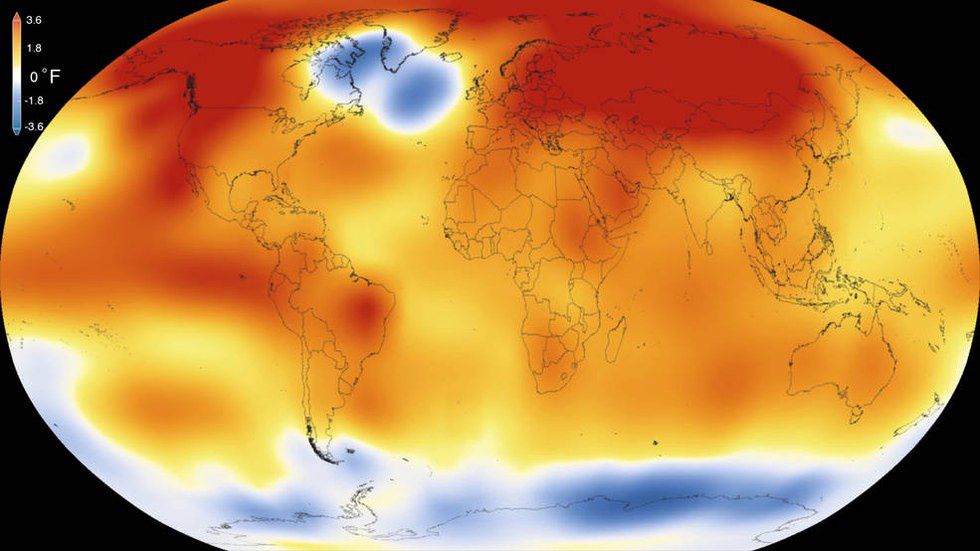
Well, this is bad news for Donald Trump. According to NASA and NOAA (National Oceanic and Atmospheric Administration), 2015 saw a rise in global temperature of .23 degrees fahrenheit, making it the hottest year ever recorded. It may not seem like much, but when the total average global temperature rise from 1880-2012 was 1.53 degrees fahrenheit, .23 degrees is a hefty increase in just one year. And while some may blame the record-shattering temperature rise on El Niño, Gavin Schmidt, climatologist and director of the NASA Goddard Institute for Space Studies says that "2015 was remarkable even in the context of the ongoing El Niño."
2. Black holes have "hair"
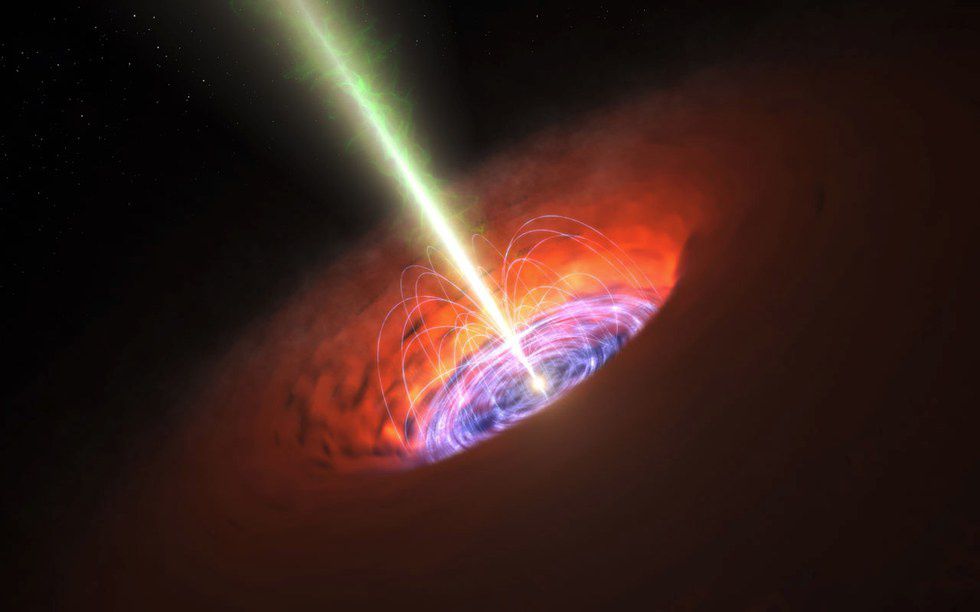
Is this black hole having a better hair day than you? Maybe. Stick with me here: in 1976, Stephen Hawking proposed "that information is destroyed when a black hole is formed and subsequently evaporates" which became known as the information paradox. The information paradox was believed "implausible," but no substantial evidence had been discovered to disprove it--until now. Hawking and two other scientists published a report this week that suggests that "black holes have a lush head of 'soft hair.'" If this is a head scratcher for you (pun intended), it may help to know that 'hair' basically means information. These findings tell us that information doesn't disappear once it crosses the event horizon, but rather that it's stored in zero-energy particles that "fringe a black hole's event horizon." The same report also shows that black holes aren't all the same, and that the history of a black hole makes it unique, like a snowflake (aw!).
3. Scientists may have found a 9th* planet
*10th, if you believe in Pluto
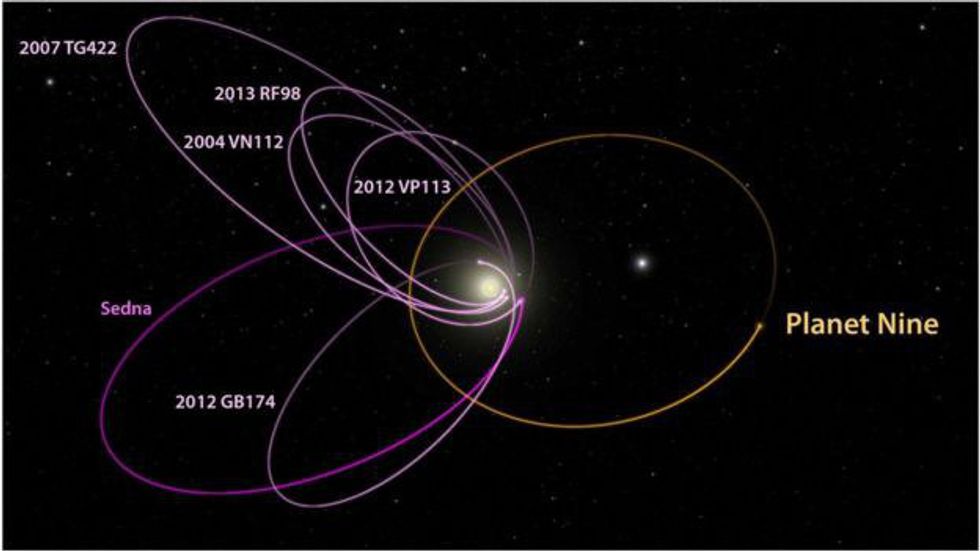 Astronomers from Caltech believe that the strange movement of objects in the Kuiper Belt (where Pluto is located) may be explained by the presence of a 9th* planet. Dr. Mike Brown, professor of planetary astronomy at Caltech, says that "the most distant objects all swing out in one direction in a very strange way that shouldn't happen, and we realised the only way we could get them to swing in one direction is if there is a massive planet, also very distant in the Solar System, keeping them in place while they all go around the Sun." We haven't been able to see this planet yet, but the group of astronomers is hoping to locate it. If it exists, planet 9 is estimated to be "10 times the mass of Earth" and would take about 20,000 years to orbit the Sun.
4. Scientists created a chicken with a dinosaur snout
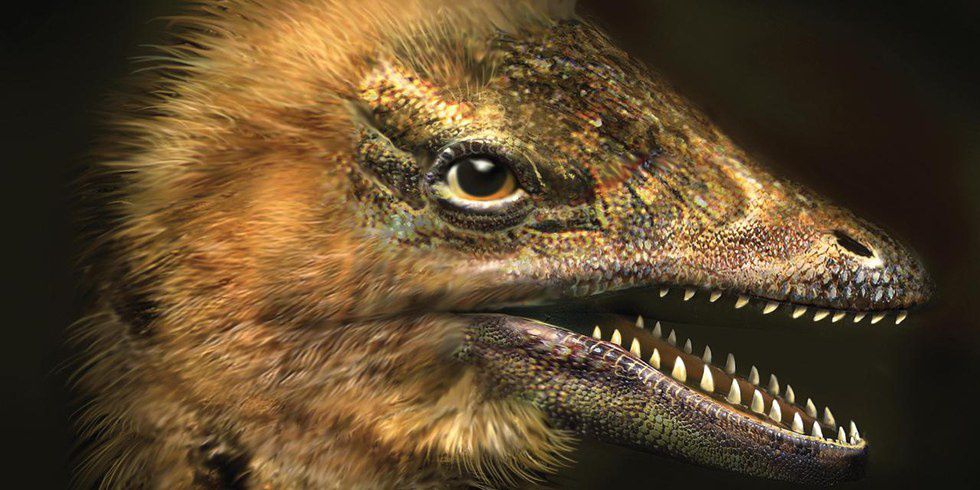
We know that birds are descendants of dinosaurs, but the evolution of the beak has remained a bit of a mystery. Scientists Bhart-Anjan Bhullar and Arhat Abzhanov, who set out to figure out "what the heck a beak actually is," ended up being able to produce chicken embryos that had an ancestral snout instead of a beak, resembling Velociraptors. They did this by simply suppressing certain genes. In fact, the genetic modification involved in this experiment is "far less weird" than modifications made by breeders. So, does this give a whole new meaning to dinosaur chicken nuggets? Unfortunately, no. While Bhullar is confident that these chicken embryos could have hatched and survived "just fine," the ethics are still a little fuzzy (he's obviously seen Jurassic World).
5. All of the aliens are dead