


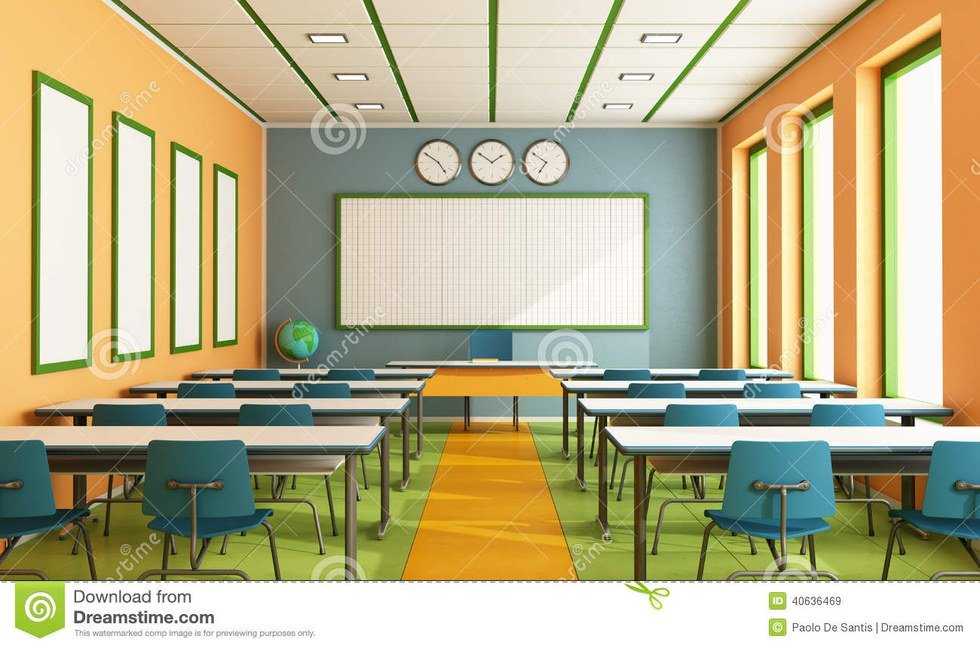
The physical environment in which schooling and education takes place is often overlooked by school boards on local and national scales. These spaces are not deemed quite as important as the material taught in these classrooms or how the material is taught in these classrooms, but what administrators and law makers do not realize is that no perfect regime or educational reform will change today’s educational system until the physical school buildings are updated and retrofitted for today and future students.
Who ever thought that white concrete walls and vinyl floors would ever make a space comfortable enough to learn in? Or that rows and columns of desks lined up like soldiers would ever accommodate an engaged and active learning experience for students of all ages? Research has proven time and time again that students who appear to engage and have discussions with their peers as well as one on one time with their teachers are likely to have higher rates of academic achievement. The traditionally cold, rectangular classrooms are neither conducive to comfort nor collaboration, and in many ways can hinder the student’s desire to learn as well as the teacher’s ability to instruct.
Different elements that make up the classroom can heavily affect the environment-behavior that takes place. For example, having a evenly distributed amount of natural daylight throughout the classroom can decrease distracted behavior. Maintaining thermal comfort and the ability to adjust temperatures within a classroom is extremely significant, as increase in temperature and humidity obviously causes discomfort and distraction to students. Perhaps the largest reported problem from students and teachers alike is noise – mostly background noise due to poor acoustics. Sounds from neighboring classrooms, or activity outside classroom windows, and HVAC systems found within the classrooms can lead to a constantly buzzing and chaotic classroom. This is the largest distraction to students and a frustrating experience for teachers too.
While these are basic factors of the classroom environment, they are often ignored due to the poor conditions in which most schools are often found. The average school is an average of fifty years old, and many of which are long overdue for updates. These deteriorating environments often filled with poor indoor air quality, molds, and bacterias are not appropriate for students at any age to learn in. Working across fields could potentially create an environment that students may one day actually even enjoy going to school, learning, and engaging.
By simultaneously designing spaces that are more aesthetically attractive to the eye, considering energy sufficient designs, and investing in the future, the average school design could be the key to revolutionizing the education system. Work places and hospitals achieve specific designs based on their fields all the time, so why should students and teachers not receive this treatment as well?















