

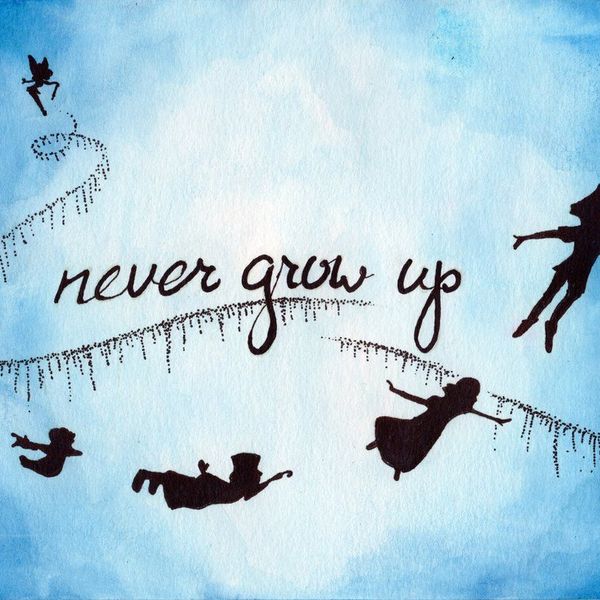
All my life I’ve adored Peter Pan. And all my life I’ve been terrified of the inevitable fact that I’d have to grow up. Both of these things have been true as long as I can remember. So much so that I’m not even sure which came first. Though, I’m inclined to believe that it’s the latter, which inspired the former. See, I had a wonderful childhood and a natural inclination for make-believe like so many kids do. I enjoyed the freedoms that childhood allowed me and rather than grow to eagerly await adulthood like so many of my peers, I grew instead to fear it tremendously. Adulthood was not a world of promise and possibility and beginnings. To me, it was the end of all the good that my childhood had brought me—not to be melodramatic, but the place where dreams go to die. Like it or not, however, adulthood stood its ground in my impending future, and I approached it, unable to turn back no matter how much I wanted to. That’s why I loved the story of Peter Pan. It was everything I wanted—to stay young, innocent, irresponsible, and unjaded.
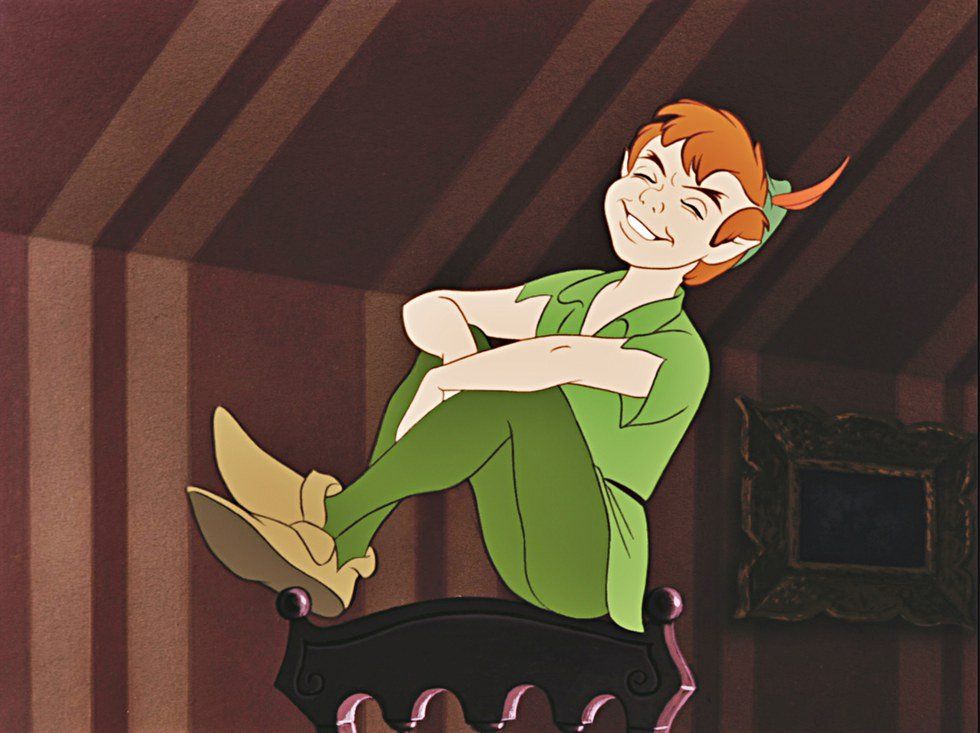
Of course, I quickly matured—whether I wanted to or not—to realize that not all aspects of youth are positive. After all, there’s a reason Wendy Darling went home after her frolic through Neverland. She entered her tale alongside her fears—not unlike my own—of adulthood, and came out the other side of the story realizing that there’s a reason we all have to grow up. And it’s not just because we’re biologically inclined to age. Take Peter Pan for example. He’s the spirit of childhood. Part of what that means is that he’s essentially a metaphor for all things childlike. But to look at him as a literal character, we can find numerous flaws. He’s not just happy-go-lucky and fun and silly. He also has an incredibly underdeveloped, thin grasp on what is right and what is wrong. He says hurtful things and throws temper tantrums when things don’t go his way. In short, he’s flawed—but particularly in a way that you’d expect children to be flawed...because these are flaws that come with the ignorance and insensitivity that youth and inexperience invariably yields.
And yet, I still adore Peter Pan. I still hold onto my childhood as tight as I can. Why? Well, there’s still Captain Hook to account for. He’s the polar opposite of Peter Pan, except for one thing; He is adulthood at its worst, while Peter Pan is childhood in its purest form—and that’s not to say ‘best’ form, but rather ‘truest’ and most broadly speaking form. Point is, Captain Hook is everything that scares me about adulthood. And who fights Captain Hook better than Peter Pan? I mentioned earlier that Peter Pan is the spirit of childhood. While that does mean in part that he stands as a metaphor for childhood, it also means that he is there to maintain the child in all of us. And that doesn’t mean perpetual, misplaced immaturity. It means thinking creatively when everyone else wants your mind contained in a box. It means holding onto hope even when you’ve been let down before. It means being unafraid in a world that’s given us so much to fear. Combine these things with the lessons of life that have only made you more compassionate and selfless, and you’ve found the perfect balance. It doesn’t have to be all one or the other. I may have to grow up. I may have to mature. I may have even grown to enjoy the benefits of personal maturation. But that doesn’t mean I have to harden my heart or forget how to dream. There are benefits to both sides of this coin and I plan to enjoy them all, with Peter Pan—the spirit of my childhood—at my matured side.
















