

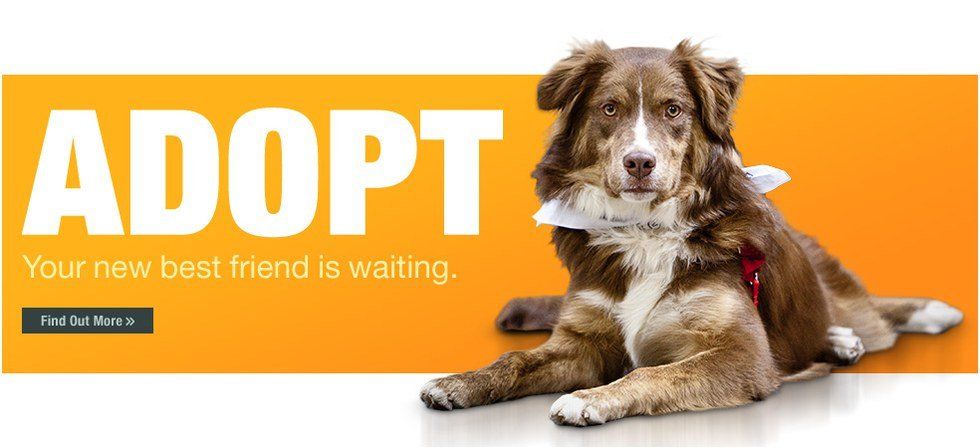
About 60 percent of all U.S. households have at least one pet and many strays are pets who were not properly kept inside of the home or fence. Most have not been properly microchipped or tagged with proper identification to allow shelters to return them to their rightful owners. Due to these problems, less than 2 precent of cats and roughly 20 percent of dogs are returned to their owners. This is why approximately 7.6 million dogs and cats enter shelters across the country every year. Because of this, as well as not enough animals being spayed or neutered and overpopulating the US, nearly 2.7 million of those are euthanized within the year they are admitted to a shelter. There is no way to figure the amount of homeless dogs or cats in the U.S. However, the estimated number of homeless cats is near 70 million.
Pet adoption is a topic near and dear to my heart and I chose to write about this topic because of two recent encounters: One encounter where an acquaintance was breeding purebred dogs and selling them at $300-400 a pop; a second when a friend told me her and her boyfriend wanted a pure breed puppy to train because "shelter dogs are too old." *Insert picture of me with my jaw on the floor*
First, I would like to address some problems associated with backyard puppy breeders, like the acquaintance I mentioned in paragraph one. According to Paws.org, backyard breeders are not to be confused with puppy mill breeders. While both are motivated by profit, backyard breeders are usually people who breed their family pet once in a while, yet are commonly uninformed on the topic of how to breed responsibly. They usually do not know to check for genetic defects. Red flags commonly associated with these people are not asking questions about prospective buyers, labeling the dogs as "designer" breeds being sold at less that six weeks old, reluctance to show living conditions of the dogs, and no guarantees to take back the pet any time during the animal's life span, no matter what the buyer's reason may be.
However, not all backyard breeders are like the ones stated above. Some can be incredibly well informed and produce a good litter of puppies with a strong bloodline. They've checked for genetic defects, and will make sure to provide their buyers with a glimpse into the life they provide for their pets to ensure a buyer knows what they are paying for and who they are paying.
Second, I would like to address the friend who refused to look into shelters due to wanting a purebred puppy. According to DoSomething.org, 25 percent of dogs in shelters are purebred and, in the state of Indiana, there are 15 specialized purebred rescues around the state. The Pit Bull Rescue Center, Indy Home for Huskies, Great Lakes Border Collie Rescue, and Dachshund Rescue of North America are just a few purebred rescues featuring dogs from the Indiana area. My friend's reasoning for wanting to buy from a breeder, due to not being able to find a purebred puppy, was not a well informed decision considering the above information.
My family has never purchased a dog from a breeder or pet store. We have adopted all of our household animals from humane societies or from the streets. It's a personal preference of ours that we do not care to own a purebred animal, nor want to support anyone who willingly chooses to breed their animals. There are too many cats and dogs, purebreds and mutts, without homes that are incredibly smart and loving. We adopted dogs who came with a house my parents bought; we adopted one off the streets of Indianapolis; we took in and raised two kittens from a litter of strays found in a relative's barn; we adopted our beautiful mutt from the humane society; and we adopted an older cat who had been in the humane society for far too long. All of our animals have been spayed or neutered to prevent them from procreating due to the country being overpopulated already.
I am an advocate for adoption because too many animals need to be adopted in the U.S. Too many animals are being euthanized due to a lack of homes. Our world doesn't need another litter of pups or kittens to be born and be killed. Preventative matters like spaying and neutering can prevent this, as will adopting rather than buying from breeders.
If you are looking for a pet, lots of shelters, including the Morgan County Humane Society, are offering specials on their animals to reduce overpopulation in the shelters. Check with your local humane society today to see if they are hosting similar specials.
"11 Facts About Animal Homelessness." DoSomething.org. Web. Aug. 28, 2015.
"Buyer Beware: The Problem with Puppy Mills and Backyard Breeders » PAWS."PAWS - People Helping Animals. Web. 28 Aug. 2015.
"Pet Statistics." ASPCA. Web. 28 Aug. 2015.
"Pets by the Numbers." Humane Society of the United States. Web. 28 Aug. 2015.