What does sex-trafficking look like? Is it a Taken type scenario? Pretty, innocent, white, American, college girls get kidnapped in foreign countries and put up for auction in front of turban-wearing sheiks and mustachioed Eastern European Mob-lords with thick accents and silk shirts, and Liam Neeson can solve it all with a scary monologue and a few dozen throat-punches?
Or is it the girl who went to your high school, who seemed to always be alone; the girl who came from a broken home, on who's arms you always thought you could see bruises? Is it the girl who ran away at 14? The girl who met a guy that told her he loved her, then beat her, hooked her on heroin, and started selling her?
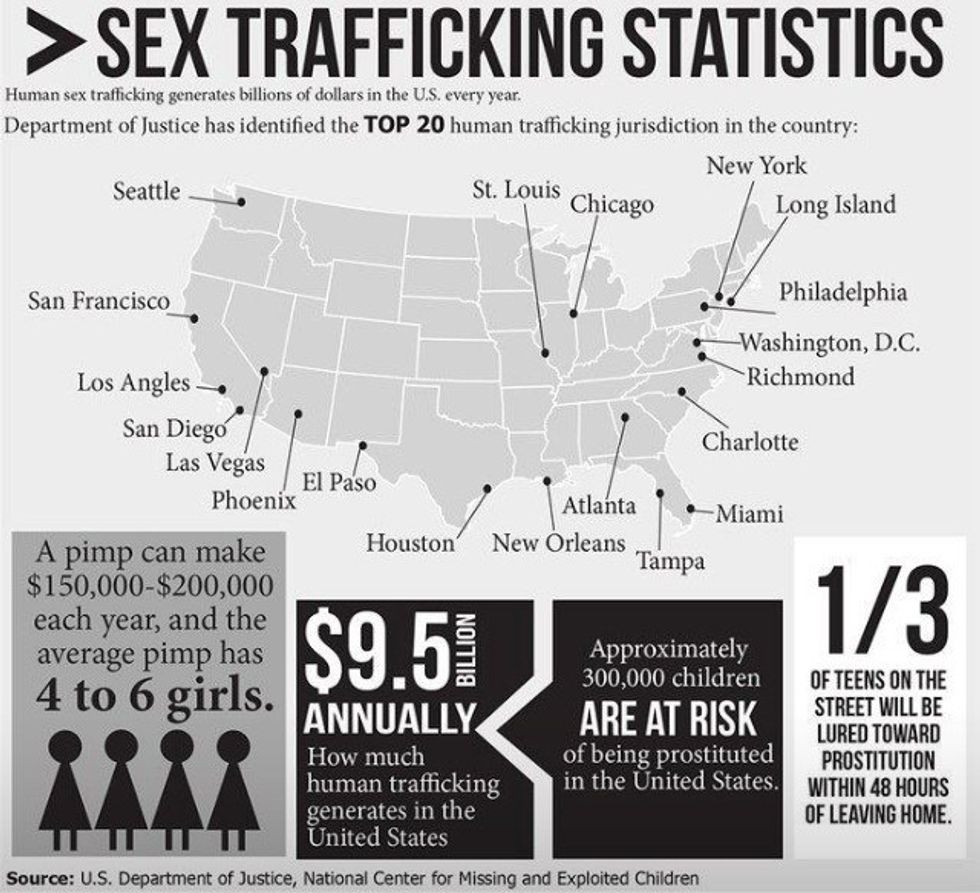
The reality is that it looks like the latter. Of the estimated 4.5 million people held in sexual slavery globally, 300,000-400,000 can be found in the US alone, and sex-trafficking in the US is a $9.5 billion a year industry. It's enormously pervasive; it happens all over the country, draws in victims form all socio-ecomonic backgrounds. Homeless and runaway youth are the most vulnerable, with one in four homeless youth victimized, and one in six runaways being exploited. Even more alarming, the average age of entering into street prostitution is 12-14.
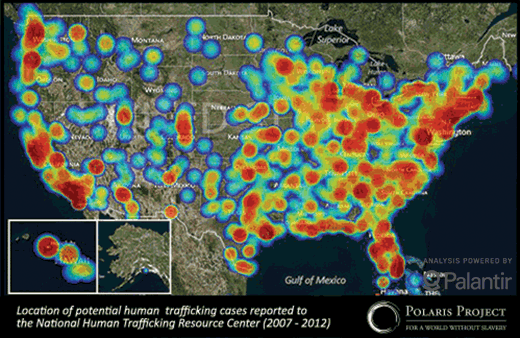
The reason we don't see this happening around us is that it wears very clever disguises; street prostitution, escort services, amateur pornography, the list goes on and on. We know these things exist, but we don't think of them as forms of human-trafficking or sexual slavery.
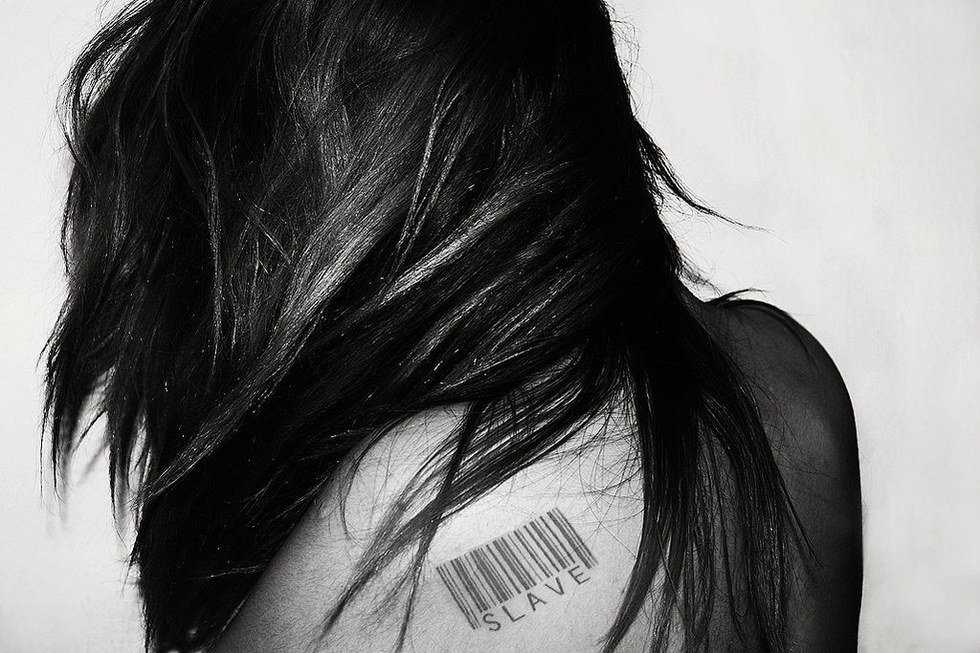
We buy into the mythology that pimps and traffickers project, that the hooker on the corner is there of her own volition, trying to pay through college, that she likes her job, that she's really 18, etc. etc The reality is that these girls are turned into property by their pimps, beaten, raped, imprisoned, kept strung out on drugs, and even branded. They're forced to have sex with dozens of people a day, every day. They see none of their profits, even though they bring in upwards of $1000 dollars a day, and are sold to and stolen by other pimps like currency.
Survivors of the sex trade tell of further horrors and unimaginable suffering and cruelty, but perhaps the greatest tragedy of all is how often this issue gets overlooked or un-prosecuted. Few girls feel safe coming forward, about their experiences, due to the effectiveness of pimps' control methods and the fear of violence against their families. There are a few federal laws that give protection to victims of sex-trafficking, but all too often survivors of the sex trade are treated with the same kind of victim shaming mentality that rape survivors encounter. In fact, the ordeal of sex-traffic survivors is even more compacted by the presence of hard drugs (which pimps use as methods of control) and the tendency of the U.S. to imprison more prostitutes than sex-traffickers. Survivors also too often suffer from PTSD, STIs, and the effects of long-term drug abuse.
In the face of such an adaptable and persistent institution, it often seems that there's no way to stop the commodification of people. But all we need to do to stop sex trafficking is eliminate the demand. We need to awaken ourselves to the realities before us, that the girl on the corner might not want to be there, that the 'actress' on the screen might not really be 18, that the masseuse at the massage parlor might only be offering a happy ending because a thug in the back has threatened to kill her kids. We need to acknowledge the reality of slavery all around us, and make active choices not to support it, not visiting the Super Bowl, for starters.