The overall perception of Caribbean music that seems to exists in America is that Caribbean music is vulgar and un-relatable unless a mainstream artist practices the genre. This one sentence explains how Caribbean music has become appropriated in America. I believe this is an act that stems from a misunderstanding, judging and mass sampling. To understand how Caribbean music is appropriated, you have to first understand Caribbean music itself.
The Caribbean sea encompasses at least 28 island nations and over 7,000 islands in its warm, tropical waters. These islands are home to an array of music genre’s like Calypso, Chutney, Junkanoo, Kompa, Merengue, Soca and Zouk. These distinct sounds were formulated from a fusion of African, European, Indian and aboriginal influences, and often times promote an island vibe and a sense of lightheartedness.
This mindset is an indirect result of slave resistance to judgement and oppression during slavery in the Caribbean. It promoted a new mindset of being stress-free and assisted in creating the trademark of relaxation and carefreeness that the Caribbean is known for today. Our music reflects that mentality but it is a mentality that many are unable to grasp.
The concept is best explained in The Fader’s interview with Director X, who has directed videos with Caribbean artists like Sean Paul, Mavado and Rihanna’s latest hit, “Work.” Director X addressed misunderstandings about the dance culture in his latest interview, stating, “Dancing and sex are tied together in America—if you're dancing with somebody that means you're sleeping with somebody... In West Indian culture, you're dancing with someone because you're dancing with someone. You're having fun.”
The comparison and misunderstanding of another culture based on the standards of your own is called ethnocentrism. Ethnocentrism combined with cultural exchanges creates room for appropriation and is fueled by two groups of people: the appropriating profiter and the appropriating consumer.
The appropriating profiter is usually an outsider to the culture. In the case of the Caribbean, it is a person who is able to identify the beauty in Caribbean dances and music. They often sample dance moves, song lyrics, and song beats for their own artistic work. This is evident in songs like:
- Lil Wayne’s 2011 song, “6 foot, 7 foot” that got it’s chorus from Harry Belafonte’s 1956 song, “Banana Boat Song”
- Drake’s 2009 song,“Over” that got the lyrics “One thing about music when it hits you, you feel no pain” from Bob Marley’s 1973 song, “Trenchtown Rock”
- Beyonce’s 2011 song, “Who Run The World” that got its beat from Major Lazer’s 2009 song, “Pon De Floor”
Other artists like Kanye, B.I.G and Tupac have at some point in their career sampled music from Caribbean artists. Often times these artists favor Jamaican music genres and, therefore, genres like reggae and dancehall become the dominant (or only) representations of the entire region. Dancers also sample moves that have been done in the Caribbean for years and popularize it by applying these moves to American songs.
When I addressed the issue of this mass sampling with a friend she told me it wasn’t that big of an issue. She argued that not only was this sampling done legally, but the samplers were giving the original artist more exposure, and I shouldn’t find fault in an artist who is just showing appreciation for another artist’s work.
Though her sentiments are valid it still doesn’t mean my sentiments should be disregarded. If it was just one or two artists being sampled that would be fine, but an entire region’s culture is constantly borrowed and profited off of, while that region receives minimal attribution in return.
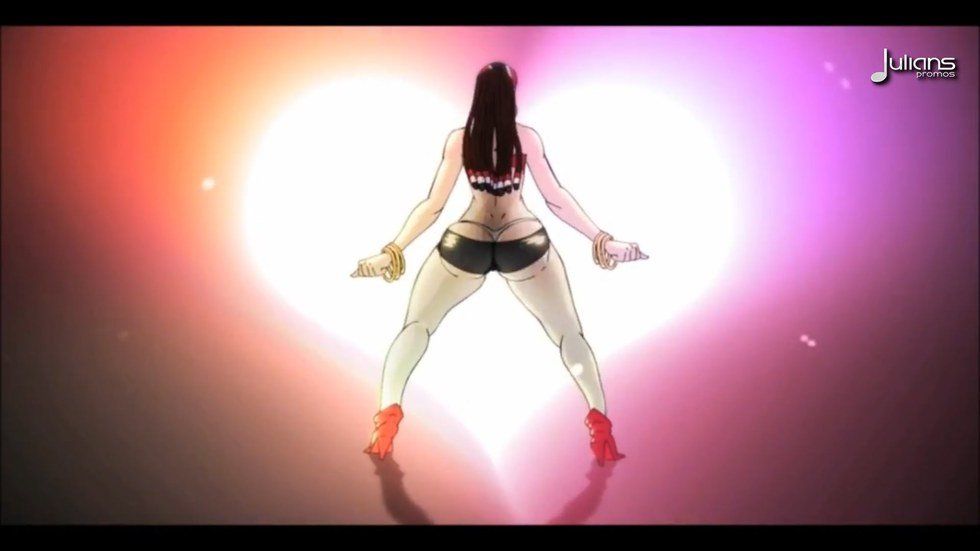
The latter appropriating group endorses the appropriation as they serve as the appropriating consumer. A typical appropriating audience member finds that they can not relate to Caribbean music (which they typically define as dancehall). They also find it a bit more on the loose side due to the popularity of dancehall videos showcasing one side of dancehall that incorporates more unconventional movements. Yet, when mainstream artists sample the same music and carry out the same concepts, the appropriating audience member praises the artist for their innovation and creativity.
What makes this appropriation act even more offensive is the fact that Hip-Hop lovers are too often the appropriators and fail to understand their relation to Jamaican music as it serves as the predecessor of Hip-Hop. The Father of Hip Hop, DJ Kool Herc, was born in Jamaica and took music stylings from his home country and used it in America. With these techniques, he then influenced the formulation of Hip-Hop as a genre, therefore making Jamaican music the father of Hip-Hop. Years later, Hip-Hop artists continue to take from Jamaican influences, while unaware listeners continue to praise the sampler and not the originator.
In the Caribbean, we are well aware of our musical predecessors and the people we sample. If a Caribbean artist samples an American artist, the sampler usually doesn’t distort the beat, but rather the lyrical content. Thus, audience members are able to identify the original song.
We respect the artistry and I am asking that the same respect is given back to Caribbean music. Understand that these islands and their people have worked to create the sounds that resonate through the Caribbean. So, do not belittle these genres by associating an entire region to one genre. Do not distance yourself from a music style that is foreign, but instead, learn how multiple music genres are intertwined. Pay more attention to the mass sampling of another culture and pay respects to the originators.