Jokia stands in the protection of the tree’s shade, shielded from those who have hurt her. At fifty-four years old, you can see the scars that mark her skin, indication of the hardships she has faced. The wrinkles from her eyes are prominent against her greying skin and if you look close enough, you can almost see the sadness in her eyes, as if she remembers her past. Belonging to the family of largest land creatures on the planet, it’s hard to believe that so many emotions can be conveyed from her eyes. Jokia is an Asian Elephant in the Elephant Nature Park located in the Chiang Mai province of Thailand.
She was two months pregnant when she was forced to haul heavy materials up a mountain. When she suddenly had a miscarriage due to strenuous activity, she became so distraught and depressed that she refused to work. Her owners went to great lengths to make her work, but she simply would not move, too consumed with the desolation of losing her baby. When the mahout, or trainer, suddenly used his axe to hit her eye, she was stunned. When he hit her other eye, she had no other choice but to continue the treacherous journey, saddened by loss and blinded by those who caused that loss.
I stare at her today, close enough to touch, at the park where she was rescued after twelve years of being abused and over-worked.
In Thailand, elephants were often used in the logging industry to pull logs up mountains or across great distances for profit. However, in 1989, the Thai government banned logging as an attempt to conserve their diminishing rain forests. Although this step was a fortunate one for Thailand’s environment, it unfortunately left thousands of elephants unemployed and on their own. Families and workers who owned them could no longer afford to keep them, so many either sold them or left them on their own.
They have nowhere to go. With humans encroaching on their land, they have very little space to graze and can often been seen on the sides of streets. They barely have room to share the winding, narrow roads with trucks and cars as they roam to find a place to simply eat. Even more unfortunate, many get trapped into working for cruel mahouts.
At the beginning of the century, there were over 100,000 elephants in Thailand alone, now there are merely 3,000 alive in the country and only 30,000 worldwide.
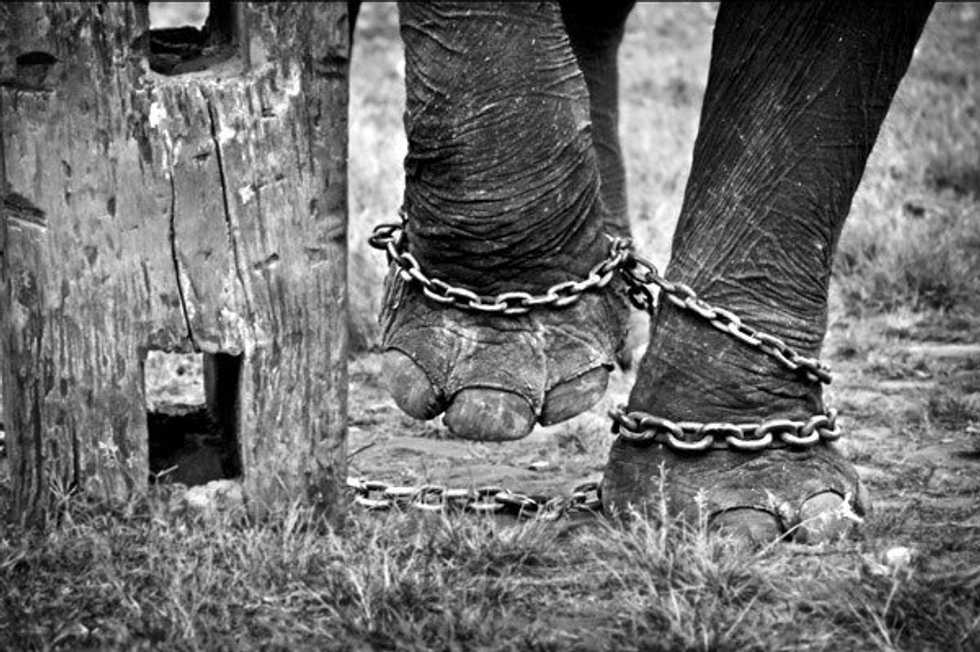
Jokia’s story, unfortunately, is only one of the many tragedies of elephants all over Thailand. Even driving to the rescue park, I passed so many tourist camps where people could ride on the elephants’ backs for a small sum of money. We would ride in our bus down the road to where we were about to see the rescued elephants who were abused for most of their lives, and right in front of us are elephants being abused only a few miles away from the camp. Tourists smile and pose for their selfie sticks as they ride on top of an elephant, blissfully unaware of the animal tired and chained underneath them.
Fortunately, others have recognized this indecency as well. Although the Elephant Nature Park does not have enough funds to save every elephant, the few they do save are shown compassion and kindness. Here, travelers can feed and bathe the elephants while touring the reservation.
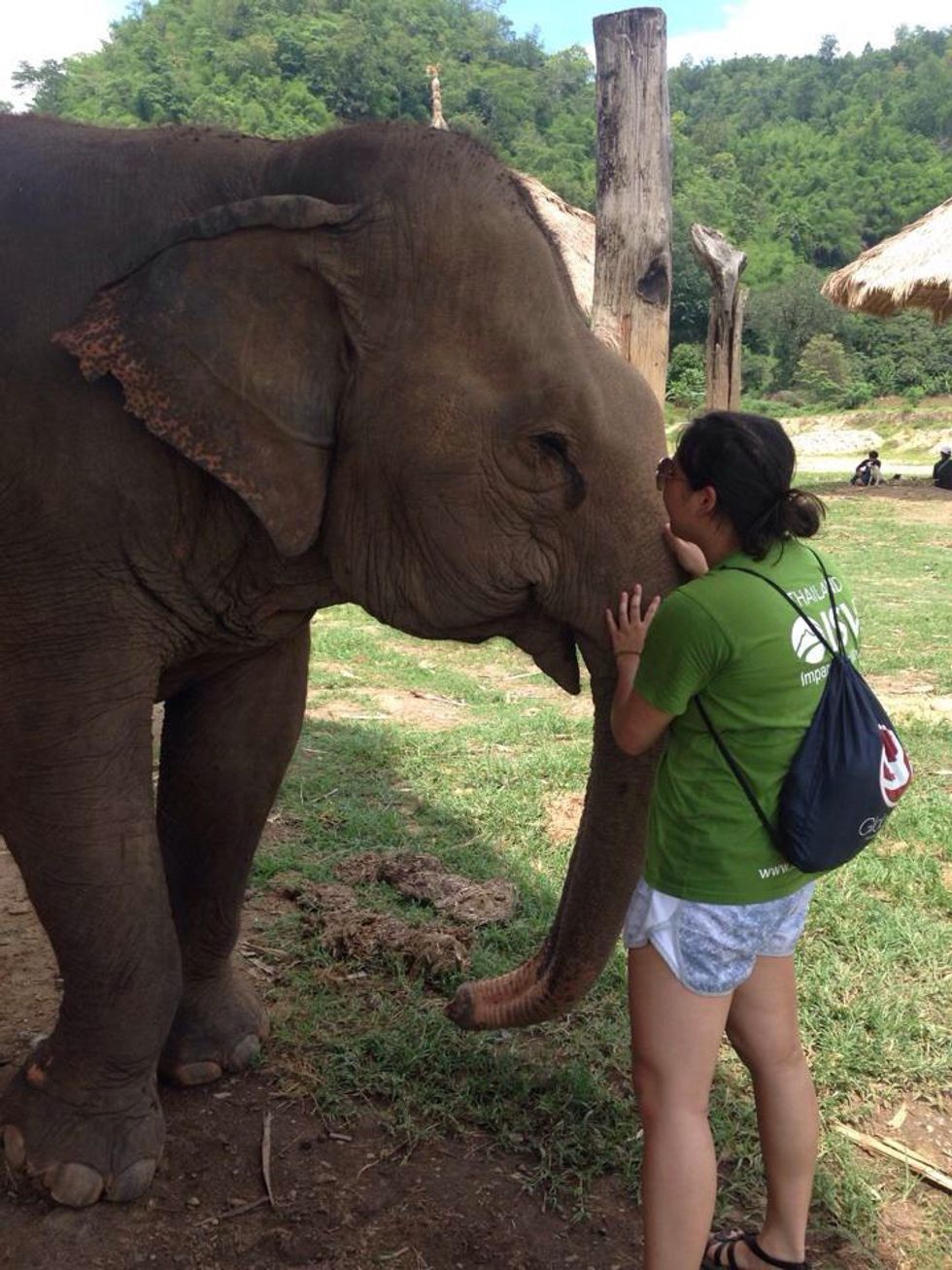
Jokia now has a friend in the park in the 70-year-old elephant, Mae Perm. She leads Jokia around the camp and protects her from strangers like us until we earn her trust. She leads her blind friend from the water hole to the shade, leading Jokia away from the past of hard labor and abuse, into the future filled with safety and friendship.
For more information or to find out how to help them, visit http://www.elephantnaturepark.org