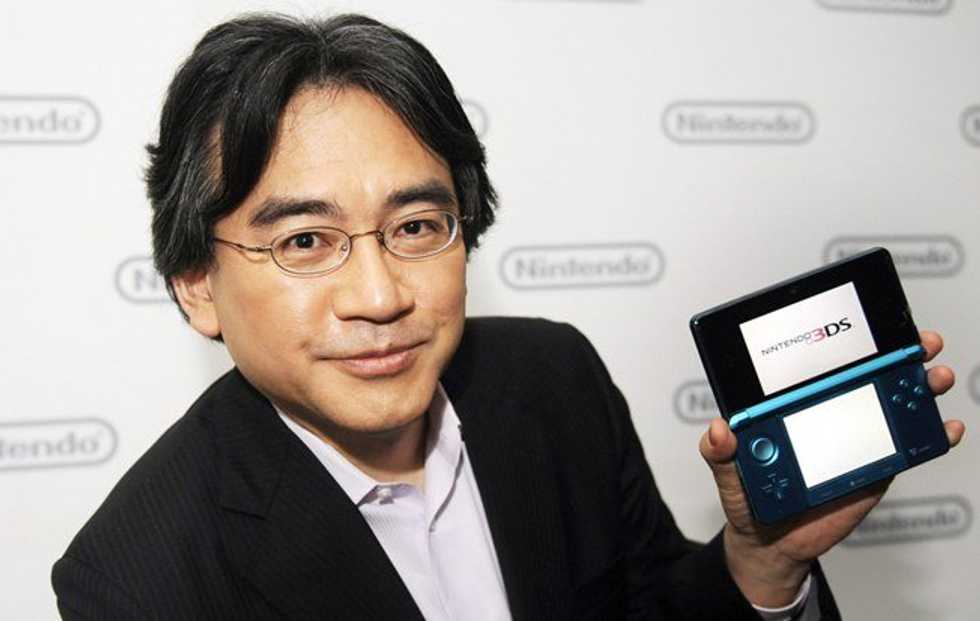
In the year 2000, a man joined one of the major three video game companies. He would start off as a director but then make his way through the ranks before becoming the video game publisher’s president in a mere two years. In 2013, he would become the CEO of Nintendo America. That man was Satoru Iwata. Iwata had many things still planned for the upcoming years for the Wii U and a still unveiled new console, but he sadly passed away on July 11, 2015, at age 55, due to a bile duct growth.
Iwata helped Nintendo fight against other major publishers Microsoft and Sony in the console wars, pitting the Nintendo Gamecube against the heavy machinery known as the PlayStation 2 and Xbox. He helped Nintendo appeal to the core of what video games were for: entertainment for the whole family. In this process, he helped with the development and release of the Wii as it went up against Microsoft’s Xbox 360 and Sony’s PlayStation 3. Iwata helped Nintendo dominate the handheld market with the conception of the touchscreen handheld known as the Nintendo DS (dual screen) and helped keep sales and interests in the video game handheld department alive. He also helped with the evolution of the DS as it turned into the 3DS, a handheld that could deliver 3D images without the aid of glasses. Iwata did all this and more, always keeping his eyes on the true reasons for the video game industry, which is the unification and bonding experience that video games can have on a household.
Iwata made major differences within the company in his 15 years spent there. He first worked for HAL Laboratory, a company closely associated with Nintendo, and became president there before transferring to the parent company. He would innovate and take bold new steps with the company’s ideas, knowing full well that they could not compete against the tougher software and be able to outspend them. He instead focused on new ideas and went where many game developers fear to go, by expanding not to just one demographic as everyone believed that video games should be at the time. Nintendo focused on everyone instead of just the teenage to mid-adult demographic.
Iwata knew that fighting against the bigger companies would be tough, but he stuck through it all and focused on defining what a gamer truly is. With the DS came the arrival of the Brain Age games, a game where one could do daily teasers to keep their mind focused and quick witted (I had several games of the series as well) and the Nintendogs franchise, a game in which one could have a virtual pet of their choosing. These kind of games easily brought in people who previously saw video games just as a distraction for teenagers and adolescents and made them reconsider and try video games out for themselves. The Wii had quirks like motion controls that people were afraid would not pass, but Nintendo pulled it off. With the free game known as Wii Sports, the family could get together and play sports such as baseball, golf and even bowling with the flick of the wrist and a little movement. This ability to appeal to everyone instead of a certain demographic guaranteed Nintendo’s spot in a large percentage of people’s homes as it sold 101 million units worldwide.
Many people in the gaming industry will never forget all of the hard work Iwata did to preserve the Nintendo name in people’s homes. He will be forever remembered for his ingenuity, his friendly demeanor during his interviews and his calm understanding of what it truly means to be a gamer. One of his great quotes can sum up his mission to make video games a bonding experience as he stated at the Game Developers Conference in 2005, “On my business card, I am a corporate president. In my mind, I am a game developer. But in my heart, I am a gamer.”