
If you’re anything like me, you’re glued to your phone. And I mean Gorilla glued to your phone. Every three seconds, your eyes unknowingly shift to that mocking screen. The phantom buzzing keeps you awake at night. You check Facebook, then Instagram, then Facebook again, and then your texts. If you could, your Facebook relationship status would read: “In a relationship with iPhone 6.”
While this disturbingly true discourse about the role of technology in our lives remains under constant ridicule and criticism, nobody seems to do anything about it. That's why I don’t want to have another conversation about the addiction that we all know is too real when it comes to checking our text messages. I know that I can’t stop any time that I want to and that my reliance on my phone, like it is for so many others, is alarming. And although I usually defend the pro argument when it comes to cell phone use, there is one negative phenomenon that is as irritating as it is damaging: ghosting.
For those of you fortunate enough to not know what ghosting is, it is the process by which a person distances themselves from somebody, usually a potential bae, through lack of communication. The person doing the ghosting will stop responding to your text messages, avoid your calls, and in some extreme cases, will even block you from all of their social media. All in an attempt to ditch you. Because somehow, this seems like a much more conducive way to tell someone you’re not interested.
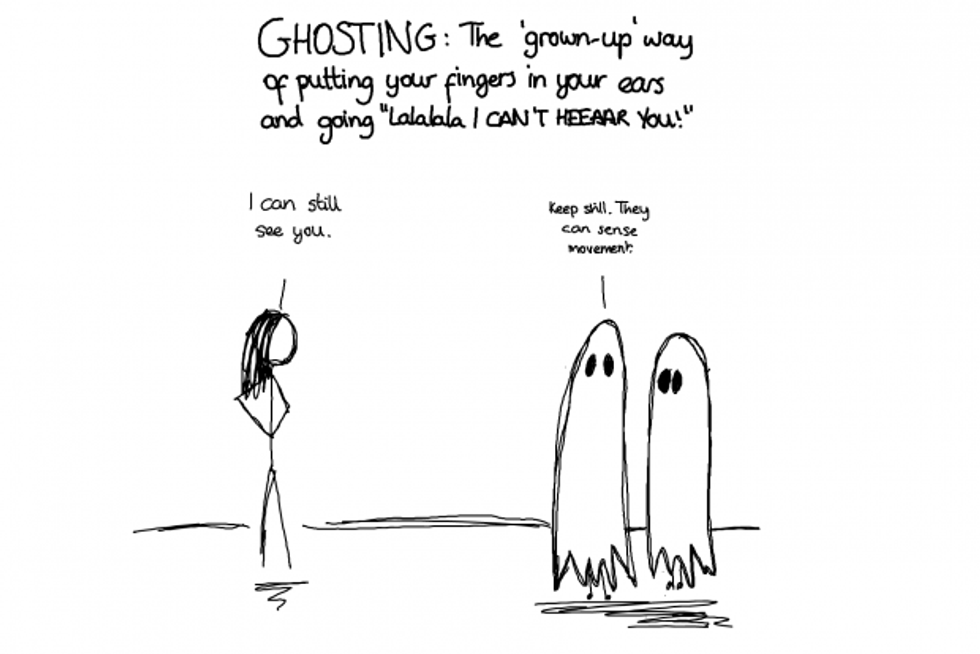
The most annoying part of ghosting is it usually comes with no warning signs at all. Sure, sometimes it’s pretty evident that the girl you went on a date with last week does not want to pursue things any further if you didn’t really have that great of a time or she never tried to text you after. But majority of the time, ghosting occurs the same way Oski shows up on campus: unappreciated and completely out of nowhere. You and boo-thang were probably texting everyday, the sun was shining and the birds were chirping and you’re pretty sure you walked out of your apartment and into a Disney fairytale. He laughed at your awful jokes and seemed like he was interested in what you did. She eluded that she wanted to hang out again and complimented the shirt you wore the other night at dinner because she’s just that good at remembering details. Then suddenly, when you think you’ve really hit it off, they stop responding. In an attempt to confirm the inevitable ghosting, you probably ask 30 friends what the appropriate amount of time is to wait until you text him again. You do, but still no response. Oh my god, he unmatched you on Tinder and he’s no longer your BFF on Snapchat.
Or worst of all, you go on a few dates and everything is coming up roses until you finally do it. I mean, you make Kelso from That 70’s Show proud because you did it. “Text me,” he says. “Let’s do it again sometime,” she whispers as she tiptoes out. But you never hear from them again, no matter how many texts you send.
The other day I was watching Seinfeld and I wondered if ghosting was as prevalent then when only landlines existed as it is now. I assume it was probably worse with only one mode of communication, but I also think that ghosting has become less of a mechanism for escape and more of a commentary on the worthless value we place on communication. In the 90s, if someone didn’t call you back then your imagination created a scenario that allowed you to rationalize why they never called. And the beauty is, you could believe it.
Today with the popularity of Instagram, Facebook, Twitter, Tinder, OkCupid, read receipts—to merely hit the tip of the iceberg—we can’t create narratives on why people don’t respond to our messages. With one click, swipe, or tap you know where they were, who they were with, and what they were doing. They didn’t respond to your text because they were at a frat party or selling donuts on Sproul. Sure, okay, that’s good enough we tell ourselves. But in reality, everybody is as glued to their phone as you are or I am.
Which is what makes ghosting so damaging. Yes, it is annoying when someone doesn’t respond, and it can be quite disappointing if you really thought you shared a connection with them. But more than that, ghosting harbors a culture of self-consciousness and self-doubt. The publicization of our every move and the reliance on cell phones makes communicating with people more accessible than ever before. Phones stay in our hands or in our pants pocket every single waking moment of the day. We check into Facebook and we tweet about the guy who fell asleep next to us in class. Yet, somehow in the midst of this social media frenzy, we somehow “forget” to text people back. Why is that?
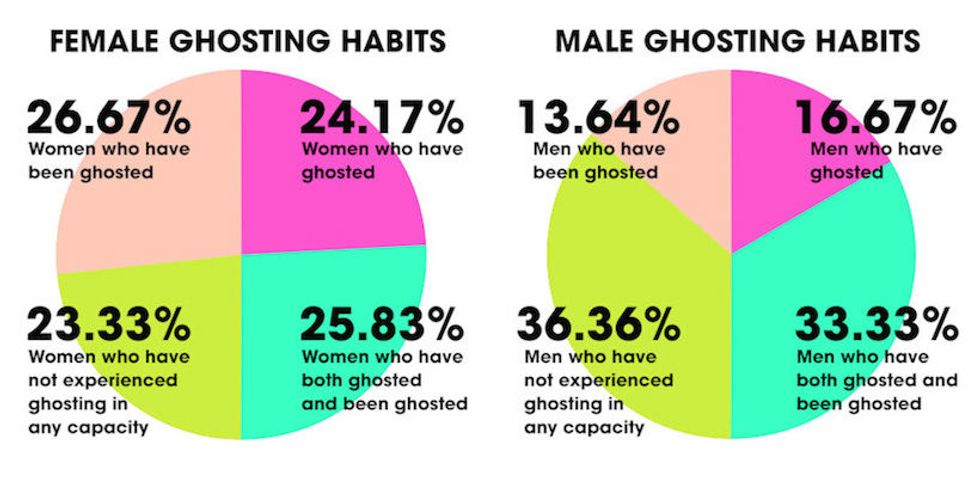
I don’t really think that there’s a clear answer as to why people love ghosting. One speculation brings me back to my childhood when I watched Bambi and Thumper explains that his dad always taught him: “If you don’t have anything nice to say, don’t say anything at all.” And maybe that’s why ghosters ghost, because it’s easier to say nothing than it is to blatantly let someone down. Or maybe it all returns to the security of a screen—hiding behind a cell phone is much easier than communicating in person.
Personally, I can’t attest to the whys of ghosting because I don’t do it often, unless it’s for a safety reason (people on Tinder can be creepy). What I can explain, however, is the detrimental effects ghosting has on us. I’ve been ghosted plenty of times by men I dated or men I slept with. It doesn’t matter which type of relationship it was, every time you get ghosted the initial reaction is “what’s wrong with me?” Ghosting fosters these completely false notions in our mind that somehow there’s something inherently “wrong” with us or our appearance. Unfortunately, ghosting leads us to believe that we’re somehow not good enough, not pretty enough, not skinny enough, or not [insert newest bullshit societal expectation here]. When people don’t respond, we automatically place the blame on ourselves. We analyze every word we’ve ever exchanged and we apologize for what—for wanting the most simplest form of human interaction: communication?
When we’re ghosted, we never stop to think that it’s the ghoster’s fault. They’re the ones who fall victim to our incessant texts. And in fostering this self-consciousness, they also foster humiliation. The amount of times I’ve texted a boy in hopes of a response that I never received is humiliating. It’s embarrassing to keep pursuing something that your mind knows will never happen but your heart keeps grasping for. And ghosters feed into this cycle. Instead of ignoring someone and allowing them to make fool out of themselves, just clearly state you’re not interested. Let the person move on, don’t keep them guessing about if you didn’t like their body or if you thought their sense of humor was too dry.
Because even though it shouldn’t matter, we remember what people say (or don’t say, in the case of ghosting) about us. When we start texting a new boy or dating a new girl, the insecurities that we relished from our previous ghosting experience resurface. We remain hyper aware of our flaws because we diagnose them as the cause to our failing relationships when we’re ghosted.
In reality, ghosting isn’t about the person being ghosted. It speaks more about the person doing the ghosting. Sure, we’ve probably all ghosted at some point in our lives, but it’s time to be more cognizant of the effects that this emotionally manipulative form of communication has on others. Ghosting does not occur because we don’t like the way someone looks or acts; it occurs because we don’t place enough worth on somebody’s time and words. So the next time you’re ghosted, don’t immediately believe there’s something wrong with you (trust me, you’re perfect), rather believe that there’s something wrong with the way we communicate.