

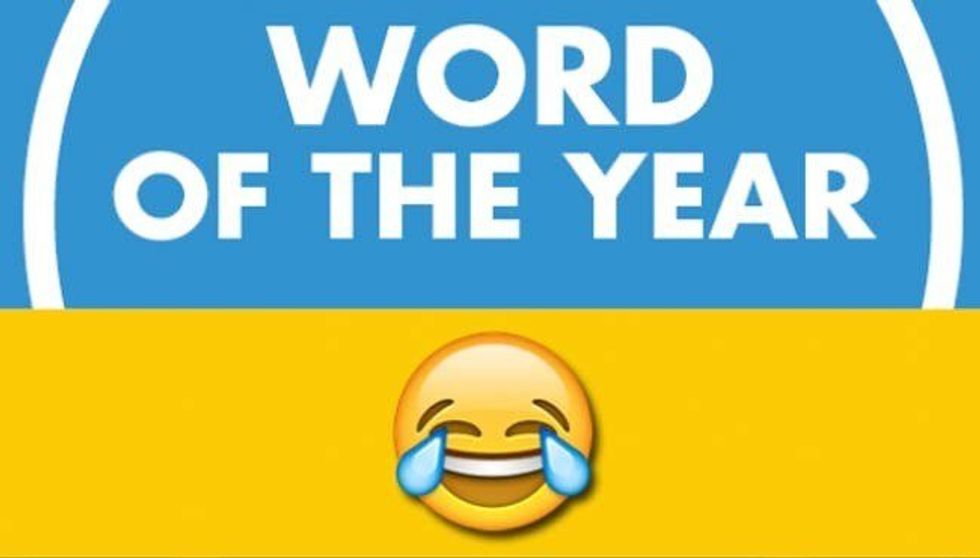
This November, Oxford Dictionary announced the “tears of joy” emoji ( 😂 ), the most widely used emoji in the past year, as the 2015 Word of the Year. Other contenders included “ad blocker,” “Brexit,” “Dark Web,” "lumbersexual,” “on fleek,” “refugee,” “sharing economy” and “they (singular)”, but Oxford felt the emoji was most reflective of our cultural climate. As expected, the choice is not a popular one.
Yet while language purists rage over the decision, Oxford’s WOTY actually highlights a crucial characteristic of language that we tend to ignore—that is, the fluidity of language. Language is not stagnant. It’s constantly evolving to stay relevant, as are our means of communicating. The emoji’s unconventionality doesn’t discount its legitimacy and use.
Casper Grathwohl, President of Oxford Dictionaries, explained the choice, saying, “[Emojis] can serve as insightful windows through which to view our cultural preoccupations.” The Word of the Year must capture the ethos, mood, or preoccupations of that particular year—and according to Oxford, the tears of joy emoji more than fulfills this requirement.
The term emoji is Japanese, derived from the Japanese words e (picture) and moji (letter, character). The English word emoticon, however, stems from the English words of emotion and icon. The emoji’s brevity and personality are especially popular as texting as a means of communication thrives. The focus on emotion also reflects the emoji’s clear dependence on emotional connotations. So while the emoji exists as a form of communication outside of the alphabet, it’s layered, infusing multiplicity of meaning in an image. A picture’s worth a thousand words, right?
And so while the emoji is unconventional, it exists as a nuanced form of expression. It’s another way of communicating. Best of all, the emoji isn’t bound by language, which is especially helpful as the internet connects us beyond geographic borders. The emoji, born in the digital age, is intended to stay digital. It highlights social media’s important role in our lives and the relationships built through those channels.
The Oxford Dictionaries routinely focuses on current English and includes modern meanings and uses of words—although specific emojis have not been added to the dictionary. Even if the choice was a publicity stunt, it brings to light Descriptivist ideas of egalitarian language as it unpacks the idea of a “word.”

















