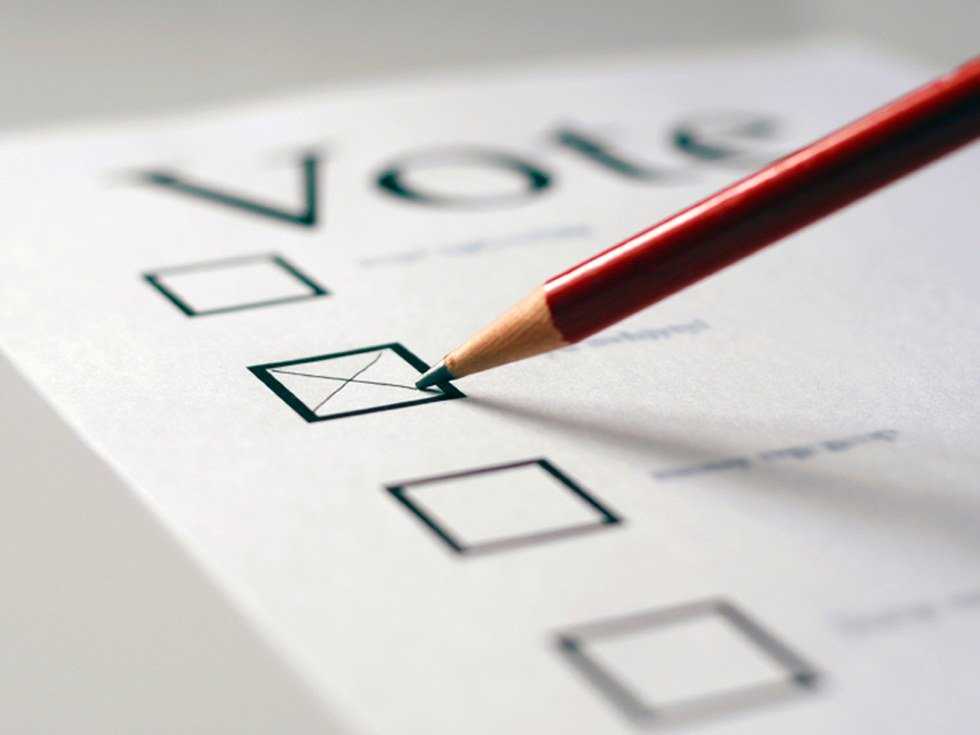
All forms of democracy depend on the right to vote. Whether it is a direct democracy where citizens vote directly on the issues or a representative democracy where citizens vote for their leaders, the idea of acting on choice is the foundation of the institution. Voting in the United States is fairly simple. We choose one candidate per position, and we are finished. However, there are other systems of voting that make the process far more interesting.
Why does America have two major political parties? For much of its history, there have been just two prominent political coalitions. There is a concept in political science known as Duverger’s law that predicts the presence of two-party or multiparty political systems based on the style of election. In the United States, we cast a vote for a single candidate, which usually causes people to divide into one of two camps. This style of election results in voting for the “lesser of two evils” because people are generally afraid to cast a vote to a minor candidate for fears of spoiling the election.
A country like Germany features a proportional representation system where people vote for a political party instead of a particular candidate. If the party received 20% of the vote, the party will obtain 20% of the seats in the legislative body, giving them some government influence. If a minor party candidate received 20% of support in the United States, it would be highly unlikely for that candidate to have much of an influence afterward. This voting system also avoids the controversial gerrymandering practice that artificially increases a party’s power by drawing the districts in a clever way.
However, this type of voting is not very personal. Some people may prefer to vote for a candidate instead of a party to represent them in the legislature. In the 2016 election, many states and counties had ballot initiatives, which are essentially proposed bills that become law if a majority of voters agree to it. Maine proposed a ballot initiative to establish a voting system known as ranked-choice, and it passed with 52% of the vote.
Instead of voting for a single candidate, voters are now able to rank their choices per position. The goal of this system is to allow voters to choose a candidate without worrying about “spoiling” their vote. Suppose three candidates are running for the position of governor. Say you agree with the green party’s candidate the most, but you fear that the red party’s candidate will win unless you vote for the blue party’s candidate. You would rank the green party candidate 1, blue party candidate 2, and the red party candidate 3. In the first round of voting, if any candidate receives a >50% majority of the vote, the election ends and that candidate wins.
If no one wins after round one, the candidate with the least amount of votes is eliminated. If the green party candidate were eliminated, your vote would essentially get switched to the blue party candidate. In a three-person race, the election is guaranteed to end on round two. In a four-person race, the election is guaranteed to end on round three and so on.
Maine will use this system when voting for their representatives in Congress. This of course does require a greater understanding of the candidates compared to the traditional style of picking your favorite. We will know how well ranked choice works in Maine with time. Hopefully this experiment in Maine’s “laboratory of democracy” serves as a model for other states to follow.