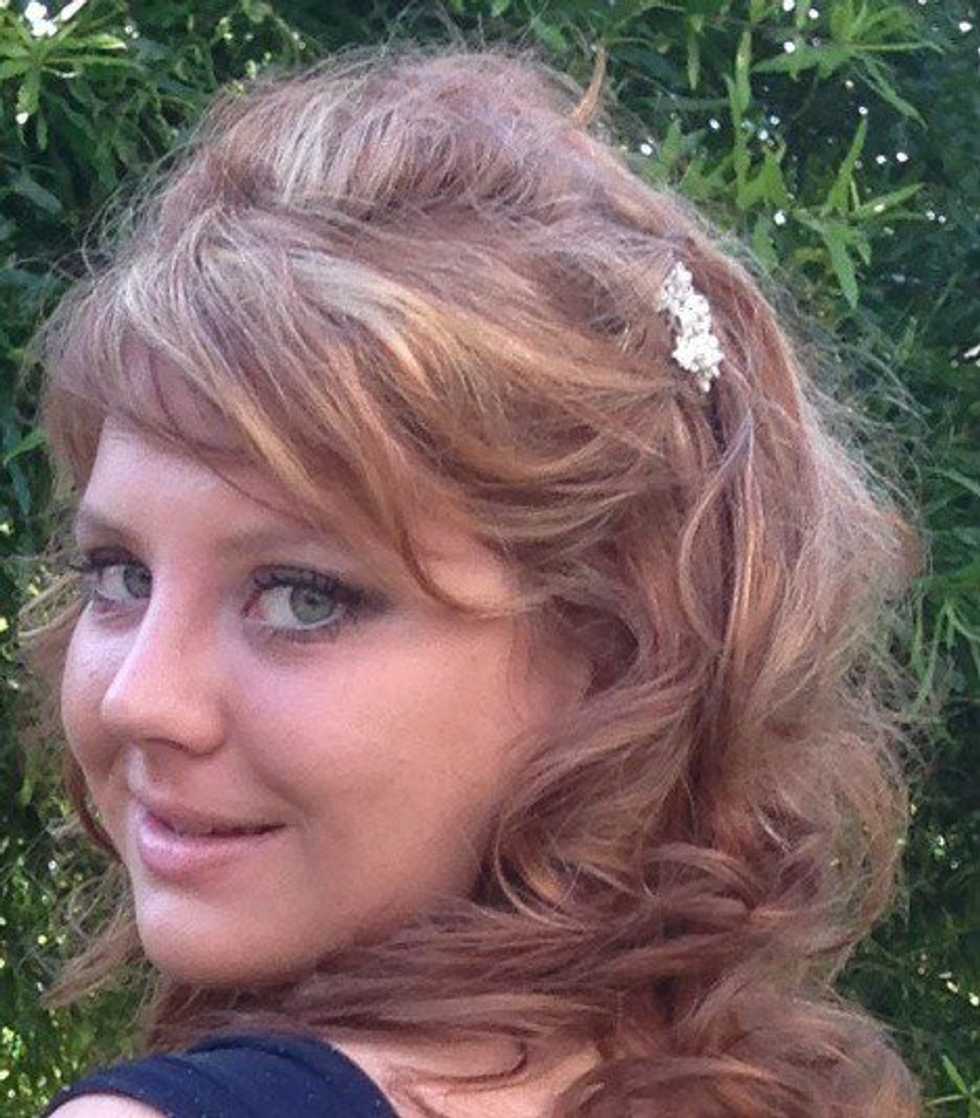
Being hard of hearing has changed me a lot. Not only has my disability taught me how to deal with people, I learned a lot about myself. I understood things that I was never able to before. I didn't get hearing aids until my senior year of high school. Whenever I complained about my hearing, my parents said that I should listen more, or that I should stop being passive-aggressive. I was taken to the ear doctor when I was little, and my parents were told that, "I could hear grass grow." And yet, I lost twenty-five percent of my hearing in one ear and thirty percent in the other from ear infections, scarring of tubes, and MRSA.
Of course, I blamed my parents at the beginning, but I do not now. I love them too much, and I understand where they were coming from. I also have a speech impediment; I can't pronounce some letters correctly. I was always self-conscious about it, and I still am. People still mock me about it today. I'm absolutely terrified about talking to people I don't know, or giving presentations. I do not want to hear people laughing to my face, or asking what country I am from. But, that's OK. It's a part of me.
When I got my hearing aids, I was awed. I could hear a man across the room turn the pages of his book. The sound of rain was accentuated. I could actually hear the teachers from the back of the room. However, the noise of yelling and laughing students overwhelmed me. I adapted over time, though. Just as all the other children with disabilities do. My relief came when I realized that I was not stupid or mentally challenged; I am simply hard of hearing.
A girl that I went to high school with helped me a little with the adaptation process. I remember crying on her shoulder, and her comforting me. I was so upset that I wouldn't be able to hear my grandchildren laugh when I get old. She made me realize that not everybody would accept my disability and the difficulties that come with hearing loss. During my first semester of college, she got mad at me due to my disability. She claimed that my disability didn't stop me from walking to class, or from living life as any other normal person. She did not understand that my hardships were of a different kind. She did not understand why I got "special treatment." Do you think I want this special treatment? Do you think I enjoy hearing ungrateful people laugh at my face because I cannot speak properly? No, nobody with a disability does. But, we learn to cope with our differences.
I told her once that I was going to apply for a handicap license plate. She was furious. She told me that my hearing had nothing to do with driving. Well, it does. I can't hear noises behind me. I cannot hear the siren of policemen or ambulances. I cannot hear people behind me screaming my name if I walk across a street, and a car happens to speed around the corner. I do not have the same privileges as you. Nor do I want them. Hard of hearing has its advantages, and I plan to use them all.
Those with disabilities, physical or mental or emotional, have faced discrimination. And that will always be the case. When you hear a person stutter, do not laugh or mock that person. Just smile and tell that person that everything is OK, and not to rush when speaking. When you see a deaf person, do not scream into their ears or makeup sign language as a joke. All you have to do is speak slower, and maybe write down what you have to say.
Do not pretend to have a disability to get more advantages. You already have an advantage over us that we will never have. When you see any person with any disability, just be understanding and kind. That is all we want. We want to be accepted and seen as some degree of normal. We remember how you act with us, and we remember how you make us feel. The only difference between us and those with no disabilities is that we have more obstacles to overcome, but we will overcome them -- with or without your support. We have each other. Sometimes, that is all we need.