

Some fans of the Disney film Frozen and the Captain America film series started the hashtags #GiveElsaAGirlfriend and #GiveCaptainAmericaABoyfriend, with the intent of grabbing the attention of the makers of those films, and persuading them to give same-sex lovers to the characters Captain America and Elsa in upcoming films featuring them. The reasons vary: some believe that same-sex relationships would be appropriate for those characters, while others are motivated by the need for greater representation of LGBTQ folks in the entertainment industry.
These hashtags have predictably provoked ire and backlash among conservatives, particularly the religious right. The right-wing website ActRight even circulated a petition against giving Elsa a girlfriend, with this justification: "Forcing political correctness into children's movies is a sure way to ruin them. Please join us in telling Disney we don't want our children's stories promoting homosexuality."
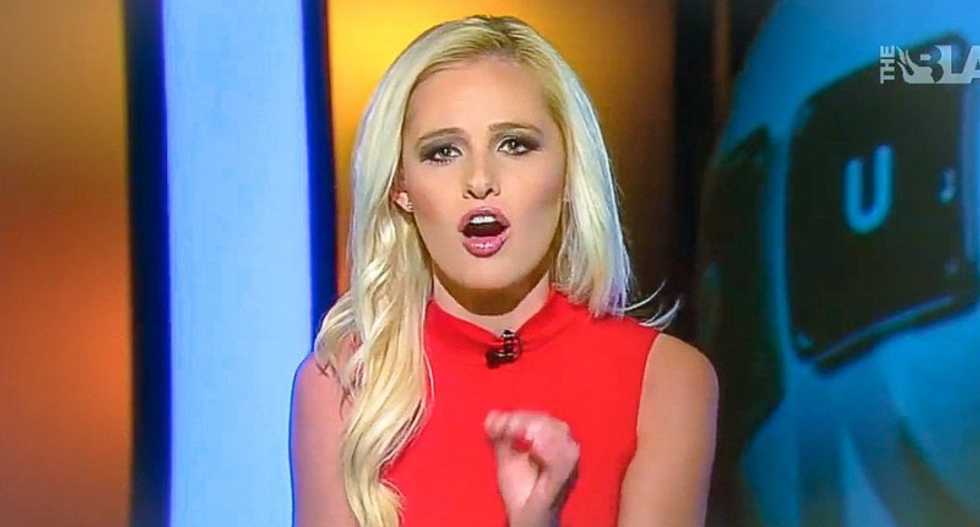
Among the detractors is Tomi Lahren, a political commentator for TheBlaze, who voiced her disdain for the hashtags on her online series Tomi. Here are some excerpts from her commentary:
"Truth is, most of us, even conservatives, don't care if you're gay. Seriously, we don't. We just get tired of having this stuff paraded in our faces constantly. And when it makes us uncomfortable, you call us bigots."
"No, we just don't need to be reminded on every single sitcom, movie, and song. We get it: you're gay."
"The Gay Alliance Against Defamation, or GLAAD, is also pissed at Disney for their abysmal lack of queer characters. Yeah, they want to give Frozen's Elsa a girlfriend, too. Where does this end?"
"It seems like heterosexual relationships are becoming too square, too traditional, and too boring for the mainstream."
It was excruciating trying to sit through the entire segment and maintain my composure, as often is the case with Tomi Lahren. So, let me see if I can provide Tomi with a bit of perspective:
Personally, I don't care whether Captain America gets a boyfriend, because I probably won't be seeing his new movie one way or the other--superhero movies generally don't interest me. As for Elsa, my only opinion on that is that if she doesn't have a girlfriend, she should remain single, because either would make an empowering Disney heroine. I'll probably see Frozen 2; I don't have much faith in sequels, but sometimes they surprise you. But again, I don't particularly care, one way or the other, whether Elsa gets a girlfriend.
Concerning the priorities of the LGBTQ community, representation in entertainment media, while important, is probably lower on the totem pole than, say, teen suicide. If Captain America and Elsa don't enter gay relationships, the LGBTQ community likely wouldn't boycott or get all up in arms about it. And everyone understands that the primary purpose of these films is entertainment, nor would anyone want fiction films, particularly those of the superhero/fantasy genres, to serve as stand-ins for educating the public on LGBTQ issues.
Be that as it may, while most of us develop a skill for discernment when consuming media as we age, by the time we do, we've ingrained many of the subtle norms and messages that are widely present in entertainment media, whether we know it or not. Moreover, even with the awareness that it's "just entertainment," we look to fiction to find characters that we can relate to, or other ways that a creative work reflects our lives and realities.
So, though I might be generally apathetic toward the sexual orientation of a Stars-and-Stripes-clad superhero and a queen with ice powers, a gay teenager may feel differently about it. If they are grappling with their sexuality, wondering whether there is something wrong with them, or whether it's "normal," seeing these prominent characters in same-sex relationships, in films heavily promoted by major movie studios and flocked to by the masses, might grant them some comfort that there are others who are attracted to those of the same sex, and reassurance that men pursuing relationships with men, and women likewise, is not wrong or immoral.
One might be thinking, "It's just a movie, what's the big deal?" But don't underestimate the power of creative works; for example, the music of Owl City once persuaded a suicidal fan out of taking her own life. There's nothing wrong with people resonating with a work of fiction, or a creative work, as long as they are able to discern fact from fiction. But that's a debate for another time.
Tomi Lahren complains about homosexuality being "shoved down our throats," "ramrodded down our throats," and "paraded in our faces constantly," apparently thinking she needed to redundantly rephrase the same message three times to effectively communicate her point. Well, point taken. I have two responses to that.
My initial response is to roll my eyes and think, "Quit being dramatic." I hardly think anything is being shoved down anyone's throat. We're talking about a Twitter hashtag that has zero effect on Tomi's everyday life, and has nothing to do with her whatsoever. She could very easily turn off social media if it bothers her that much. In addition, LGBTQ characters are not as mainstream as Tomi makes them out to be. Though there have been many gay characters over the years, and a growing number of bisexual and trans characters, as well as general acceptance of this population by many in the entertainment industry, it is still very heteronormative. Representation is still lacking, and the LGBTQ characters that do exist often fit certain stereotypes.
Tomi Lahren tries hard to persuade the viewer that she doesn't care, yet she cared enough to devote an entire segment to venting her disdain, so I'm not convinced. Even more infuriating is that within her commentary are some very questionable priorities which reflect an astounding sense of entitlement. The LGBTQ community grapples with discrimination in housing and employment, poverty, suicide, and all manner of other crap, and Tomi Lahren makes more of a fuss out of a trending hashtag that offends her.
Within her commentary is also a subtle need to reinforce that heteronormativity, though she would likely not admit it. She is asking same-sex couples to hide their relationship from her for her own comfort. She is asking them to refrain from doing things that opposite-sex couples do all the time, things that she would never ask opposite-sex couples not to do. Heterosexual relationships are everywhere in entertainment media, but provoke no such ire from Tomi.
At one point, Tomi Lahren literally asks, "Where does this end?" with an amusing sense of dread in her voice, as if she's talking about a sign of the end times. I'll tell you where it ends, Tomi: it ends when same-sex couples are no longer asked to hide for the sake of straight people's comfort. It ends when gay teenagers no longer question whether their sexuality is wrong or abnormal, and feel free to pursue same-sex relationships.
And it ends when reactions like yours cease to exist, because same-sex relationships aren't a big deal, just like opposite-sex relationships. It ends when straight people stop being offended by same-sex relationships, because they don't affect them.
















