
March 12th 2016. Thousands of people are out on the streets honking their horns and proudly waving their flags. The joy radiates off the children’s faces as the air show makes its way over their homes. There is not a single frown on the faces of those in the crowds. It is a happy day—the beginning of an era and the birth of a new state: Israel.
On March 12th 2016, thousands of people came together to celebrate 68 years of Israeli independence. To the Israelis, March 12th marks the creation of the state of Israel. It is a day of happiness and celebration. However, the creation of the state of Israel came with a price. On the other side of the wall, there is no happiness, only sorrow. Palestinians mourned the loss of their homes, their families, and their beloved land. To the Palestinians, this is a day of grief—for the birth of Israel marked the death of Palestine.
At the turn of the 20th Century, a new Jewish nationalist ideology called Zionism was developing. Zionism called for the creation of a Jewish homeland in Palestine. During this time, many Jewish Europeans immigrated to Palestine, causing the Jewish population to grow from a tiny minority to 35% of the population. In 1947, the United Nations partitioned Historic Palestine, giving 55% to the Jewish population and 45% to the Palestinian population-- at the time of partition, the Jewish population owned less than 6% of Palestine.
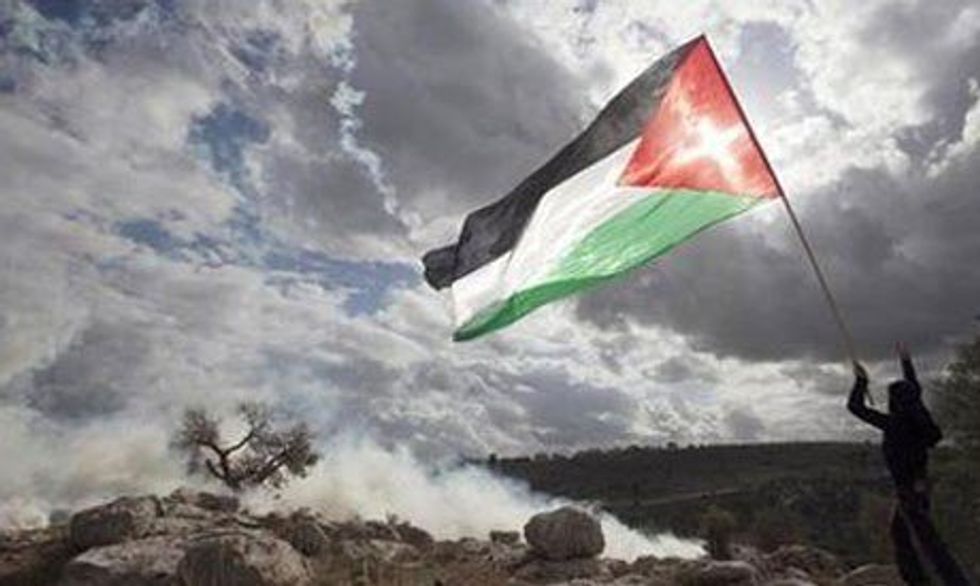
To Palestinians, the Israeli independence day is known as “Nakba Day,” meaning Day of Catastrophe. During the 1948 Palestine war, an estimated 700,000 Palestinians fled or were expelled, and hundreds of Palestinian towns and villages were depopulated and destroyed.
While both sides endured tremendous loss, the number of Muslim and Christians Palestinians killed greatly outnumbers the amount of Jews killed. After Israel declared its independence, about 80% of the Palestinians fled their homes and were forcibly displaced in the West Bank and Gaza-- a fraction of what Palestine once was-- or became refugees in surrounding countries such as Lebanon, Syria, and Jordan.The other 20% remained in occupied Palestine under military rule, with no rights, until 1967—nearly 20 years later—when they were finally given Israeli citizenships. However, even this citizenship came with a loss of their rights and extreme segregation as second-class citizens. That same year, during the Six-Day War, Israel took over the West Bank and Gaza from Jordan and Egypt, which is where most of the Palestinians had fled to in 1948. Today, these Palestinians are living under Israeli military rule, with little to no rights. Israel controls everything from electricity and water usage to general elections and national revenue.
The Palestinians are living in an oppressive nation. While in some parts Israel has allowed a Palestinian “autonomous” entity to take on such municipal functions such as education, healthcare, infrastructure and policing, Israel maintains overall power.They have no nation, no citizenship, and no ultimate control over their own lives. So while the free Israeli citizens were celebrating the greatest day for their state, just over the wall was a mother remembering in grievance the death of her son, an old man heartbroken over the destruction of his family’s 800 year old olive tree, and a nation crying for the return of its people. This is what the millions of people were joyously commemorating on March 12th, 2016. This is the Israeli day of “Independence”.

















