

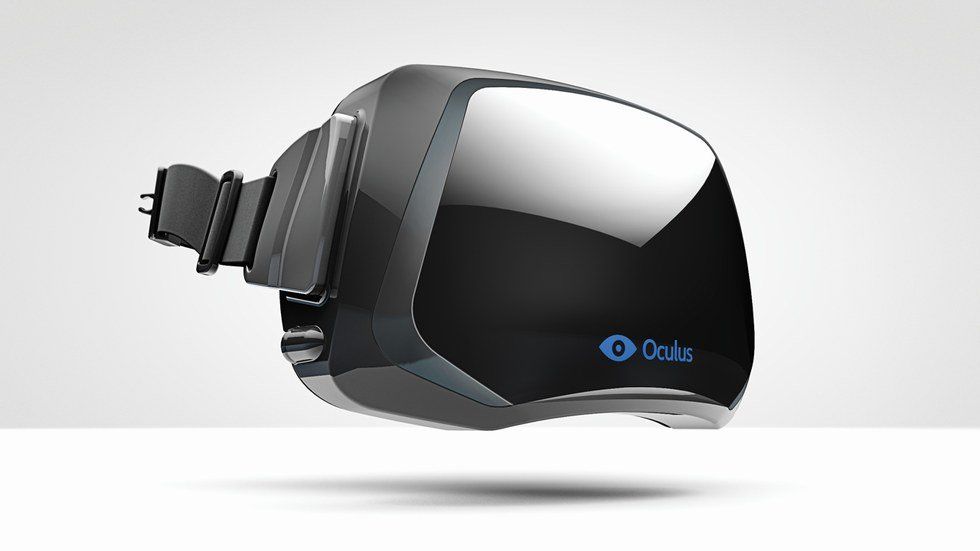
The future has arrived with the Oculus Rift VR Headset. It's the first virtual reality headset of its kind to make it so the user does not get nauseated or sick when using the device. Problems with previous models, such as eMagin and Vuzix, caused users to get sick to the point of vomiting because of latency problems within the headset. The Oculus Rift has changed that, making it so the screen that is inches from your face moves at such a fast rate that it tricks your brain into believing that it is actual reality. Accordingly, the Oculus Rift VR Headset is primarily being developed for video game purposes, but it shows promise as an application for other ventures, such as education, productivity, and cinema.
If you think the true application of the VR headset is video games, you may be correct for now, but Mark Zuckerberg hinted at the possibility of what a VR headset could do once fully mastered; “Imagine enjoying a courtside seat at a game, studying in a classroom of students and teachers all over the world, or consulting with a doctor face-to-face — just by putting on goggles in your home.” To think in the wider scale of what virtual reality can actually do for us as human beings is amazing. The Oculus Rift has discovered a way to trick the visual cortex of the brain into thinking that it is actually looking at what seems to be reality, although you are simply looking into a screen. “This is the first time that we’ve succeeded in stimulating parts of the human visual system directly,” says Abrash, the Valve engineer. “I don’t get vertigo when I watch a video of the Grand Canyon on TV, but I do when I stand on a ledge in VR.” The possibilities are endless with a machine such as the Oculus Rift, and we as humans are just developing such software that it is in its early stages of success.
The problem with previous VR headsets is that they were blurry, buggy, and nauseating, because they could not keep up with what the brain wanted to perceive in real time. The Oculus Rift is the first ever headset that is good enough to trick the brain into believing the unimaginable. Former VR headsets allowed you to look around by moving your head, but never allowed you to move in the virtual world that you were seeing. The Oculus Rift has changed that by adding 40 small infrared LEDs on the external of the headset, so it tracks the user's motions, allowing them to crouch, lean, or approach in-game objects.
In addition, the Oculus Rift could change the way that education is done in the future. In class, we discussed the idea of online classes and how it is more convenient for certain students to take classes online. Imagine if, while you are taking this online class from your home, you could put on a headset and be immersed in the classroom with other students and a teacher right in front of you. The application for the Oculus VR headset is just beginning to break the barrier of what we believe can be done, and with years to come, it may just change the way we look at the world, physically and virtually.
The Oculus Rift is the beginning of the potential that is Virtual Reality and will provide amazing breakthroughs in every way possible, allowing users to see the world from the comfort of their own home. With having applications in education, gaming, and entertainment, the Oculus Rift could change the way the people and humans live life their lives in the upcoming years. Mark Zuckerberg stated, “I’ve seen five or six demos that made me think the world was about to change: Apple II, Netscape, Google, iPhone… then Oculus.”