

In the age of online media the term “clickbait” gets thrown around a lot to describe articles with exaggerated headlines that do not fully deliver any noteworthy content. These articles are used to direct web traffic to a particular site to increase its advertising base and therefore its profitability. One can imagine headlines like “The Top 10 Things You Have Been Missing Out On Your Whole Life,” “6 Secrets Big Businesses Don’t Want You To Know,” or perhaps even “The Number One Reason You Will Click On This Article,” popping up all over your screen while you are surfing the web, and who among us has not clicked on at least one of these articles (after all, you clicked on this article)? So the question is why? Why does “clickbait” work and why do we click on the things we do on the internet?
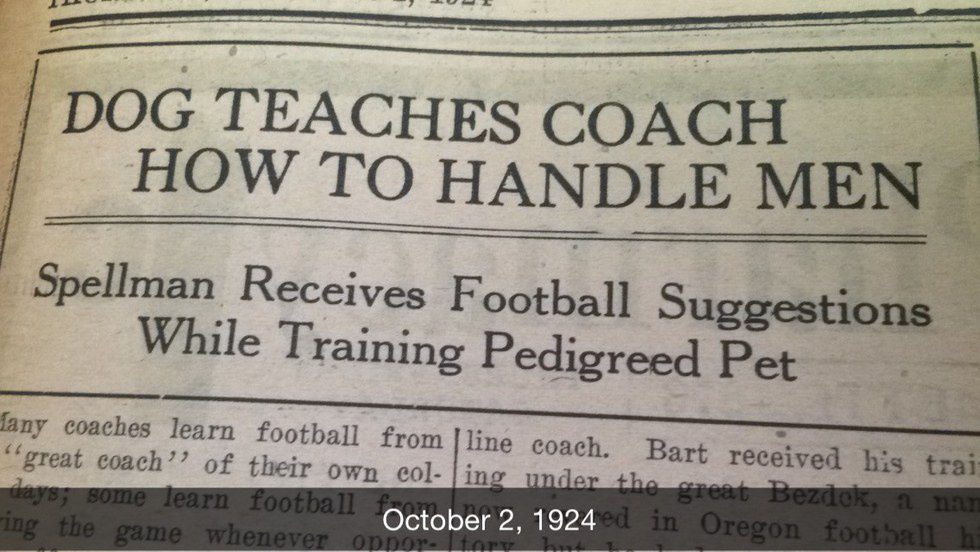
The basic principle behind “clickbait” articles is one as old as journalism itself. Since the printing of the first newspaper in England in 1641, there has been a need for a way to draw readers to individual articles. The headline was the answer. As the newspaper industry grew having the most interesting headlines became a way to sell papers (readbait?). Headlines containing alliteration, puns, hyperbole, and other types of wordplay became common place (STICKS NIX HICK PIX—Variety 1935, HEADLESS BODY IN TOPLESS BAR—New York Post 1983, DOG TEACHES COACH HOW TO HANDLE MEN—Oregon Daily Emerald 1924, etc.). Now, with individuals having so much access to content via the internet, the need for an enticing headline has grown exponentially. Today the success of an article is based on how many people click on it, and as any fisherman, worth his weight in…well fish, would say: you must bait the hook to catch the fish (enter “clickbait”). Therefore, as long as the content of the article delivers what’s the harm? (A few minutes of decreased productivity?) So if, in essence, any enticing headline can be defined as “clickbait,” then the question becomes why do we “bite?”
The answer in one word: curiosity. (Yes, it killed the cat and now it is back for your free time.) Curiosity is one of the key factors that motivates our actions. It is how we learn, develop and discover, but, ironically, the reasons behind human curiosity are shrouded in mystery. In fact, curiosity seems to defy rational behavior. For example, if curiosity’s purpose is to gather information to make an informed decision, then why do patients always desire more information about their afflictions, but still leave the decision-making to their doctors? Additionally, if the purpose of curiosity is to learn valuable information that will help us survive, then why is it the driving factor for us to explore the most dangerous places, i.e. the proverbial bottomless pit? (Curious isn’t it?) According to George Loewenstein’s article, “The Psychology of Curiosity: A Review and Reinterpretation,” curiosity is the result of us recognizing a gap in our own knowledge and desiring to fill it. These information gaps are brought to our recognition naturally and the strength of our desire to fill them is based on our overall interest. So when a patient desires to know more about their affliction, it is because they have recognized that they know very little about what is wrong with them, and because the affliction directly affects them, they have a strong interest in it. Therefore, they have a strong urge to fill their knowledge gap.
Now how does all of this explain why you spent time reading about the ten reasons Jennifer Lawrence is the greatest actress of all time? It is actually quite simple. Upon seeing the headline for the article about Jennifer Lawrence, you subconsciously recognized a gap in your knowledge about her and because you are such a big fan of Jennifer Lawrence (and who could blame you), you were compelled to click on the article to fill said knowledge gap. However, as a society we spend countless hours “article-surfing” often without really remembering how we got to a particular article. For example, I often look up a movie to see if an actor/actress I know was in it. Then, I will find another actor/actress I recognize and wonder what they were in. It is a vicious cycle. In fact, because every time we log on to the Internet we are surrounding ourselves with almost an infinite amount of information, we are also subjecting ourselves to a constant recognition of our own knowledge gaps. Therefore, we click from article to article trying desperately to fill them until either our interest or the battery on our computer run out. So the next time you are bored at work and think about taking a look at an article, ask yourself, “do I really need to know what the five weirdest new fashion trends sweeping the globe are?” Then at least try to read it quickly.
Sources: http://www.localhistories.org/media.html
, https://www.cmu.edu/dietrich/sds/docs/loewenstein/....