
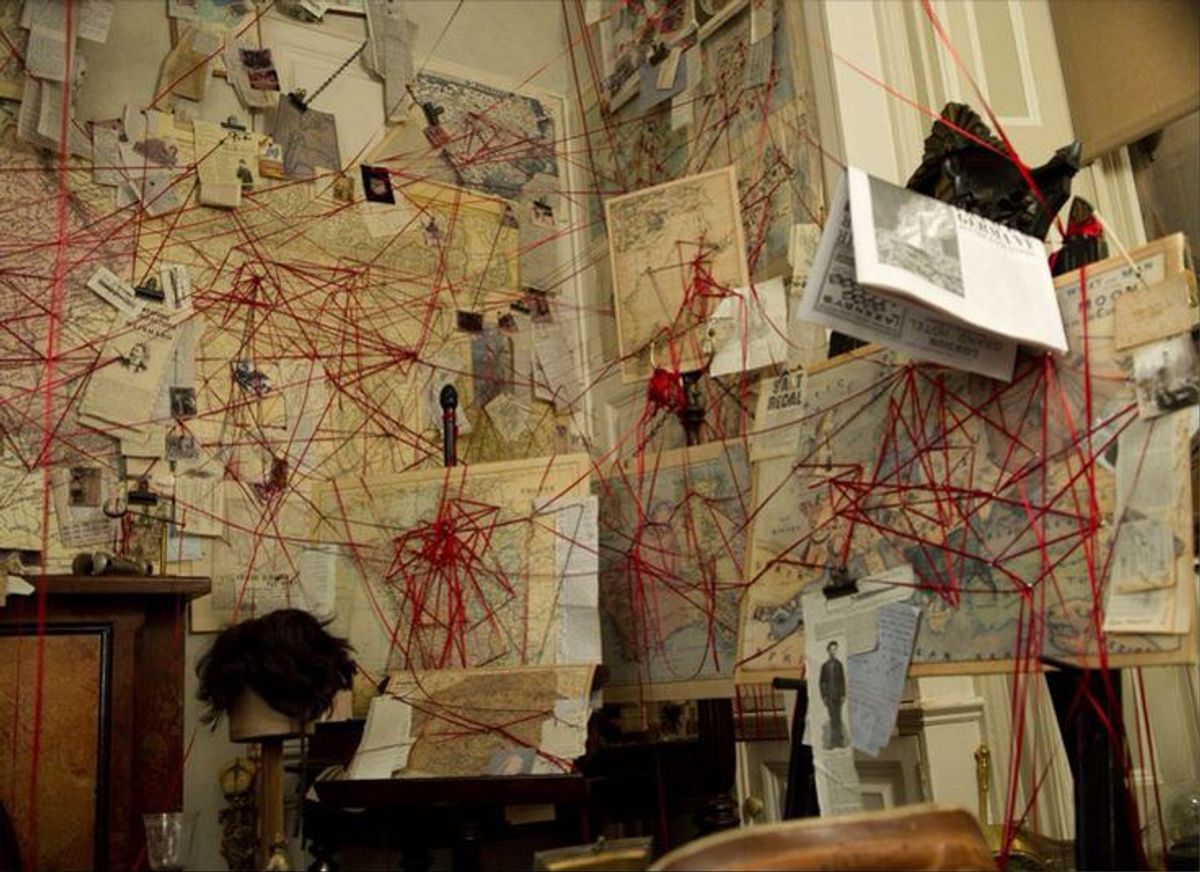
"A Beautiful Mind" is a great movie. One of my favorites, if we’re not counting "Gattaca" (and all my friends and family have begged me to, just once, shut up about "Gattaca"). When I was a freshman in college, I actually performed a scene from 2001’s Best Picture winner as Alicia Nash for my acting class. I wore this great red lipstick, got rave reviews from the other nine people in my class, I was basically a revelation. Whatever, no big deal.
For those who don't know, "A Beautiful Mind" is based on the real life of famed mathematician John Nash, who also suffered from severe paranoid schizophrenia for most of his life. The audience cheers as John fights against his hallucinations and breakdowns to do incredible work, eventually winning the Nobel Prize for Economic Sciences in 1994.
"A Beautiful Mind" is a great, inspiring movie. It's also part of a very troubling trend.
Time and time again you see it in on screen. A severely mentally ill person -- usually played by a reedy British actor, looking at you Benny C -- uses their disease or disorder to do seemingly impossible things. You see it in stories of Van Gogh, Frida Kahlo, and countless other scientists, artists and athletes. Television too, is full of depressed drug addicts like Dr. House and Sherlock Holmes whose destructive habits are put up with because they're so smart. "I see a man using a social disorder as a procedural device. Pain. Painful writing. It hurts." joked "Community", poking fun at the trope.
These "broken-but-brilliant" characters are inspiring, sure, but they also send a slightly depressing message that the only mentally ill people worth caring about are the geniuses.
I’ve suffered from depression since I was twelve and anxiety since I was old enough to worry. I'm also a B- kind of student. I graduated high school ranked in the middle of my class of four hundred, and while my grades and accomplishments at Ithaca College are enough to keep me in my scholarships, they’re not enough for any sort of dean’s list. Unless you ask my grandmother, I'm by no one's idea of brilliant. But that doesn't make my mental illness any less valid.
There is a popular rhetoric you hear often at a liberal arts school such as mine. "If Van Gogh had been medicated, would he have still painted Starry Night?" It's the kind of thinking that makes me furious, the idea that being miserable for the sake of your art and accomplishments is a way to live, that a mentally ill person is only worth something if they change the world. That is not the sort of message you should be sending the mentally ill youth of today, especially when they're already internalizing that they're not good enough.
I don’t write as many articles and short stories when I’m on antidepressants; the words don’t come as easily or frequently. But me and my not beautiful, not one-in-a-million mind are a hell of a lot happier doing it.

















