
A previous article I wrote entitled “Why I Can Still be a Feminist and Enjoy Anime” was inspired by Elizabeth Midford, a character in Black Butler. She inspired this article because I was, at first, apprehensive and defensive about discussing her character as something feminist. That article focuses on defending enjoying anime as a feminist -- here, I want to examine Elizabeth as a feminist character.
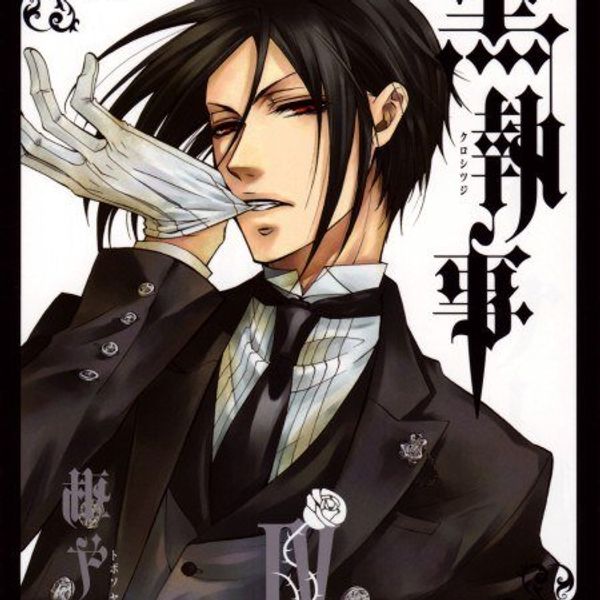
Black Butler is an anime and manga series that focuses on orphaned Ciel Phantomhive and his demonic butler, Sebastian. Ciel seeks to fulfil his family’s role as the “Queen’s Watchdog” and to eliminate his parent’s murderers. He works for the queen, eliminating threats and criminals without the use of the police or law. Elizabeth is Ciel’s fiancée and she is determined to bring light and happiness back into Ciel’s life. Elizabeth and Ciel have been engaged for most (if not all) their lives. Elizabeth knew Ciel before and after he was orphaned and she sees Ciel’s current lack of happiness and innocence and seeks to make up for it. Before his parents' murder, she aspired to be a wife he could protect -- after, she decides to be a wife that can protect him.
When I first saw Elizabeth, she annoyed me. I watched, appalled, as Ciel came home to find his house re-decorated, his workers in new uniforms and a new outfit, complete with matching jewelry, all according to her tastes. She then demands Ciel hold a little ball for the two of them. Ciel complies, only because he wants to get rid of her as soon as possible and she won’t leave until she gets what she wants.
Ciel even wears the outfit she chose for him, only altering it by wearing the family ring, passed down through several generations and one of the few, if only, things left from his family. When Elizabeth sees that he isn’t wearing the ring she chose, she throws a fit and ends up throwing his ring on the ground so hard it breaks.
I thought she was a spoiled brat, invasive and selfish. I still think she is, to a degree—good motives only justify so much—but after reading the manga of the series, I see that, although she was selfish in the first scene, I should not have discredited her entirely.
Just like some movies based on books, Black Butler’s anime diverged from the manga somewhat drastically. In the anime, we see a few more instances where Elizabeth wants to make Ciel happy, though she goes about it somewhat shallowly and fails; in the manga, we see that she has taken greater measures to support and encourage Ciel.
They aren’t sweeping, romantic or earth-shattering gestures. She fights stigmas, both culture and myself -- as a viewer who did not like her and saw her only as a shallow, wealthy girl -- force upon her in little ways. One thing that really stood out to me is, she denies herself some of the latest fashions in shoes to make Ciel feel better.
This probably doesn’t sound impressive. Wealthy Elizabeth doesn’t let her buy herself the newest type of shoes, poor thing. She’s really working hard for her fiancé, isn’t she? It isn’t about that, though -- her motives for denying herself shoes that would not only make her look older and seem older, as well as more in-fashion, would make her taller than Ciel. Elizabeth is aware of Ciel’s need to seem older and more mature and she wants to contribute to his image. She likes the new fashions and wants to wear them, but she refuses, sticking to shoes that aren’t as high as the current fashion, making herself look more childish, so that he doesn’t.
It might sound like I support female characters who give up things they like to support male characters, and I do, but I would like to specify my interest. Characters who voluntarily give up something they enjoy to support someone in their lives that they care about are meaningful to me. I think it is important that we see Elizabeth giving this up voluntarily, because it’s what she wants to do. Ciel doesn’t make her do it (I don’t think he’s even aware of it). She chooses to, and I think it is important to show that a female character can support any character in such a way without being forced. She is allowed to make her own decisions, and this shows that freedom can be used to support the men in her life. This makes her a feminist character; she chooses to support her husband because she loves him (somewhat obsessively). Her flaws and strengths aren’t limited to stereotypical, harmful gender stereotypes; she is more than a bratty child, but her flaws aren’t swept under the rug, either.
(Of course, I also like her because she isn’t particularly interested in her lessons or the shallow social lives of wealthy women, instead enjoying things like swordplay, but those are somewhat stereotypical -- though still valid and important -- “strong girl” characteristics.)