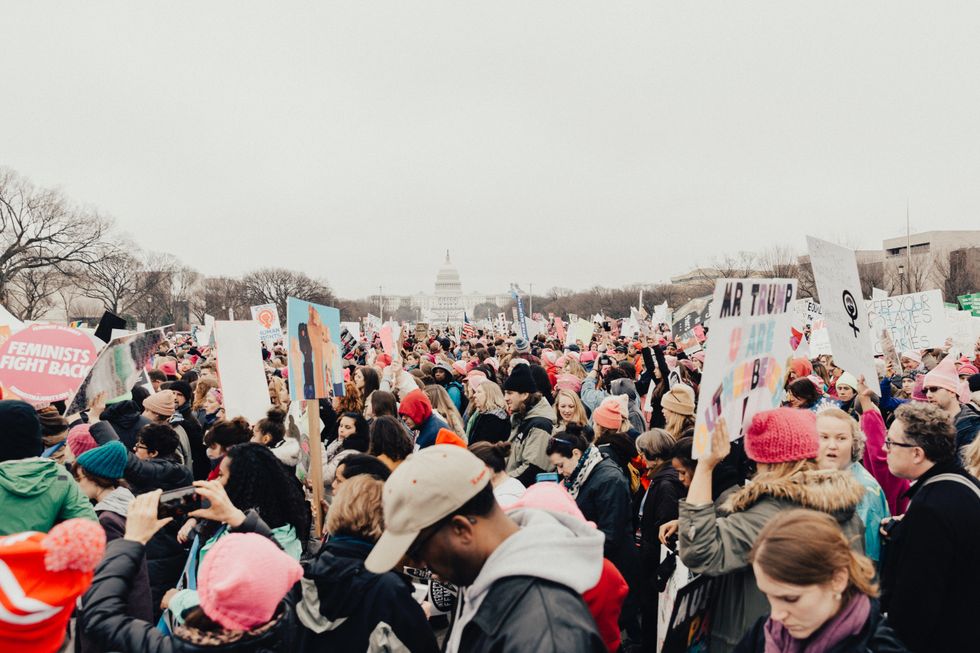
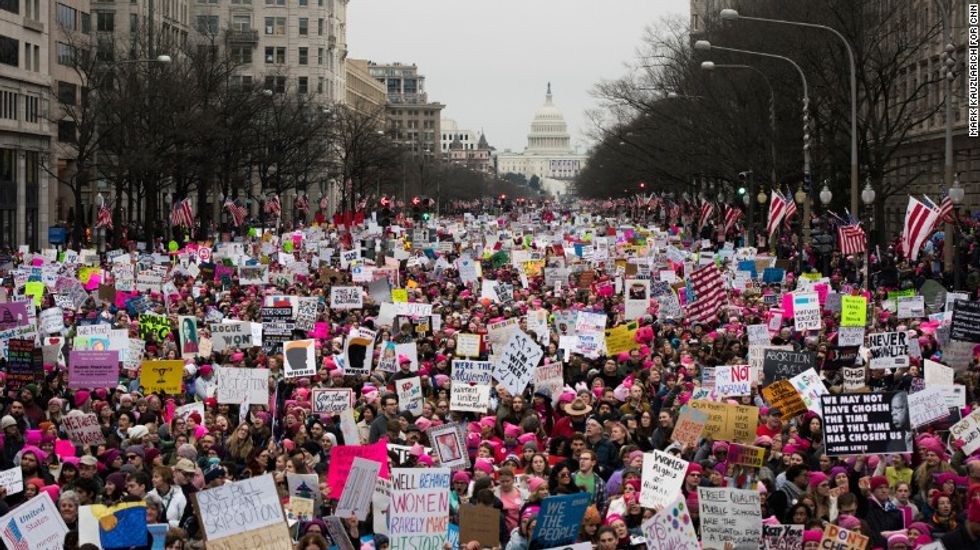
Last January, the 2017 Women's March set forth a movement that capitalized on the outrage experienced by many Americans after the election of Donald Trump. Since then, we have seen many protests in response to his language and policies. But as the 2018 Women’s March took the streets of New York, Philadelphia, Chicago, and many more -- what’s changed? Have we really made progress a year into the Trump presidency?
Some may argue that we have. Certainly the ‘#MeToo’ movement has brought attention to the normalcy of rape culture, not to mention the number of women affected by sexual abuse or assault. And recent sexual assault allegations against big-name actors or producers perhaps has indicated a shift in cultural attitudes against the accused. But as we look at the events in the 2018 march, that rift that was present in 2017 is still apparent now.
For one, there is a tremendous difference in meaning for these marches. Individuals who have more to lose in fulfilling an act of dissent- for instance an undocumented immigrant who risks arrest by attending a demonstration or a black man who might be targeted by police sent to monitor a protest. For some white women, protesting can be something they use to mark themselves as “activists." It’s a passive action, maybe something to add on their Instagram profile to make them seem more active or cultured. Nigerian author of the book “I’m Judging You: The Do-Better Manual”, Luvvie Ajayi, wrote on her Facebook that, “White women and white bodies can hold space on streets and shut down cities ‘peacefully’ because they are allowed to… In a world that doesn’t protect women much, when it chooses to, it is white women it protects.” Although over 3 million people participated in the women's marches in 2017, there is a privilege in being able to go home and be able to leave those issues you protested on the back burner.
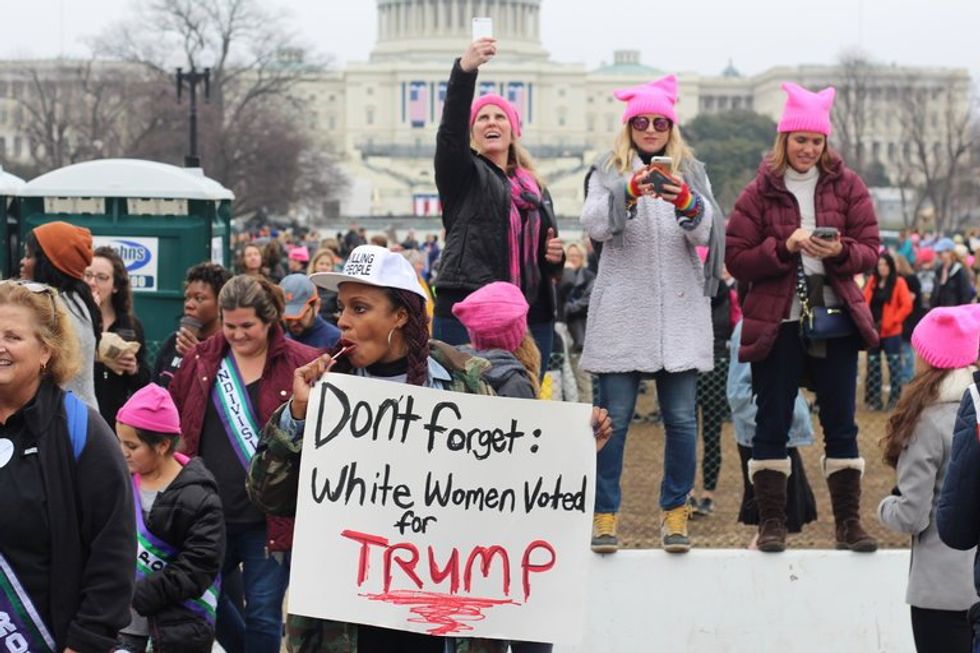
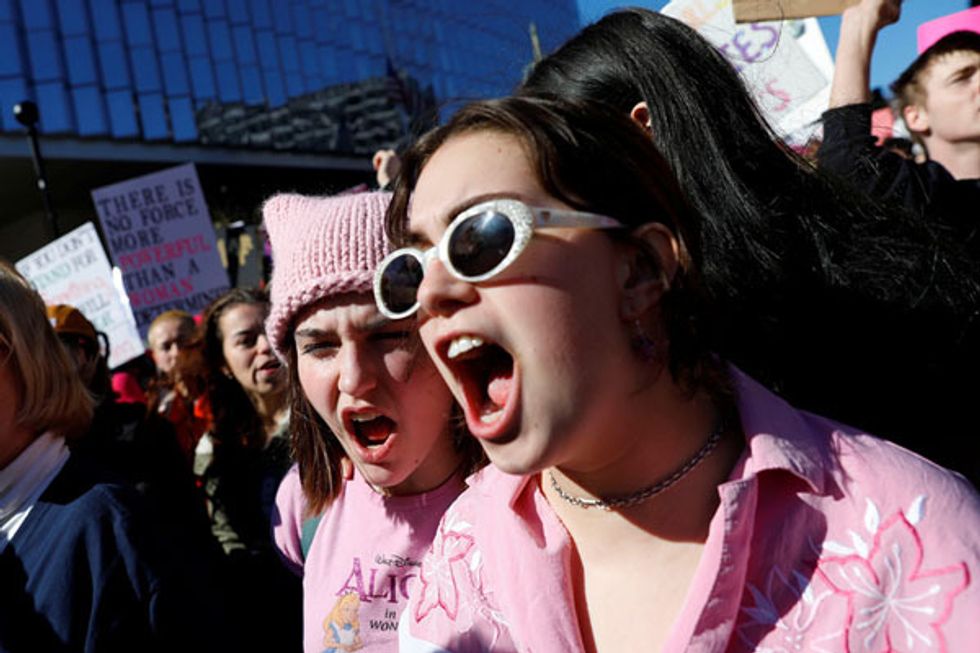
Secondly, there is a distinct lack of inclusion in the women's march, which is broadly a cis, white female oriented presence. This can pose a problem for not only people of color but trans or non-binary people. The “pussy-hats” that prove so symbolic and synonymous with the march can also been seen as extremely limiting. Some activists have ditched the hat at marches, refuting the fact that vaginas = female or vise versa. Another example of exclusion happened at 2018 march where female protesters wrote slogans like “Pussy power” or “This pussy bites back” on pads in the effort to take an object that is normally taboo and reclaim it. This is problematic -- not only is it a waste of pads (menstrual products are often costly, especially for low-income women) but is also cis-centric, excluding some of their fellow marchers who identify as female.

The third problem occurs when new marchers don’t take cues or build upon communities who have the experience and the framework for setting up resistance. White women who show up to the Women's March as their first protest take for granted the privilege and ease of marching. They may, because of the color of their skin, be treated kindly by police officers or looked favorably upon by the media. Protesting in this ignorance undermine those who have fought and died for that same right.
Marching can be a motivating, powerful experience for those who participate. However, a year later there are still distinct problems in how it is done. White feminists can’t take it upon themselves to march only when the time is convenient for them and not for others. We cannot continue to promote a cisnormative, exclusive culture, and it ends in 2018.