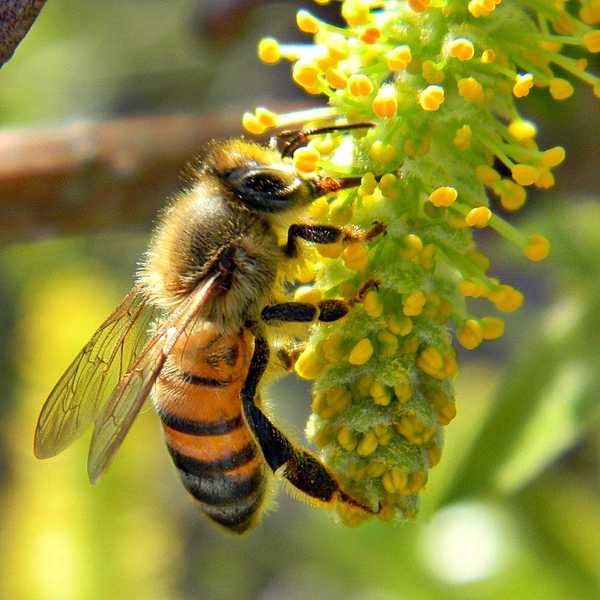

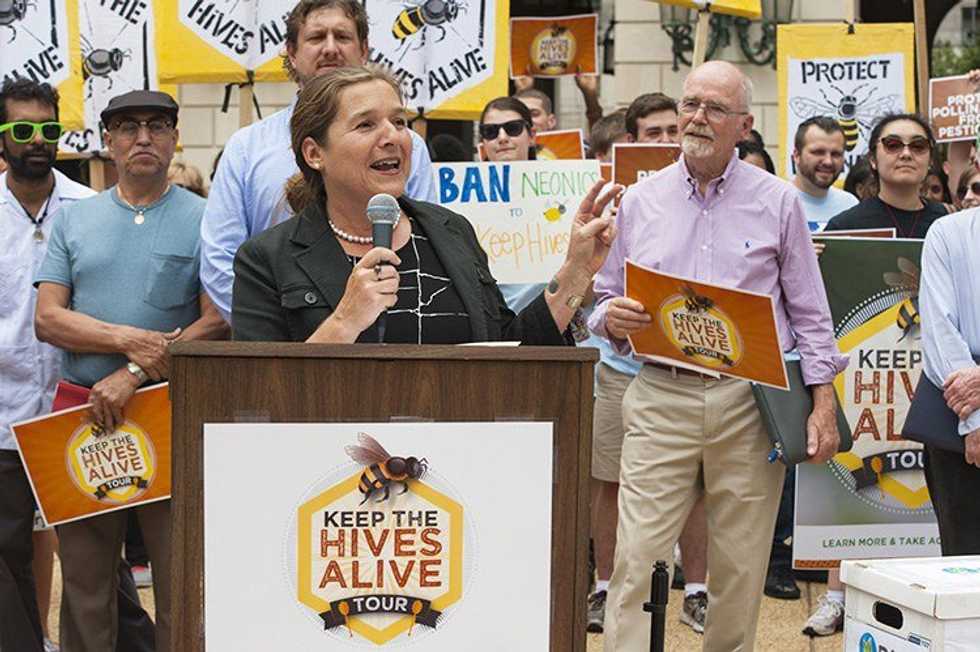
Last month, the Pollinator Stewardship Council’s “Keep the Hives Alive Tour” arrived in Washington, D.C. along with many other environmental organizations including Environment America and NRDC, as well as food advocates, consumers, and beekeepers, to urge the EPA to stop using neonic pesticides. Neonicotinoids, or “neonics” for short, have become increasingly used on crops during the 21st century. This fairly new brand of insecticides are not only killing off honey bees, which are vital to the flourishment - and ultimately survival - of much of the produce humans consume on a daily basis, but they also induce many unexplored life-threatening health effects.
This type of insecticide, first introduced in the mid-90s, has found its way into the food and water we ingest. The systemic presence of neonics means they cannot be removed through washing off produce like other pesticides. After a series of studies, the EPA concluded that intake of high doses of neonics results in changes in brain structure and performance. NIH-funded researchers discovered more alarming information about the impact of neonics on the brain when their study found that consistent human exposure to this insecticide from its presence in flea and tick medicine for pets is linked to Autism spectrum disorder. According to Environment America, neonics are 6,000 times more potent than the dangerous pesticide DDT, banned years ago.
Since the EPA themselves researched the implications of using neonicotinoids, why did it take until 2016 for them to admit the colossal sum of honey bee deaths in recent years is a byproduct of these pesticides? Considering that one-third of the average human diet comes from insect-pollinated plants, it would seem that this would be a more publicized and actively addressed concern. James Cook, a beekeeper from Minnesota, is leading the "Keep the Hives Alive Tour" because he has witnessed first-hand the immense honey bee death taking place from neonics. Honey bees pollinate 80 percent of the plants we regularly consume. Without them, we can say "goodbye" to an abundance of strawberries, peaches, cucumbers, melons, broccoli, and the list goes on.
Environmental activists and workers are striving to get the EPA's attention and have them ban the availability of neonicotinoids before it's too late and honey bees can no longer survive to do their job pollinating the plants humans value so greatly.