


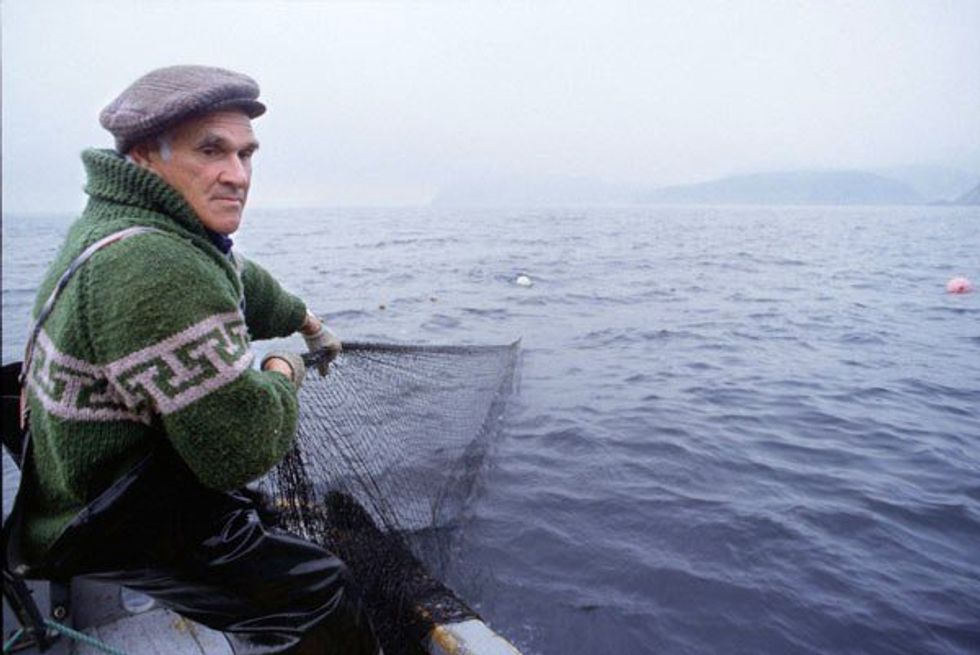
In Canada, Newfoundland, The Grand Banks cod fishery was one of the most abundant fishing grounds in the world. On July 2, 1992, fisheries Minister John Crosbie announced to a crowd of angry fisherman that there would be a two-year ban on cod fishing. The ban was extended indefinitely a year into the initial two year ban.
The Canadian government once was documented saying, "unless nature reversed, there would not be any reduction of cod stocks in the foreseeable future." Nature does not change that drastically that quickly, but the way people started to fish for the cod, it did.
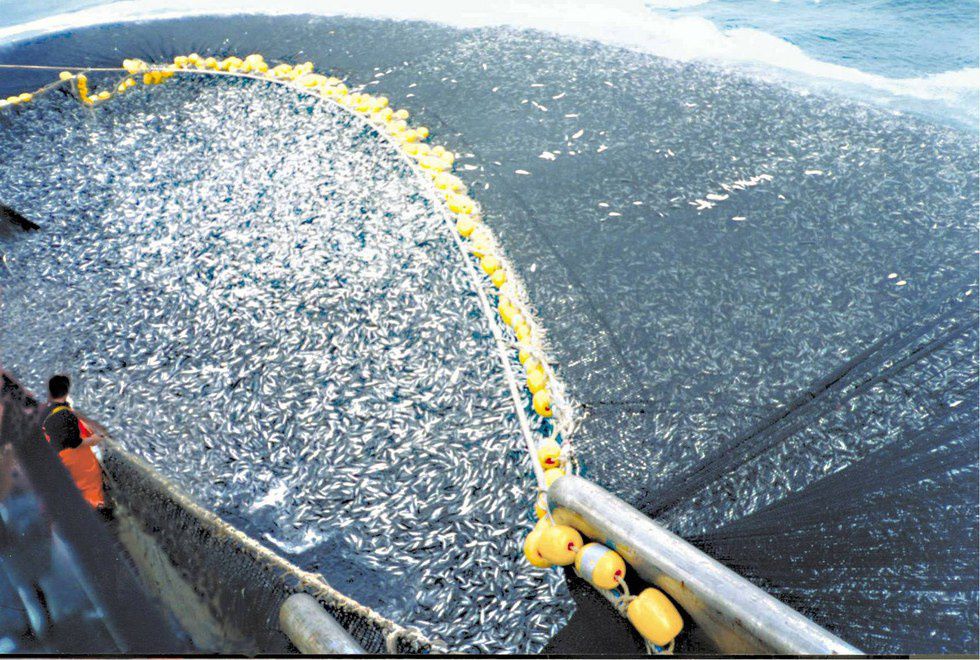
Technological advances in fishing lead to more and more fish being caught in lager quantities and much more quickly than ever before. Trawling, which started in the 1950’s devastated the cod populations. Trawling is when an industrial size ship pulls a net that can sometimes be the size of a rugby field across the sea, catching anything in its path. Usually 80 to 90 percent of its catch is bycatch that is killed in the netting and thrown back into the ocean. These ships worked around the clock in Newfoundland and absolutely decimated the cod population.
Overfishing occurs when so many fish in a species have been caught that there are not enough fish to repopulate the species at the rate that they are being caught. It is an unsustainable practice that is being practiced all around the world. Everywhere that there is overfishing, there have been negative effects that follow.
The cod found in the Grand Banks fishery are Atlantic cod. A fully-grown Atlantic cod can grow to be 120 pounds. Larger fish tend to live longer and reproduce less. By 1968, 800,000 tons of cod were caught. The cod could not reproduce at the rate that they were being caught, so in 1992 when fishing season started, the cod did not show up. They did not show up because there were barley any cod left.
The result of the overfishing of the cod in Newfoundland was devastating. 40,000 people were essentially laid off. Over 400 communities all over Newfoundland depended on fishing to support their economies and the people there depended on the cod to make their livings. Now, there was barely any cod. Fishing was a way of life in Newfoundland and many did not know anything else. Many had nothing more than a high school education, if that, and were not trained for any other jobs. Because of this, the Canadian government had to step in once again and introduce multiple financial aid programs.
These financial aid programs paid out of work fisherman but also required some to take early retirement packages or to enter programs for retraining for other jobs. The programs were met with some success but did not completely get the people of Newfoundland off their economic dependency of cod.
The overfishing in Newfoundland is not that unique of a case. It is unique in the sense that it collapsed an economy of a developed country, but overfishing happens all over the world. Trawlers and other type of industrial nets are fishing the oceans clean of fish. Around the world, 52 percent of all fisheries are fully exploited and 20 percent are moderately exploited. Only one percent of these fisheries are recovering.
Bluefin Tuna are one of the more recognizable fish that are being fished to extinction. The high demand for the Bluefin has depleted their population to the point where a single Bluefin can sell $1 million. The Bluefin is also a top predator in the ocean, which keeps balance in the ecosystem. With the Bluefin gone there could be consequences.
Meanwhile, over 20 years after the fishing ban in Newfoundland, Dan Power, head of ground fish research at the Centre for fisheries Ecosystems at Memorial University in St. Johns says, “there’s a poor prognosis for the stock and recovery. We’re still a good ways down into this critical zone.”
George Rose, Director of the Centre for Fisheries Ecosystems Research at Memorial University in St. Johns has a more positive outlook on the situation. “This year we’re seeing evidence that a lot of the real negative signs in the cod stocks that have been with us for 20 years are turning around. We’re seeing that the fish are living beyond five or six years of age.”
Even though some are optimistic that cod situation in Newfoundland will get better, it is not time to celebrate just yet. “There’s positive signs, but we’re not ready for the reopening of the fisheries any time soon,” said Robert Rangeley, the Vice President for the World Wildlife Fund. “From a biological point of view, it looks like a recovery might be possible.” Rangeley believes that in the next couple years, if these positive signs continue that it might be a possibility that a fishery can open. “In the next five years or so, it might possible to start looking at a fishery.” For Newfoundland’s sake, let’s hope so.

















