
This summer, I have visited three Nazi concentration camps, four if you count Auschwitz and Birkenau separately. There have been similarities and differences in all of them. I have also been touring around Europe to see other World War I and World War II sites, including battlefields where cows now graze, preserved trench systems, overgrown fox holes, beaches, armories, bunkers, monuments to the missing, graveyards, even tunnels dug into the side of a mountain and oh yes, the famous concentration camps of the Nazi regime.
What has been striking is how people, communities and governments choose to memorialize events, people and places. There seems to be no exact science to commemorations. In Normandy, France, the United States has created a cemetery for those who died in battles in Normandy. This graveyard is operated by the United States, on French soil with French workers paid by the United States. However, in German graveyards the upkeep of the graveyards was by the German citizens until relatively recently.
More interesting than the payrolls of government cemeteries is that throughout my travels winding my way through Europe, I never stumbled into a cemetery for Germans who were in World War II. Although there had been an effort made after World War I to give a final resting place to the opposing sides forces after World War II there was not. Could this have been a way to forget the atrocities that happened? Or as a way to not have a congregating place for future groups who shared ideology of the Nazi regime? These are questions many never find the answer to.
In the Somme, France there was a number of places where battles had taken place, and yet there were no remains. Here there was an effort to reclaim the land that is regarded as the breadbasket of France. In the Somme, they are proud of the land and what it could produce. Revitalizing the land was a way to forget, although they did erect monuments in corners of fields about the men who fought or courageous acts of civilians.
For some battles, the trench systems were preserved in a way so you could walk around inside to see what life in the trenches would be like. Other trench systems were left in the woods, nature over-running the protection for the soldiers. Making a decision on what to do with a trench system that is left over falls to whoever owns the land. On private property, we saw an ongoing volunteer excavation in a forest owned by a town. There was also an excavation reconstructed by a local amateur historian and local school children.
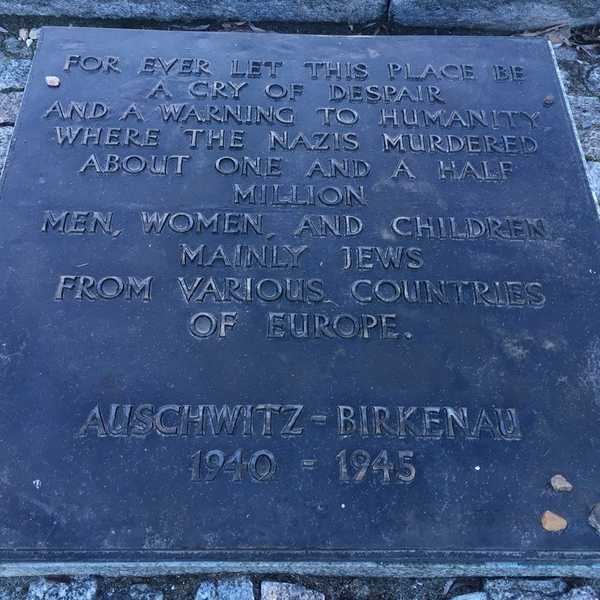
Concentration camps that I visited had different ways of memorializing their victims. In Auschwitz, they had an urn with ashes from victims of the camp. This urn was placed inside of one of the blocks, along with photos taken from victims' arrival at the camp that lined the halls. When visiting the Magdanek Camp, there is a three-part memorial that caused quite a controversy because of the open ashes. This conflicts with Jewish burial beliefs that no part of the body should be seen when buried. Although it is a conflict, likely the monument will never change because of how it is now tied to the camp. The museum sculpture garden of the Dachau camp is another way of memorializing the victims of the camp, through many sculptures and Chapels on the former camp grounds.
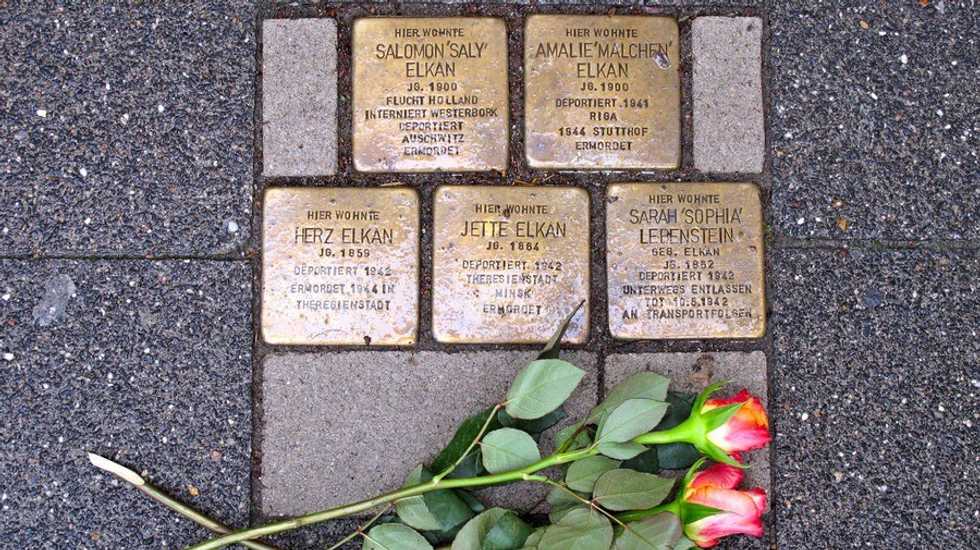
Although there are many ways to memorialize history, there is no right way. A monument is not only for people who are emotionally tied to an event or person, but for people to learn about what happened. A monument, even as small as a grave site or a marker on the side of the road, is a way to connect with the past.

















