
During my internship this summer, I stopped by a brown bag lunch chat that featured Mara Keisling, executive director of the National Center for Transgender Equality. As she spoke to us about activism, I felt the gears in my brain shifting and linking her stories to my own observations. She confessed that it gets tiring when people in the social justice sphere pick apart the procedure and lose sight of the larger picture. As an example, Mara recounted a conference in which participants had to split up into groups for a workshop. To assign the groups, organizers employed the counting off method to create a Group 1, Group 2, etc. But before the groups could form, someone objected to these numbers, claiming they were “too hierarchical” and fostered inequality among participants. This qualm was “frustrating” to Mara because it disrupted and took time away from the larger issues facing LGBTQ people that the workshop intended to address. She continued to inform us of other instances in which people nitpicked over activist execution rather than prioritizing the change it sought to create.
The emphasis Mara placed on transformative results was an angle I was not used to seeing in activist spaces. Oftentimes I have noticed that in an effort to be as politically correct and just as possible, how a group or individual confronts an issue overshadows the conquering the issue itself. Of course, these procedural criticisms are for the most part well-intentioned. But when weighing the checks and balances, I believe a potentially groundbreaking result ranks higher than an initially disputed execution.
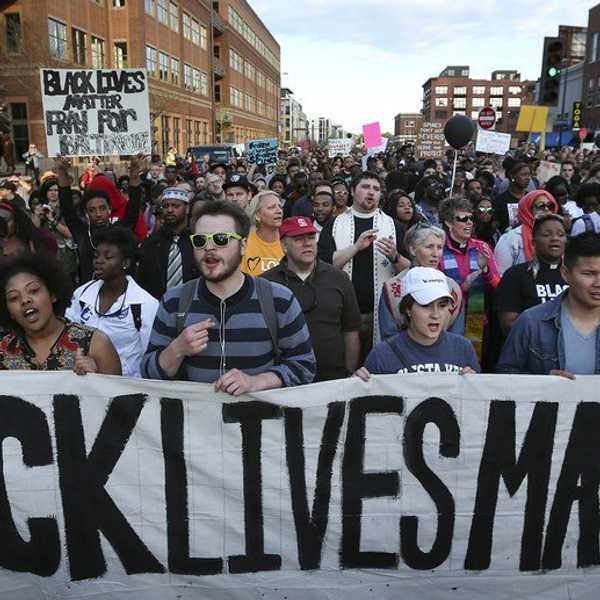
Black Lives Matter functions as a contemporary example of this scale. The way the movement chooses to take a stand stirs controversy, but its end goal of fostering dialogue often proves successful. When Black Lives Matter activists staged protests at multiple Bernie Sanders rallies—most recently in Seattle—their interruption launched its fair share of criticism from Sanders supporters. But what Black Lives Matter ultimately did was ensure that Sanders was not forgetting about the racism that exacerbates economic inequality in the United States. Soon after the Seattle protest, Sanders’ website added a racial justice section with a comprehensive platform. Sanders also hired a black criminal justice reformer as his campaign press secretary. Black Lives Matter galvanized Sanders’ campaign into aligning itself with the race issues that plague the communities it strives to reach.
Both Mara’s and Sanders’ situations demonstrate how in the social justice realm, it is easy to critique an approach as too “hierarchical” and not radical enough, or as going “too far” and not keeping with decorum. These concerns are understandable, since either extreme is capable of causing serious harm. But there are instances where vast ranges of approaches, despite causing dissent, go on to generate sweeping change that will benefit the lives of many, be it the safety of transgender people, black people, or both. Whether it comes about in a subtle or daring way, change is happening. I try to remember that.