
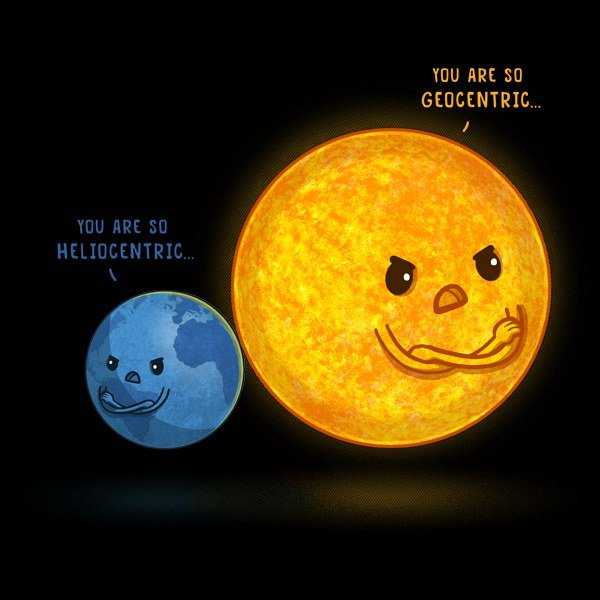
I waste a lot of time online, just browsing and looking at random things. The other day, I was scrolling through Tumblr and came across this post:
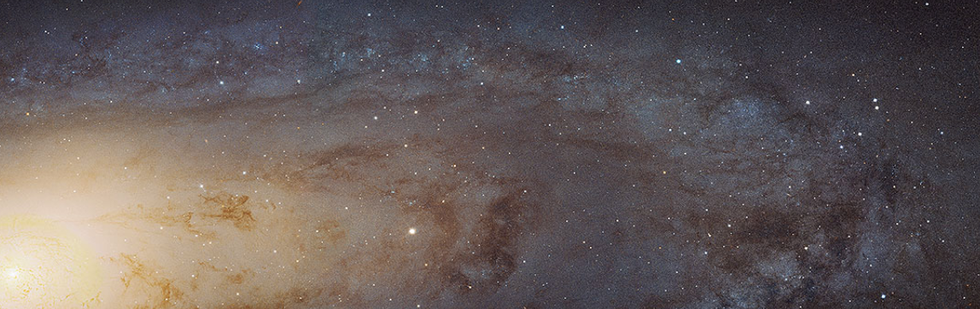
The image included in the post is from spacetelescope.org and it's a picture taken of the Andromeda galaxy by the NASA/ESA Hubble Space Telescope. The original image is "the sharpest and biggest image ever taken of the Andromeda galaxy" that shows over 100 million stars.
The image shown on the website is also just a cropped version of the original, which has 3.9 billion pixels and covers a length of almost 60,000 lightyears. 3.9 billion pixels. 60,000 lightyears. In one image. For more information on the image and the telescope, you can follow this link.
You can view the zoomable version here, and I highly recommend checking it out. The controls are a little funky and difficult to work, but the clarity of the image when you zoom in is so worth the trouble.
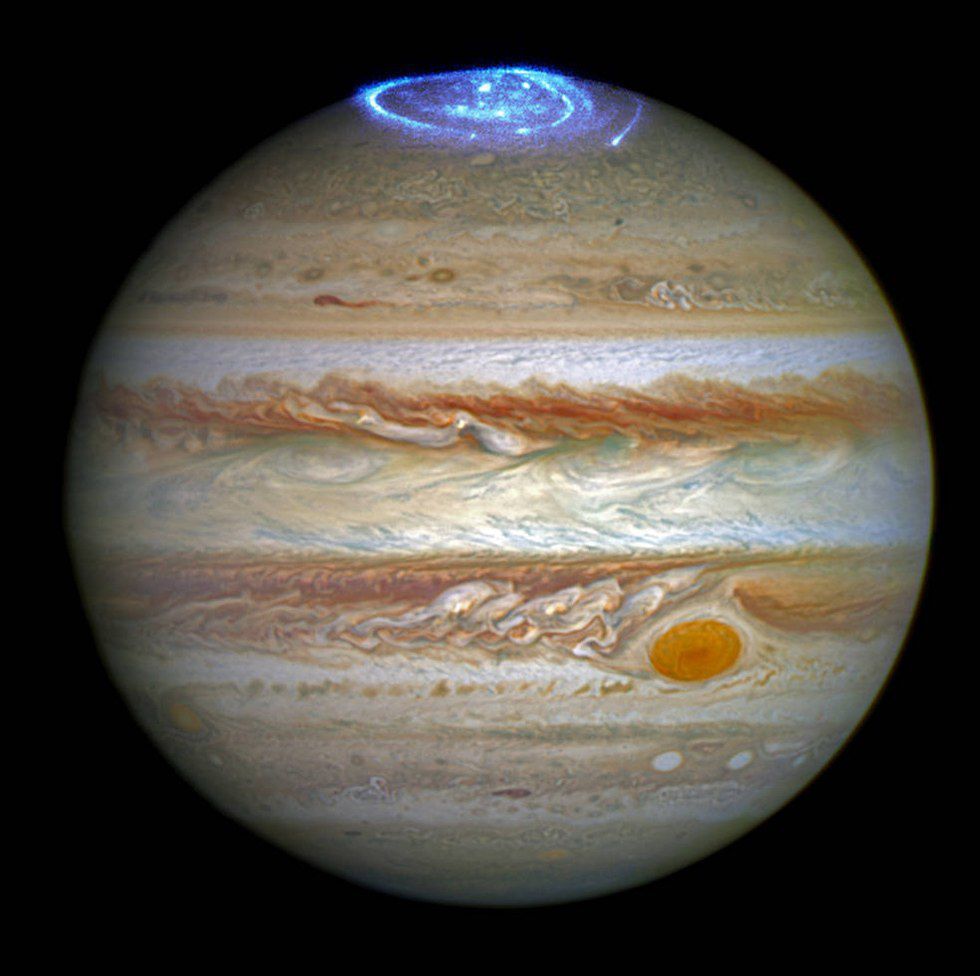
The Hubble Space Telescope has also shown auroras on Jupiter's surface recently, as shown in the picture above. Principal investigator of the study, Johnathan Nichols from the University of Leiscester, U.K., said "These auroras are very dramatic and among the most active I have ever seen.” You can read more about Jupiter's light shows here.
In other space news, on June 28 it was revealed that the same telescope that captured the incredible image of the Andromeda galaxy was also able to capture an image of a very rare cosmic tadpole. NASA's Juno Mission is due to arrive at Jupiter after a 5-year journey on Monday, July 4, according to this post. The Expedition 48 Crew will launch their four-month journey on Wednesday, July 6, with live coverage beginning at 8:30 p.m. EDT on NASA Television.
You can stay updated by going to NASA's website or following them on Twitter or Snapchat, along with their various mission and specified accounts or individual astronauts, like Jeff Williams or Kate Rubins. And you can follow the International Space Station on Instagram and Twitter.

















