
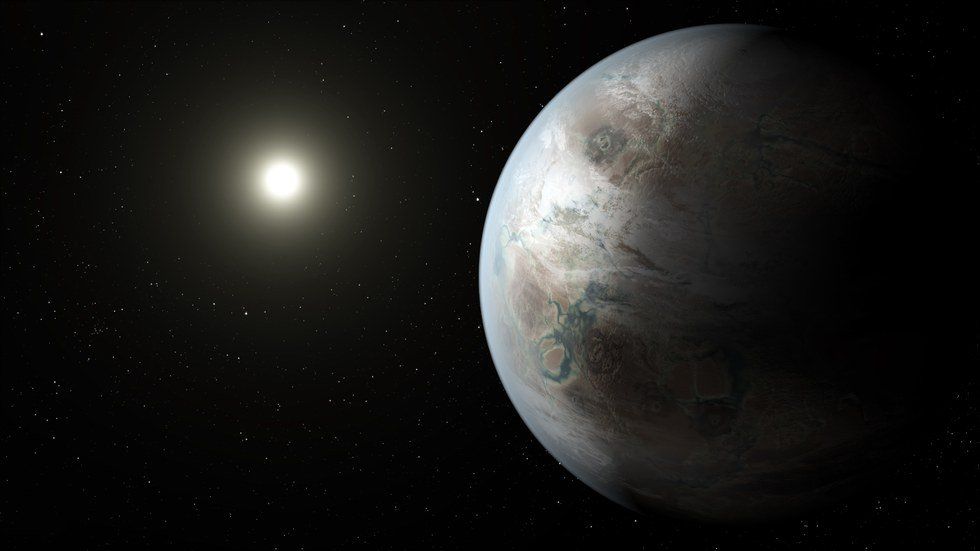
On July 23, NASA announced the discovery of Kepler-452b, a planet they have named “Earth’s bigger, older cousin” due to its similar qualities to our own planet. This announcement is an exciting marker in humanity’s search for other places in the universe that could host life like ours on Earth.
The planet was discovered by NASA’s Kepler Space Telescope, which has been searching for evidence of exoplanets, planets that orbit stars the way Earth orbits our sun, since its launch in 2009. Of the more than 1,000 confirmed exoplanets that the Kepler Space Telescope has detected, Kepler-452b is most similar to Earth and most likely to hold water and be habitable to life.
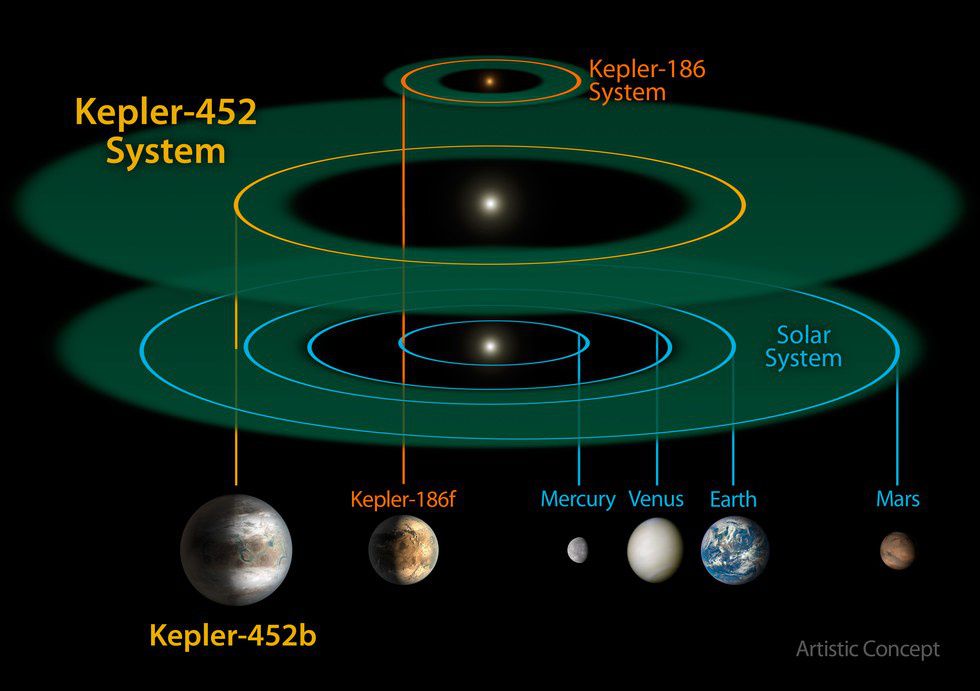
Many of Kepler-452b’s similarities to Earth stem from its orbit and size characteristics. It has been named a “Goldilocks” planet, referring to its position in relation to its sun: like Earth, Kepler-452b orbits its sun from a distance that isn’t too close or too far to hold liquid water, allowing it to stay in the “habitable” zone. It’s distance from the star it orbits is “just right.” While it does have a slightly longer orbit cycle of 385 days, Kepler-452b’s parent star is 20% brighter than the one we orbit around. The following diagram compares its orbit radii to planets in our solar system:
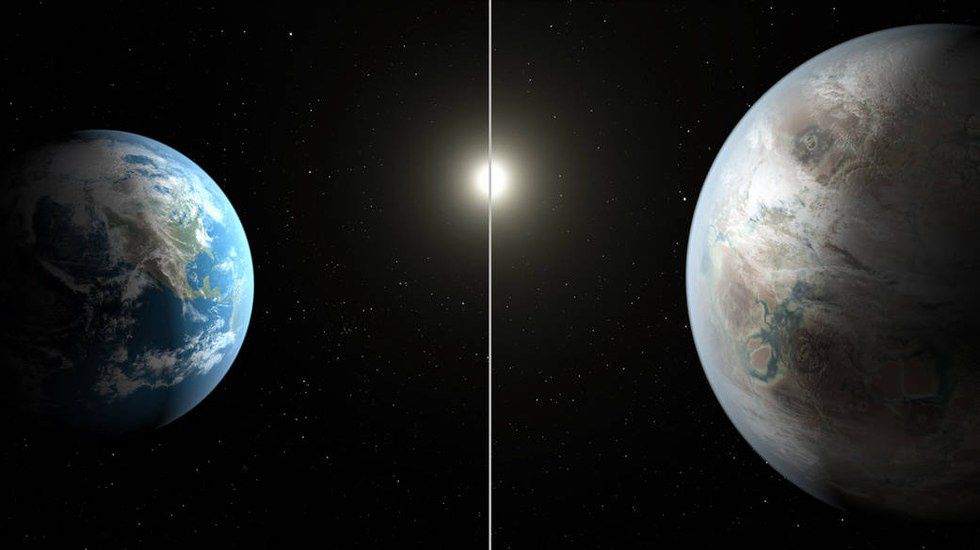
The newly discovered planet is just 60% larger than Earth, which makes it one of only eleven planets that Kepler has discovered that are less than twice Earth’s size and in their respective solar system’s habitable zone. The following is a size comparison of Earth to Kepler-452b:
Don’t run to your study abroad applications just yet, though. The technology to send a person or even a land rover to explore Kepler-452b is far from development. The planet is 1,400 light years away from us. For comparison, Mars is less than one light year away. However, scientists are able to make guesses about the composition and mass of the planet based solely on observations from Kepler. According to NASA’s published technical paper, there is a 49-62% chance that Kepler-452b is rocky like Earth. Ultimately, though, it is still unknown what materials the planet is truly composed of.
Additionally, while it may reside in a sweet spot as a “Goldilocks” planet that could hold water and therefore life, there is absolutely no evidence yet that life has ever existed on Kepler-452b. Forget any fantasies about aliens picking up radio waves humans send out— according to Wired, even if aliens have been living there and picking up radio signals, Kepler-452b is too far to receive any signals we have sent out since the invention of radio. However, NASA’s technical paper makes a note about the possibility of past life on Kepler-452b:
[...] we are left to speculate on the fate of an ancient civilization that may have developed first on Kepler-452b (or on a moon orbiting it). For example, it may have subsequently migrated to an as-yet-undetected outer planet to escape the inevitable loss of most of the intrinsic water inventory after the moist runaway greenhouse effect took hold at Kepler-452b’s orbital distance approximately 800 Myr ago. (Jenkins et-al, 16)
So until humans can conduct more thorough investigations, we won’t know whether Kepler-452b holds life, whether its life forms have left the planet, or whether humans could inhabit it in the future. In the meantime, discoveries of planets like our own are exciting fuel for the imagination and incentive for the public to follow the developments of space exploration.