

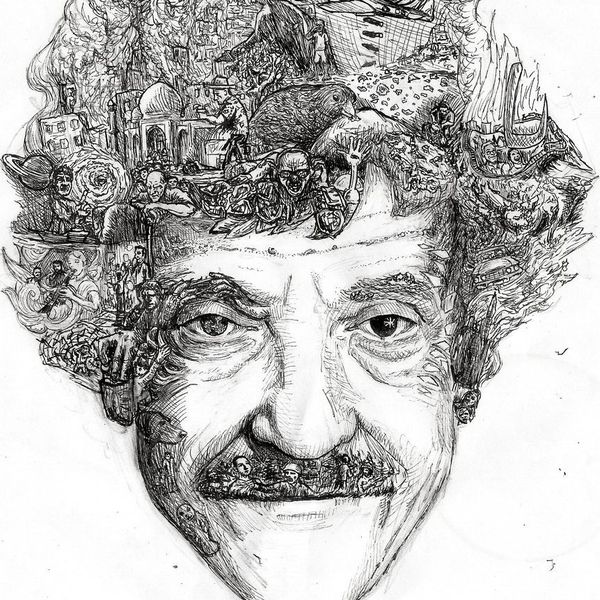
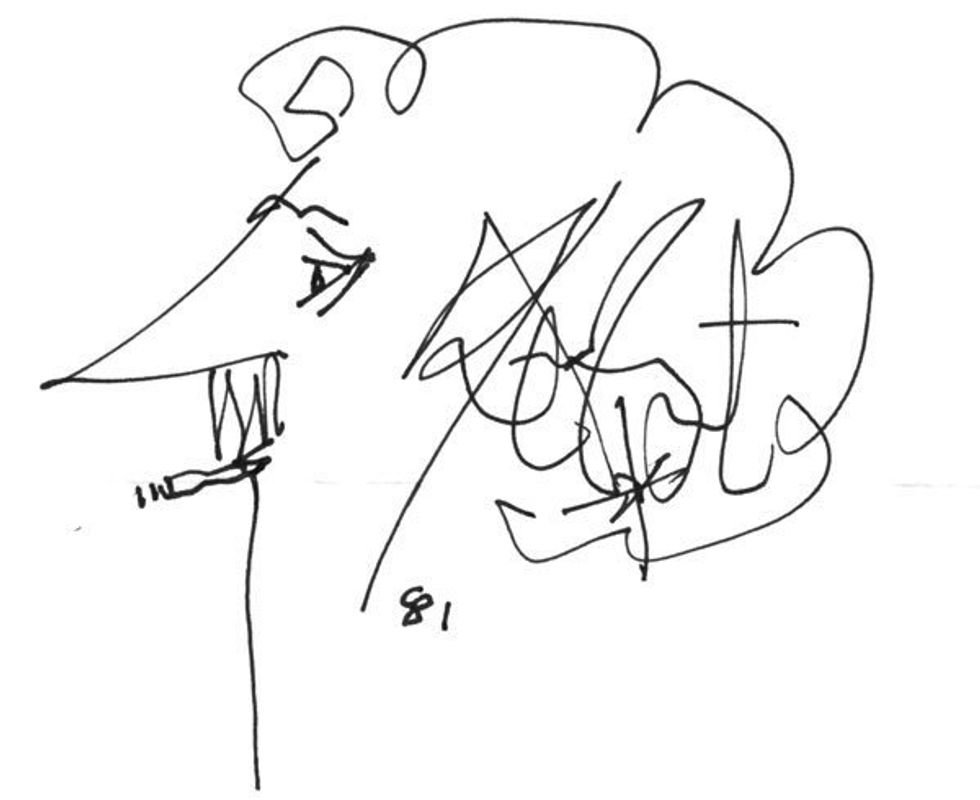
When Kurt Vonnegut wrote "Slaughterhouse-Five" in 1969, an increasing number of Americans were opposing the Vietnam War. Although the book was set during the second World War, the anti-war message could not have come at a better time.
"Slaughterhouse-Five" centers around the controversial bombing of Dresden. Vonnegut was a prisoner of war in Dresden when the bombing took place, but survived because he was housed deep underground in a slaughterhouse; hence, the title of the novel. After the bombing ended, Vonnegut had to help dispose of the countless bodies. 24 years later, Vonnegut wrote about his experience.
The novel starts in the first-person perspective with Vonnegut unsure how to write "Slaughterhouse-Five." After he meets up with an old friend, Bernard O'Hare, who was also a prisoner of war with him, Vonnegut decides the direction he will go. Mary O'Hare, the wife of Bernard, tells Vonnegut not to glorify the war, to write it like it is. She says, “You were just babies in the war—like the ones upstairs!”
Vonnegut remarks in an interview that he did not remember ever having to shave while being a prisoner of war, that it was not an issue for him. Vonnegut promised Mrs. O'Hare that his novel will not have "a part for Frank Sinatra or John Wayne."The novel then officially begins with the protagonist, Billy Pilgrim, in a strange way. Billy is able to travel in time, though he has no control when it will happen or where he will end up. Vonnegut uses this to construct a narrative that jumps in time and locations to create interesting contrasts between scenes. The seemingly random jumps in scenes are Vonnegut's way of showing how massacres make no sense, which he explains in the first chapter of the novel.
Billy jumps back and forth between being a prisoner of war and being a prisoner of the Tralfamadorians. Oh yeah, the Tralfamadorians are aliens from the planet, Tralfamadore. Tralfamadorians are able to see the past, present and future all at once which explains Billy's concept of time. Billy asks the Tralfamadorians why they refuse to change unnecessary massacres like the Dresden firebombing. They respond by explaining that everything that has happened or will happen cannot be changed; the Tralfamadorians cope with this by ignoring the negatives of life like war. Vonnegut is subtly arguing that simply ignoring massacres will not make them go away.
By constructing the narrative in such an unconventional way, Vonnegut was able to combine his personal story with fiction to tell a timeless story about the negatives of war that is still relevant today. Although the novel is set during the second World War, Vonnegut was able to connect with readers that opposed the Vietnam War by using aliens and time travel. War does not make sense to Vonnegut and the structure of the narrative of "Slaughterhouse-Five" shows this confusion.















