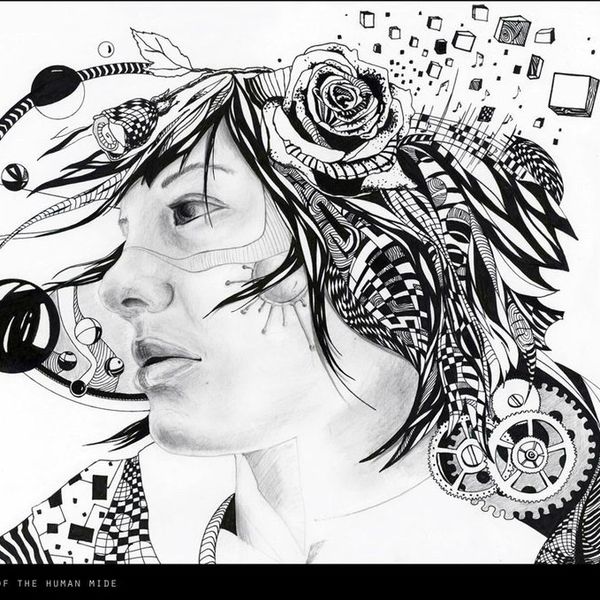

The mind is an enigma. There’s a saying that our minds aren’t cages; that our minds are gardens capable of blossoming flowers of all kinds. But is that all that it is? Don’t we create spaces for the things we like, and bars up against the things we don’t? The notion of being caged has such a negative connotation to it because nobody wants to be trapped. But being caged doesn’t necessary resonate to entrapment. And here’s why.
If you picture your mind as simply a garden with the endless capacity of sprouting beautiful roses, well, you’re not totally wrong. But you’re not totally right either. Because there’s something we’re forgetting here. Every rose has its thorns; every garden has its worms. This idealistic garden image of our mind forgets that on some days, a tornado could strike or floods could happen. The picturesque garden makes us forget that it is normal to have days when nothing feels right. It takes the notion of reality away from depression or bipolarity or even something as simple as stress. Because everything is only thought of as a potential rose.
But it is real. The silence, the regrets, the fear of failure. They might even feel all too real to comprehend at once. And so we bar these up in our minds. So I guess this becomes somewhat of a cage. But we aren’t trapped. Nobody likes to hear that we are limited beings, but we are. Our survival is limited to the Earth’s supply of oxygen and the Sun’s supply of heat. Our body’s energy is limited to our food consumption and our level of activity. But the mind is slightly different. Your mind is your source of memories and experiences that are beyond your conscious control. Yet, it is set up like a cage in the most abstract and profound way. Would you truly appreciate the beauty of spring without the contrast of winter? Would you truly understand the depth of love without ever experiencing hate or even indifference? Would you even idealize your mind as a luscious garden if you’ve never seen a barren dessert? In the most paradoxical sense, our creative capacities have to be necessarily caged in order to go beyond.
Here’s another interesting food for thought. Our minds hold memories unbounded by consciousness. But if memories are of the past, that means our minds are bounded by the past. In other words, we only know what we know. Yet, our minds have the capacity to create. Which, by definition, means to produce something that has never been produced before. Yet, what drives creation? Immediately sourcing instinct, or human nature, seems a little too simplistic and obscure. Also, if your mind is a garden of roses, would there still be a need to create in such an ideality? What drives creation are your likes and dislikes, bad and good experiences, highs and your lows. What drives creation is the reality of your depression, and also the reality of your success to overcome it. You are caged in your mind, but maybe that’s not so bad after all.