
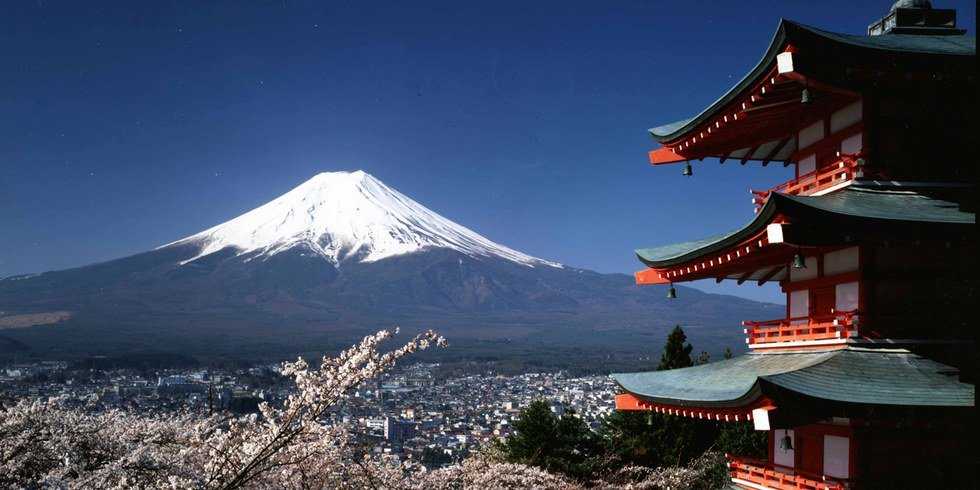
I was born in the mid 90’s in a rural town in central Japan where my parents were teaching English as a second language. When I was a few years old, my mom and I moved to a seaside town a couple of hours southeast of Tokyo. That town, full of Shinto shrines, Buddhist temples, and a community that most Americans would consider “foreign,” was home to me. It was there that I began to grow up and subconsciously started to form my own identity.
The fact that I was born in Japan is an important part of my identity. Before going on, I will make it very clear to those who would love to accuse me of cultural appropriation, that I absolutely do not identify myself as a Japanese person in any way, whether ethnically, legally, or any other way. I do not consider myself to be a part of the Japanese culture itself. Rather, I carry the experiences of my childhood in Japan as a part of me. My experiences with the Japanese culture are a part of my own personal identity as a human being, based on my history, experiences, and choices.
You may assume that as a white Anglo European American with no ethnic, familial, or legal ties to Japan, I may have felt like an outsider or at least been aware of some kind of social barrier. I wasn’t aware of one, and as far as I know, I didn’t experience a social barrier until it was pointed out to me by others. I had no Japanese citizenship, but considered myself to be essentially the same as everyone else; the kids I played with, my classmates, my neighbors, and my family friends. Of course I understood I was white, but as far as I knew, I had the same experiences as them and the same daily routine. I spoke Japanese, went to a kindergarten with Japanese children, started learning hiragana, (one of the Japanese writing systems), went to festivals on holidays, and owned a yukata (asummer kimono, or traditional outfit). From a child’s point of view, I fit in. There were rarely times when I felt like I was different, like when the boys at school made fun of my name (the first syllable of my name sounds like the Japanese word for elephant) or wanted to touch my blonde hair.
I spent a very significant portion of my life in Japan. Children learn more in their first few years than they will for the rest of their lives and they are influenced by their environment much more than many people realize. There is scientific evidence that the childhood environment is more influential on humans than their genetics.
Therefore, my childhood in Japan had a huge impact on the person I am now. whether I realized it or not. I would not be the same person today if I had been born in America.
Japanese society has a very different view on the individual’s role in society. To most Japanese people, the group is seen as being more important than the individual. People work together to create, to support, and to be part of a whole. America, on the other hand, is extremely individualistic. Almost everyone who grows up in America is taught to defend their rights as an individual. Japan is starting to evolve into a more individualistic culture, but it still leans more toward the group-oriented way of thinking. There is nothing wrong about these two different dynamics; one is not better than the other. I am simply pointing this out as an example of the differences between Japanese and American culture.
I usually get pretty uncomfortable when people start talking (or worse, arguing) about immigration. It’s a huge and controversial topic right now, and understandably so. I will not write a long, politically charged essay about immigration, but I will say that I myself am an immigrant.
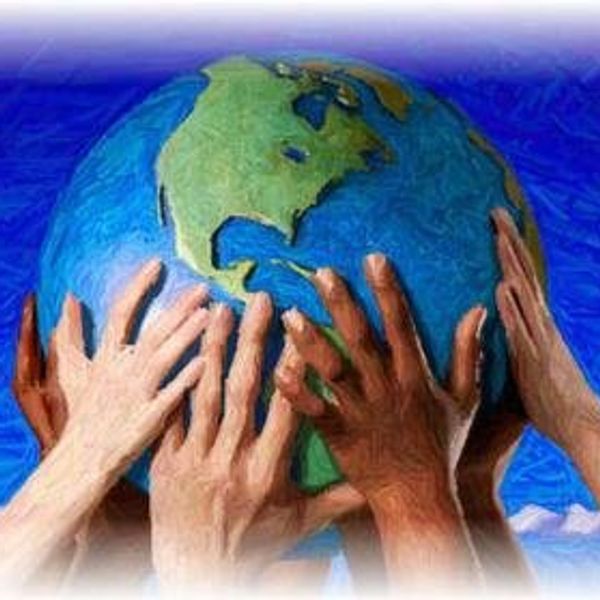
If most Americans were shown a picture of a group of people of different ethnicities, and asked to point out the person who was most likely to be an immigrant, it is most likely that they will choose the Middle Eastern woman, the Hispanic child, or the Asian man. They will probably not point out the white girl, especially if they met her and heard her fluent, unaccented American English (or relatively unaccented, considering I live on the east coast). To me, it is interesting and sad that so many people, despite America’s diversity, see race as an indication of legal status.
I am an immigrant. I was given American citizenship because my parents are American, but I moved to a country in which I had never lived, and therefore, I am an immigrant and that is part of my cultural identity. Immigration is a facet that can contribute to a person’s identity. A person does not have to choose that as a defining feature of their identity, but I consider this experience important to me.
Essentially, my view on cultural identity is this: cultural identity is you. Your cultural identity is not just your home culture and your ethnicity. It is that plus so much more. It is your history, the decisions you have made, your experiences, how you perceive those experiences, and how important they are to you. There are parts of your life that you cannot control, but overall, you choose your own cultural identity.
Of course, I identify myself as American. I was blessed to be born into a situation where I have the right to make my own choices and decide what kind of life I want to live. I cannot imagine what it is like to live in a place where I don’t have that. I am truly lucky.
I also identify myself as white. That is a culture in itself, and one that many are starting to put in a negative light. Talking about race and color in general has been a touchy subject in some places, and has been for a while. That doesn’t change the fact that color is beautiful no matter what, and shouldn’t negatively affect our self-concept or identity.
Other than being white, American, and female, the rest of my identity, including my cultural identity, is my choice. My college major is important to me. I am a music therapy major, and that is a huge part of my identity. College is a culture; the music student community and music therapy community are cultures, and I identify with them. I am Catholic and that is a culture I was born into, but I still choose it to be a part of my identity.
I choose to make my cultural experiences part and my childhood a part of my identity. Of course I am not Japanese, and I am careful not to infringe on Japanese peoples’ rights to claim their own culture and heritage, but Japan is a part of my own cultural identity. My connection to it is not a claim of belonging, but rather a part of my history. I choose to make my history a part of me, not as a Japanese person, but as someone who was born there, loved living there, and still loves to learn more about it.
This summer, I will have the chance to go back and discover more of it. I can’t wait.