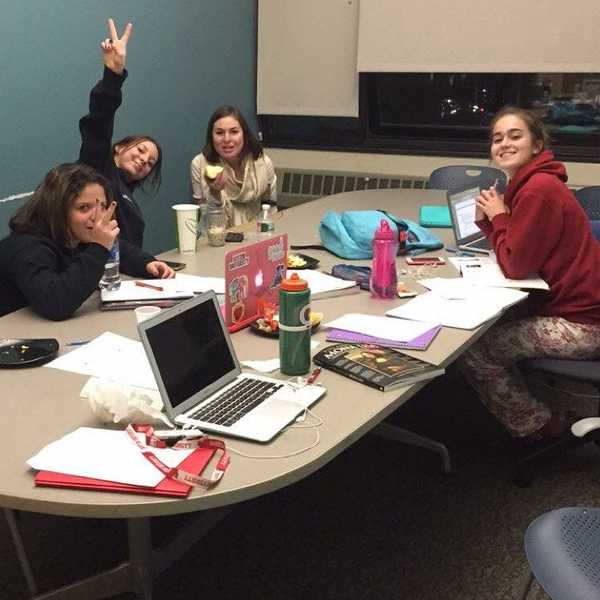

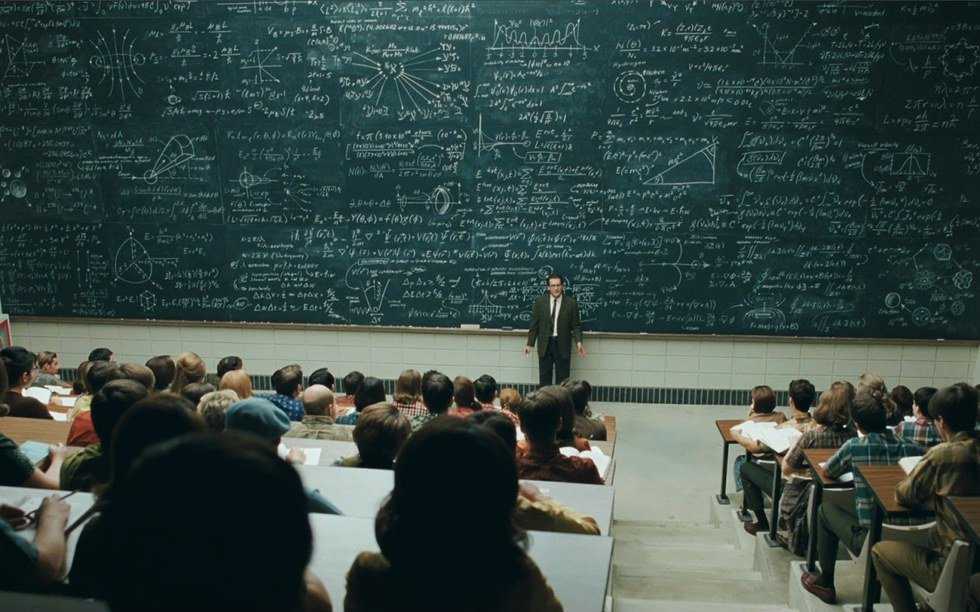
I was raised on the advice “don’t wish your life away.” But I would encourage every first semester freshman to do the exact opposite. Wish away that first semester. Rush through it to get to the second, because even though it seems like it will never get better, somehow it does.
The entire summer leading up to my freshman year at George Washington University, seemingly everyone I conversed with would spout off these age-old college clichés, such as “college is the best four years of your life” and “the first semester is so great. Everything is new and you have so much freedom.” Seriously? As a naïve, eighteen year old high school graduate who was about to embark on a journey over seven hundred miles away from home in a place where I knew no one and no one knew me, I somehow took comfort in those pieces of advice. Advice which, mind you, came mostly from middle-aged adults who had long ago graduated college.
What was I thinking? I valiantly moved east and set up my own roots in a dorm room with three people whom I had never met and not one person I could call a “friend.” Honestly, what was I thinking?
I wasn’t thinking. That was the problem. I refused to acknowledge any negative emotion that went along with starting my college career. No one told me that I would feel homesick, so I quashed that feeling.
No one told me that I would be lonely, so I ignored it. No one told me that I would feel completely lost in my academic career, so I avoided it. I am really good at avoiding things when I really have to. And I did an excellent job at hiding these emotions during that fall semester.
The main struggle of my first semester was time management. I had no semblance of it. Looking back now, having just finished my sophomore year of college, I ask myself if I ever actually did schoolwork. Netflix binges were my priority first semester.
I watched all of "Scandal" and "Friday Night Lights" that semester, becoming an expert in crisis management and high school football, but not philosophy or statistics. I had yet to learn that television is a reward for completing the academic tasks of the day.
So that, combined with some tedious gen-ed classes that I still question why I ever enrolled in in the first place, left me feeling lost and confused in my academic career.
But that’s the thing about first semester of college. I thought that high school had completely prepared me and that I wouldn’t have to put effort into the adjustment from high school academics to the university level. Isn’t that the point of high school, to be a college preparatory experience? I believed that being a great student in high school automatically meant that I would be a great student in college.
It doesn’t work that way. College is a completely different academic experience. I didn’t know that I had to map out the entire semester—each homework assignment, project, quiz, and exam—from day one. I didn’t realize how much time should be devoted to each class every day. I hadn’t yet learned how to balance my academic life, extracurricular activities and my social life.
These are the struggles that, with time, become less of a struggle and more of a routine.
My very first semester of college turned out to be the most challenging transitional period of my life. I desperately attempted to hold onto my old self while I unknowingly transformed into a new version of myself, and it was the most testing and necessary thing to ever happen to me. And I learned that after first semester, it does get better. It doesn’t become completely manageable, simple, or understandable, but it gets better.
The unknown of college is a formidable prospect, even from the rear-view mirror of the end of my sophomore year. The immense changes and adjustments that each college freshman experiences are what make that semester so painful. But believe it or not, it gets better. It really does.