
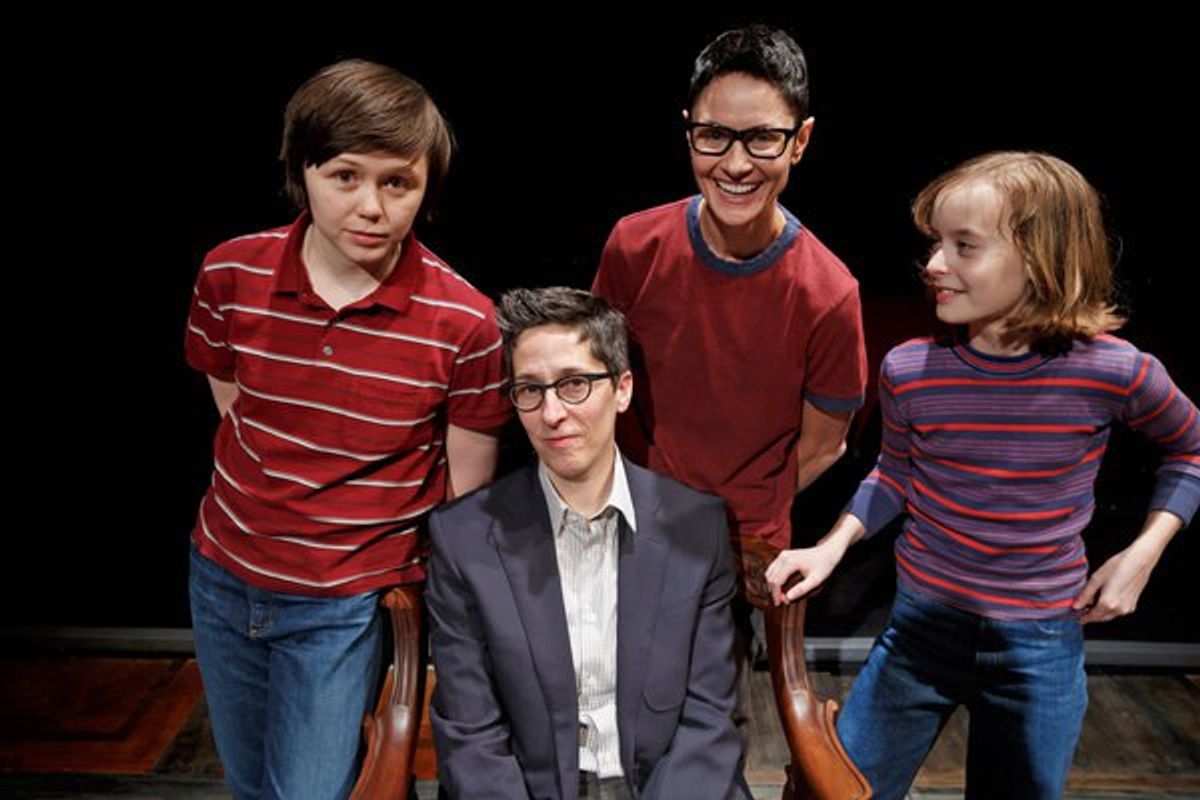
"The subject matter, obviously, is a complication in a Broadway market dominated by lighter material. The show’s producers, Kristin Caskey, Mike Isaacson and Barbara Whitman, who raised $5.2 million to finance the Broadway transfer, are emphasizing the father-daughter relationship and journey of self-discovery, rather than the sexuality, the suicide or the fact that Alison’s father ran a funeral home ("Fun Home" was the Bechdel children’s nickname for the business)."--The New York Times.
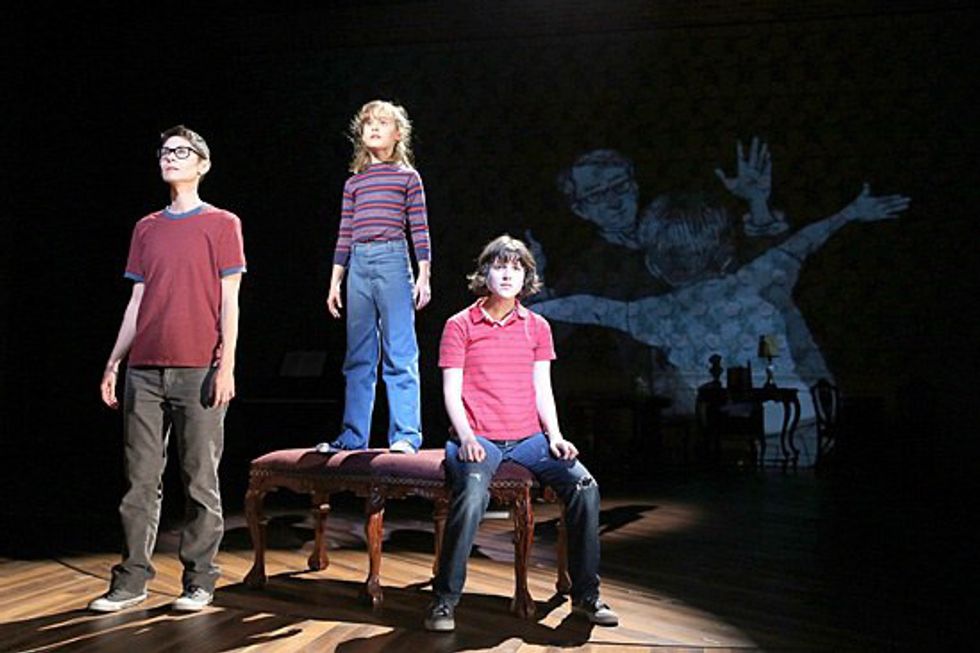
"Fun Home" in its original form, a graphic novel, simultaneously has many identical aspects but has a drastically different energy in comparison to its newish Broadway counterpart. For all of you out there who love nothing more than to belt "Changing My Major" when left alone in your apartment or jam to "Ring of Keys" in your car, I beg you to sit down with the graphic novel and give yourself the chance to be engulfed by Bechdel's crazy word-image combos. As a musical theatre fanatic, I instantly fell in love with "Fun Home" when my partner showed me a bootleg of the Broadway performance on YouTube (which, unfortunately, has now been taken down). I listened to it nonstop when I got ready in the morning, made a CD of the soundtrack for my car, and I still try to perform "Changing My Major" whenever remotely appropriate (it's like, pretty annoying for the people around me). Basically, what I'm trying to say is that I thought I was the queen of loving and understanding "Fun Home." But you're cheating yourself out of so much--if you're truly passionate about the story Bechdel tells--if you only give the musical a chance. Because, like the NY Times mentioned, the musical is a lot bouncier, and in trying to be less harsh for the benefit of its audience (in my opinion), a lot of hard-to-swallow details and beautifully haunting descriptions and images get cut or become implied. The complex world of Bechdel's O.C.D., her parents' relationship in its early stages, her father's traumatic past, and the dark details of her father's gay sex acts and possible predation are somewhat side-swept in the musical -- making the audience more comfortable, but putting far less emphasis on details that seem vital to the graphic novel.
Before I had read the book, I had always been (so grateful, but mostly) baffled that Bechdel had let her life be twisted and morphed into a musical, especially since she was not a musical theatre person before "Fun Home"'s process of transformation. “I do understand that there’s a difference between the play and my life, but it is a very strange and permeable boundary. It’s some kind of hall-of-mirrors thing. There’s been this strange feedback effect,” Bechdel says. After reading the book, though, I understand. I understand that the graphic novel, the musical, and the actual events are three completely separate entities which exist in different ways and for different purposes. I appreciate the graphic novel and the musical as two individual pieces of art, rather than one a remake of the other, but they do truly compliment one another and bolster the other's richness.
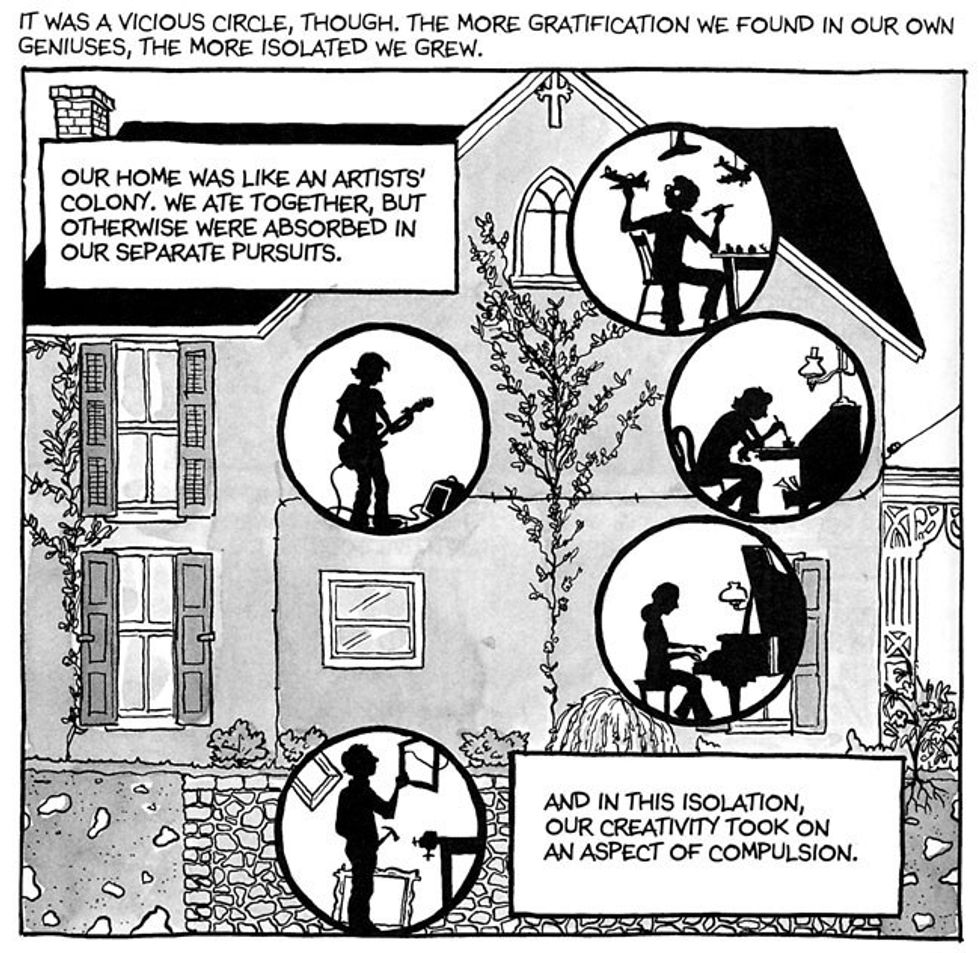
Sharing some of the love you have for the musical with the graphic novel will help you to love both more intensely than you thought possible. Imagining the amount of painstaking effort it took on Bechdel's part to draw each picture and to create the perfect corresponding line (all of which are filled to the brim with subtle, purposeful detail) is just mind-blowing, and you kind of owe it to her to read the book she poured her whole heart into for years to create. You can watch a video about the magic behind the process of turning a jumble of photographs and memories into her heart-breaking work of art here. Not only will you have a vast appreciation for the book once you read it, but reading the graphic novel will also making you realize the impossibly amazing job that Lisa Kron, Jeanine Tesori, and Sam Gold did in creating the musical:
The book is dripping with this heartbreaking elegiac tone. But that's not useful in a play because characters don't know what's going to come. So another one of our breakthrough moments in the writing came when we realized there was a time when Alison had viewed her coming out as a catalyst for her father's death. She says that in the book, and the book is predicated on her coming out as a catalyst. But in the theatrical version the thing that will break your heart is that when she comes out, she's not thinking about him at all. It's her life that is opening.--Lisa Kron (writer of the "Fun Home" musical's book and lyrics).
I don't know how they were able to delve into this hugely complex book and pick out the images and details that they thought were most important/would best fit a musical. But they did. And now "Fun Home" has five Tony Awards. And now so many more people have been touched by Bechdel's story since two mediums now exist for its telling. Also, there is now another unapologetically queer-as-hell musical out there, which is another form of visibility for the community. Basically, "Fun Home" is just the bomb.
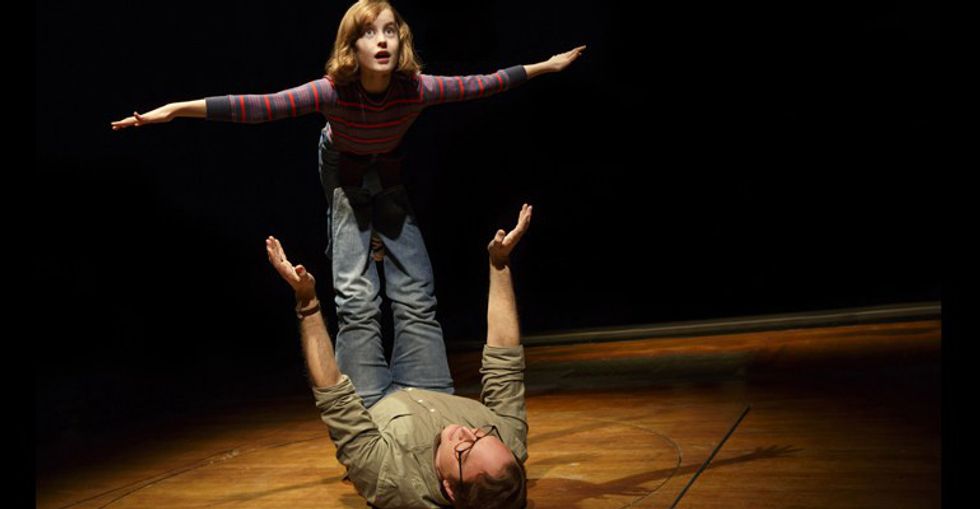
Below are a few graphic novel-musical image pairings that I think are incredibly powerful, and will hopefully encourage you to read the book if I still haven't convinced you:
Airplane, of course:



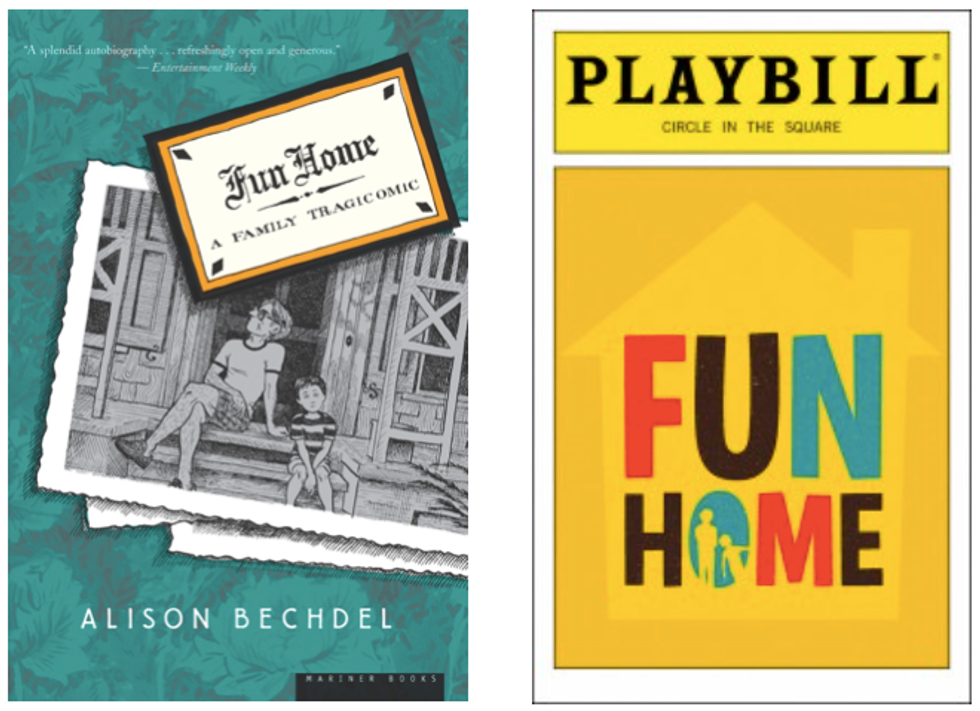
Now, if your library doesn't have it, you can buy it here.
Happy reading!















