

Last February I was given the opportunity of a lifetime: to travel to Cuba with my school’s music department. We would stay for a week and tour three different cities while playing concerts in each location. As Cuba had been just recently open to a small portion of the American public, I jumped at the chance to go and signed up for the trip right away. The promise of seeing a country not polluted by garish McDonald’s signs and free from cell phone service sounded like an incredible opportunity to escape the land of capitalism. But as the trip got closer, I became more worried. What if something went wrong? What if someone got arrested by the police? Why was “toilet paper” on the packing list? After about an hour of outlining every possible situation that could end in a horrible outcome to my mom, I felt better. I was going with my friends to do what I loved: play music. Everything else was a minor detail. So I left America in good conscience that I would have an amazing time.
The first thing I noticed about Cuba was the heat. As soon as I stepped off the plane, I was hit with a wave of humid air, even though it was about 11:30pm. I know, I know, duh. It’s a Caribbean country. But still, it was February and I was coming from New York, where the temperature was still hovering around 40 degrees. I also saw a failing of the Communist system; the infrastructure was very old and outdated, some buildings half-exposed to the outside elements. Yes, many of the buildings in Havana were decrepit. There was not much, if any, of the artificial glamour that we experience in the United States. And toilet paper was not an optional requirement, as I thought while I was packing (please, bring a roll or two). But there was something different, something more organic. There was a peace about the people in the street. They were calm, relaxed. If there were live musicians playing in the street, they would dance, and invite us to join in. We didn’t speak Spanish and they didn’t speak English, but still, we communicated.
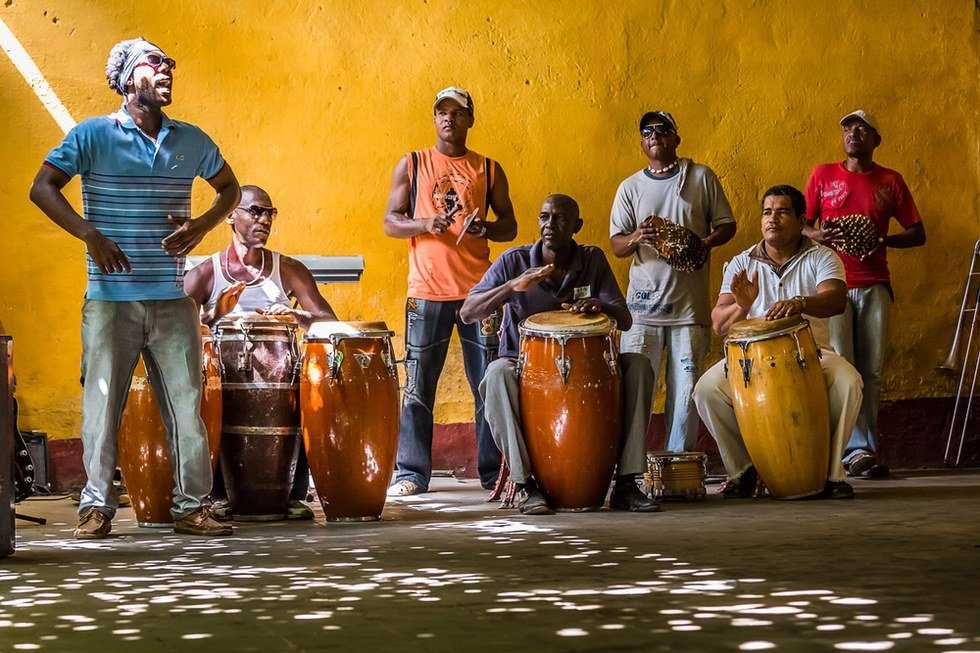
Music seemed to be one element of our stay that transformed Cuba for me. Naturally, being on a music tour, I was around music every day on the trip. But besides rehearsing with the orchestra or listening to the chorus, I was also exposed to people on the street singing, playing instruments, and just jamming. How can I describe to you how magical that was, to dance with two elderly people, to be invited to play bongos with a drummer, to watch an older man become transfixed by one member of our group’s trumpet playing. And of course, the concerts we played. All the venues we played at were gorgeous old theaters that added to the atmosphere of our already historic visit. They may not have been air conditioned, but they provided a perfect location to share our music with the citizens of different cities.
The night that was definitely the most emotional was our last concert in Santa Clara. The theater was packed. Everyone played with their entire heart and soul, making sure every note and dynamic were followed. After finishing the set with the orchestra I remember looking out at the audience and seeing them, wild with applause, and I felt tied to them through the bonds of music. And later, sitting in the audience while the band played “New York, New York” and hearing the audience sing along, I realized how much music can help a person, help a city, help a country. Cuba still needs a lot. I remember hearing my friends describe talking to some locals and hiding when they heard sirens because they knew they would be arrested if they were seen talking to us. But just seeing how much instruments and voices aided their spirits showed me the power that comes with music, the language that can be understood by anyone.
















