Mr. Holmes, the latest adaptation to the Sherlock Holmes universe, gives us quite a different look at the famous sleuth.
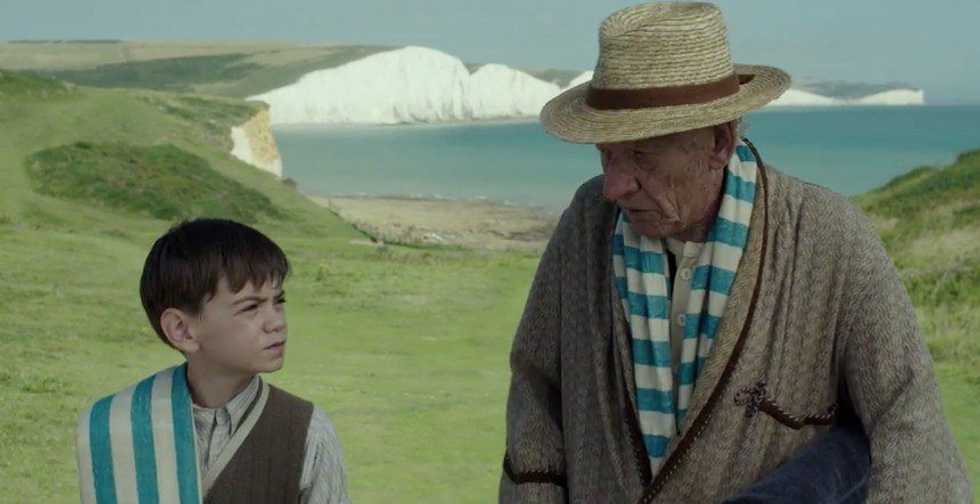
Set in 1947, we witness the last, waning years of the world’s most famous detective. Sherlock, played by Sir Ian Mckellen, now lives secluded in the countryside with only his cook (Laura Linney) and her precocious son (Milo Parker). Now losing his memory at the cost of his old age (he’s now 92), Mr. Holmes travels to Japan in search of an herb that will aid him in regaining his fading memories so that he may finish writing his first and only book, which details the events of his very last case.
Beautifully shot, we see scenes of incredible serenity with the white Cliffs of Dover in the background of Mr. Holmes’s estate, as well as unspeakable destruction as Sherlock walks down the streets of a recently devastated Hiroshima. The events are wonderfully interwoven, as in any good mystery, though here with a slower, more delicate pace. For those seeking the thrills of a more youthful Holmes, I might suggest Guy Ritchie’s Sherlock adaptations. This film, however, sets its focus on the deeper human issues – ones that emerge from years of pensive solitude, and the result is a profound ethical statement. The film may seem slow at times, but the writing and the incredible acting more than compensate to keep those interested in good filmmaking absorbed in the mystery.
“Mr. Holmes” seeks to remind us that popular stories are often embellishments, just as Dr. Watson’s depictions of Sherlock are, at least in this film, not only embellished, but overdramatized and perhaps over exaggerated. In one scene, we see the aged detective watching a movie based on himself, only to hear Sherlock giving out a patronizing chuckle at the absurdity of Watson’s fictionalized drama compared to the truth of his own real life experiences. Sherlock Holmes is, of course, a fictional character to begin with, but this film attempts to move past this to give us a more contemporary, post-modern Holmes, proving that a classic is indeed something that never finishes what it has to say.
What’s more is that it is refreshing to see filmmakers dedicated to a slower pace and a subtle story line. It may be a less exciting experience, but ultimately it draws the viewers’ attention to the finer details and the deeper elements that define the story, rather than the all-too-common contemporary use of constantly moving shots. In fact, popular film as a medium, which includes television, appears to have adopted a standard shot where the camera seems to be hand-held and never still, even in close-up shots. The shot shakes, bounces, and jostles every way except holding still. Obviously, this is to create a more exciting and dynamic impression, but it is important, I believe, to question the value of creating an allure to draw in the crowds over asking viewers to be patient enough to sit through a subtler work of art. Film presents a promising medium for an emerging post-modern culture, one that thrives on dynamic variety rather than tradition and standard. Given this, I think it is time we begin asking ourselves what kind of respect we want to give film. Should it remain the foreground for the allure of celebrity glamour and dazzling effects, or can we allow for the independent film industry to say what it has to say to the general audience? In other words – do we need billion dollar budgets and Hollywood stars to keep us entertained, or are we ready for something closer to art than entertainment?