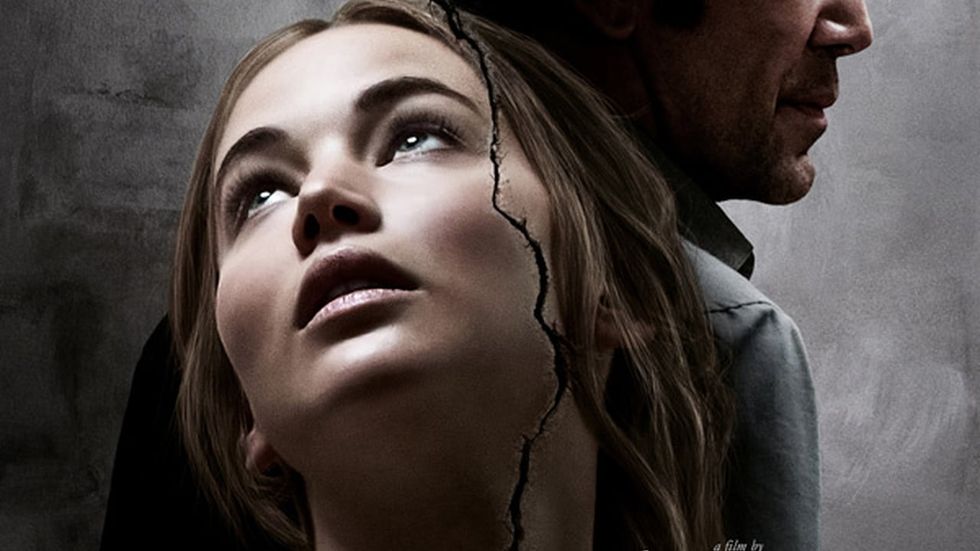
My desire to analyze this movie was many things: morbid, pretentious, unrelenting, unpleasant...
But it was not immediate. My instinctual response to mother! included awkwardly scurrying from the theater and grabbing onto the nearest grounded object to steady my trembling hands.
Darren Aronofsky’s latest slow-boiling mind-melter’s target audience doesn’t include the standard moviegoer. Unlike your actual mother, this film won’t answer your questions, won’t hold your hand, and definitely won’t make you feel as though everything’s going to be okay.
mother! revolves around the relationship between a man and a woman in their idyllic country home, which she has poured blood, sweat and tears into restoring. Unwarranted guests trickle in, pleasing Him (Jaiver Bardem), but disrupting the secluded, intimate life with Him for which Mother (Jennifer Lawrence) aches. Eventually, when Mother reaches out for His attention, the guests respond by stealing away from Mother everything that mattered to her.
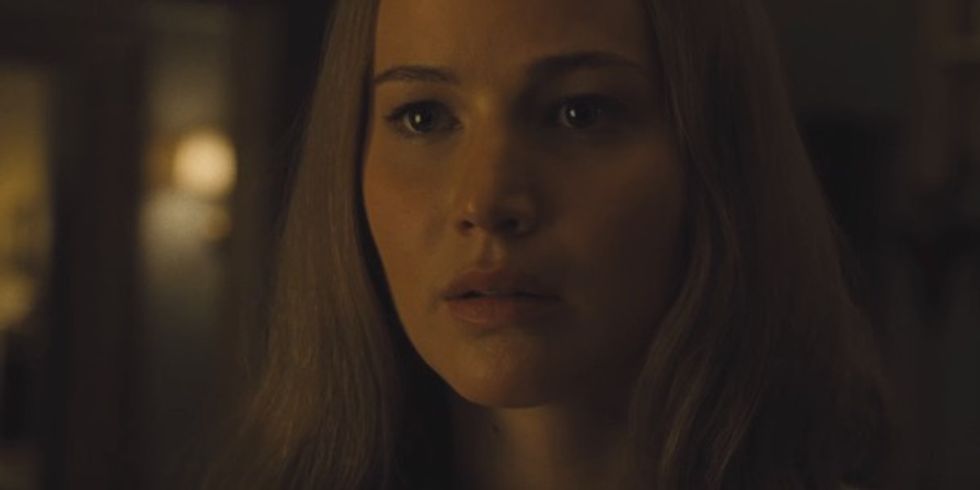
Most moviegoers who are hungry for a standard narrative will surely be disappointed - and unsettled. But Aronofsky certainly has some things to say through Mother’s pain.
Spoilers ahead.
At the start, Mother (Earth) enjoys seclusion with her loving husband Him (God), a writer (creator), but He seems to long for something more. When the guest (humanity) knocks at the door and disrupts the equilibrium, He seems thrilled to have some company, but Mother is not so sure.
The next day, the guest’s intrusive, inconsiderate wife arrives, further disturbing Mother and the tranquil home she has created. The guest reveals to Him that he (the guest) is dying, which is why the guest has reached out to his favorite writer before he passes. In essence, man acknowledges his march toward death, and in this knowledge, reaches out for relationship with the Creator, simultaneously upsetting Mother and her home.
After Mother demands that the guests leave, the guests ignore her pleas and copulate in her home, symbolically opening the door for more intruders. Not long after the guests’ sexual encounter, their sons (Cain and Abel) arrive, griping about their father’s will arrangements, and the argument turns violent, despite His efforts to break up the fight - man violates Earth’s sanctity with violence and bloodshed. God rushes to the aid of man, leaving Earth to fend for herself as Cain wanders the property menacingly.
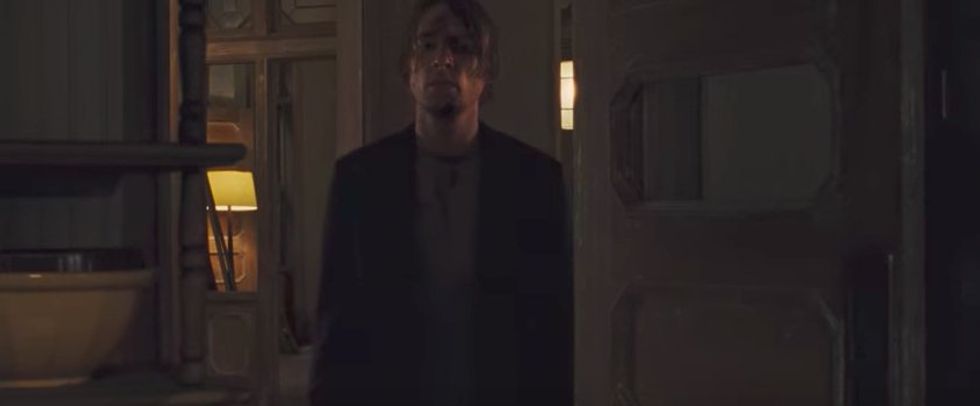
Even more ignorant guests arrive in mourning for the son who has perished, and He receives every thanks for opening His home to them, while Mother remains unnoticed. Mother Earth herself finally cries out for re-connection with her lover God - a request He gladly obliges. After a night of passion, Mother is pregnant, and this child - a son (Jesus) - inspires Him to write his magnum opus (the Bible).
Before the son is born, His work is given more than enough time to touch many lives - so many, in fact, that one night, Mother finds her home invaded by more unwanted guests than ever. They claim to have been changed by His work, touched by its intensely personal nature.
This is where things start to get really intense, so those who are sensitive should avoid reading further.
The guests’ iniquities, at first, are as harmless as lining up to use the bathroom without permission; things escalate slowly but steadily, as people begin entering private rooms, stealing things, and painting the walls. This soon grows into people tearing off wall fixtures, smashing through the floor, and shouting at Mother in anger. She loses sight of her husband and begins to go into labor as impossible chaos erupts, a la SWAT teams and gunfire; religious movements, human trafficking, and terrorism all rise and fall in Mother’s home as she groans in agony.
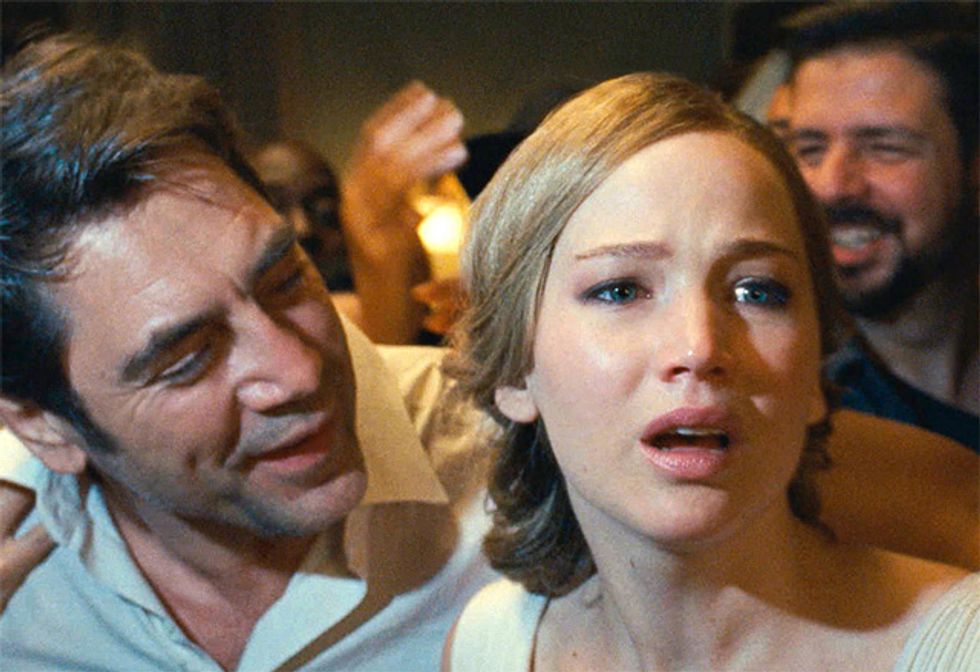
Mother’s breaking point comes when she finally has her child, her one moment of respite, and He presents His child to the people, only to have them kill (crucify) him and eat him (which Jesus teaches on in John 6). While He is distraught, He begs Mother to forgive them (the goal of Jesus’s sacrifice), at which point she loses hope and cleanses the house with fire (which is discussed in Revelation). And from the ashes, He creates a new house, with a new Mother (a new Earth, also discussed in Revelation).
mother! deserves so much more than I can give it in the space of an article. Aronofsky’s vision is hellish, maddening, and for anyone but casual moviegoers. But it can easily start an interesting dialogue when taken in by the right audience, as evidenced by this interpretation, and the many others borne from the nightmare.