

“…We will be together forever!” The head of government from Italy spits out in his thick attempt at an accent, his hands jerking back and forth as he enunciates each syllable.
I look at Nirvana sitting beside me. She rolls her eyes as I choke back a laugh. Little did we know that this was only the beginning of the entertainment to come in the next two and a half days.
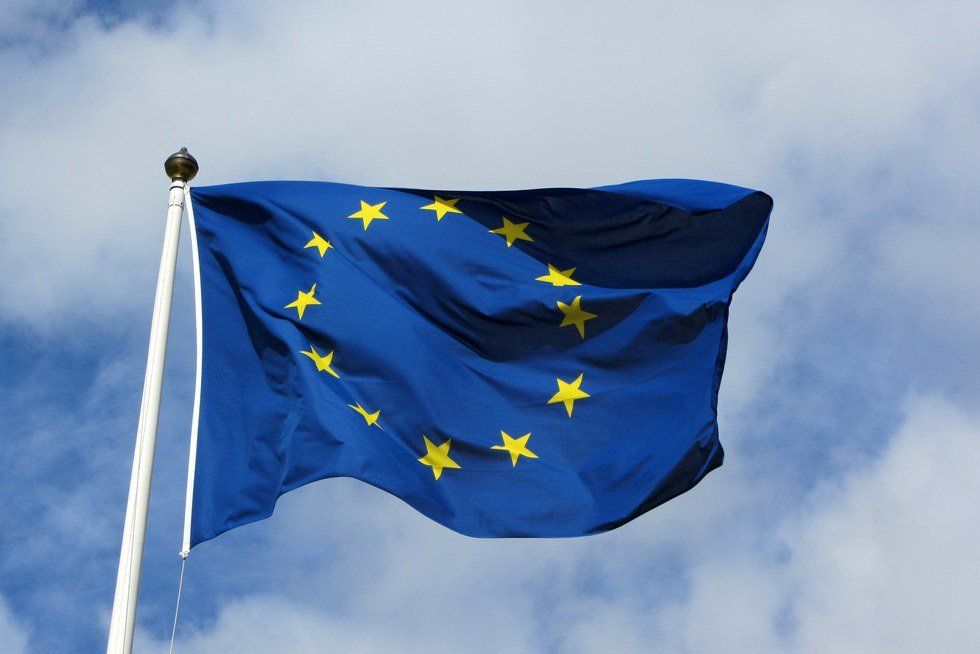
We had just arrived in Arlington, VA ,right outside of Washington, D.C. As part of our European Union class we were taking part in an European Union Simulation with 15 other universities from the Mid-Atlantic region. I was taking on the persona of Ulrike Lunacek, a European Parliamentary Member from Austria. It was my job to take her lens into debates to amend and vote on proposals dealing with the current migration crisis as well as the ensuing Brexit situation in Europe.
Coming into the simulation, if I am honest, I was skeptical. I didn’t feel prepared. Yes, I understood the basic concept of the European Union and its goals to move towards integrated economics in a single market and the ways in which the various bodies—specifically the Council of Ministers, the Commission, and the European Parliament—work together to create legislation and unify its 28 member states. But who am I to say what Austria would want to do with the influx of hundreds of thousands of migrants? How should I know what Ulrike Lunacek would want as far as caring for these refugees and working towards a common plan of action?
On top of all that, I was kind of worried about being surrounded by fanatics. And by that I mean people who are super passionate about all of this. Not that that’s a bad thing. I find it admirable actually. It’s just that discussing a hypothetical solution to a real life problem doesn’t get me fired up in the way it seemed to rally together these other students. I was worried they would see right through my fraud, my silence, my non-investment when they were so invested.
So often I found myself torn in different directions. Wavering between the platform of my left-wing party, the loyalty I have towards my nation of Austria, and duty as a representative of European citizens and the rights of people as a whole was a lot to balance. Often I found myself questioning whether Ulrike would support a specific proposal…and whether that would be because of her identity as an Austrian, a lesbian, a European, or even more simply her convictions as a human. Sometimes these interests would conflict and I had to sit in uncertainty as to what to decide.
To me, this feeling of torn loyalties, mixed identities, extends beyond this simulation. Sometimes in life we are asked to take a stand on one side or the other, to choose between the binaries of who society defines us to be. Are you with us or against us? But what if it’s not that simple? What if part of me sits with you and part of me is across the sea? What if I am more than the labels attached to my name—a woman, a white person, a die-hard Jersey fan despite lacking strong convictions as to why, a Christian, a student, an American, and on and on the list goes? How do we begin to reconcile the various parts of who we are as we confront the real life crisis’s our world is facing?
More and more I'm coming to see I don’t have the answers. I don’t believe there are answers, at least not easy ones. Perhaps as we begin to cut away the labels of who we are told we are, we will begin to see the complexity of ourselves. We may begin to see ourselves as unique individuals representing not a single categorized label but a blend of all that makes us, us.

















