


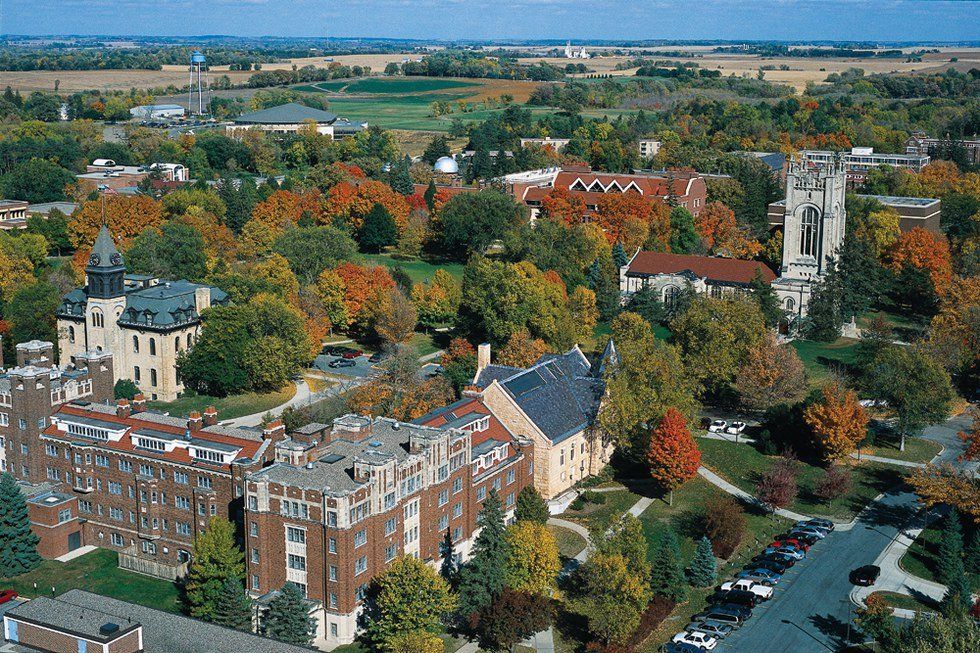
Sitting in the upper level of the student center at my liberal arts college, I am in a building filled with privileged young adults. Attending Carleton College costs over $62,000 per year. It would take my family years to pay for a single year of my education in full, but some generous scholarship donors have paid my way. I am lucky to even be here.
Across the room I hear a couple of my classmates sharing their experiences from winter break. One of them found trouble getting along with their old friends from home. "I don't mean to be elitist," he says, "but all my friends just do nothing but play video games, and they don't really think very much about things."
Apparently his friends didn't have the opportunity to go to college, let alone attend one of the best schools in the nation. I can relate. Most of my friends back home in Omaha didn't go to college right after high school. Those who did are attending community college, and I don't blame them. College is expensive.
It's expensive because it gives you so much. Beyond an expanded earning potential, you gain unimaginable critical thinking abilities and creative problem solving skills. You have access to more resources than you would ever need. You become a better writer and a smarter reader. These are skills that I think everybody should have, but I understand that the cost in dollars and time keep most people from obtaining them.
This is why we can not judge people who do not attend elite colleges. We are no better than they are, just more privileged. Sure, there are other ways to obtain critical thinking, but they require personal effort and self-discipline, which are not easy to muster. At college, we are given exercises to sharpen our minds. Uneducated people are working hard to support themselves, so educating themselves is not a priority. Survival comes first. My meals are paid for by my scholarship. I am lucky.
We also will not be able to avoid the uneducated. Over half of the U.S. population does not have an undergraduate degree. They will work for some of us. They will serve us coffee and food. They will check us in to our hotels. They will clean up after the privileged mess we leave everywhere we go when we decide that it is too much to respect people less fortunate than us.
I overheard my classmate making a simple judgement after one term of his liberal arts education. If he was already frustrated with his friends that didn't go to college because they were behind, it can only get worse. The amount of intellectual growth he experienced in the first year will only quadruple once he gets his diploma.
Uneducated people will still be uneducated, leaving them further behind. So will the elitism continue to grow as well? If he finds his friends' lack of growth "annoying" now, will he soon feel that he has to put up with a lower quality people? Will this expand further into complete disdain for the uneducated?
Hopefully not, but I would not be surprised to come back for my 25th reunion to hear my wealthy classmates throw around elitist comments.
How can we avoid elitism in the future?
Well, first of all we should check our privilege. We are ridiculously lucky to attend some of the best colleges in the world. We should be proud of our achievements, but practice humility, knowing that not everybody has had the same opportunities as us. When people are ignorant to the world of knowledge we have gained through our education, we should understand that this is not their fault. We should be willing to educate, but also know that some people do not wish to be educated. We can keep the gap between the educated and uneducated bridged if we are willing to cooperate with people of all backgrounds and see them as our equal.

















