
“It is an odd paradox that a society which can now speak openly and unabashedly about topics that were once unspeakable, still remains largely silent when it comes to mental illness.”
-Glenn Close
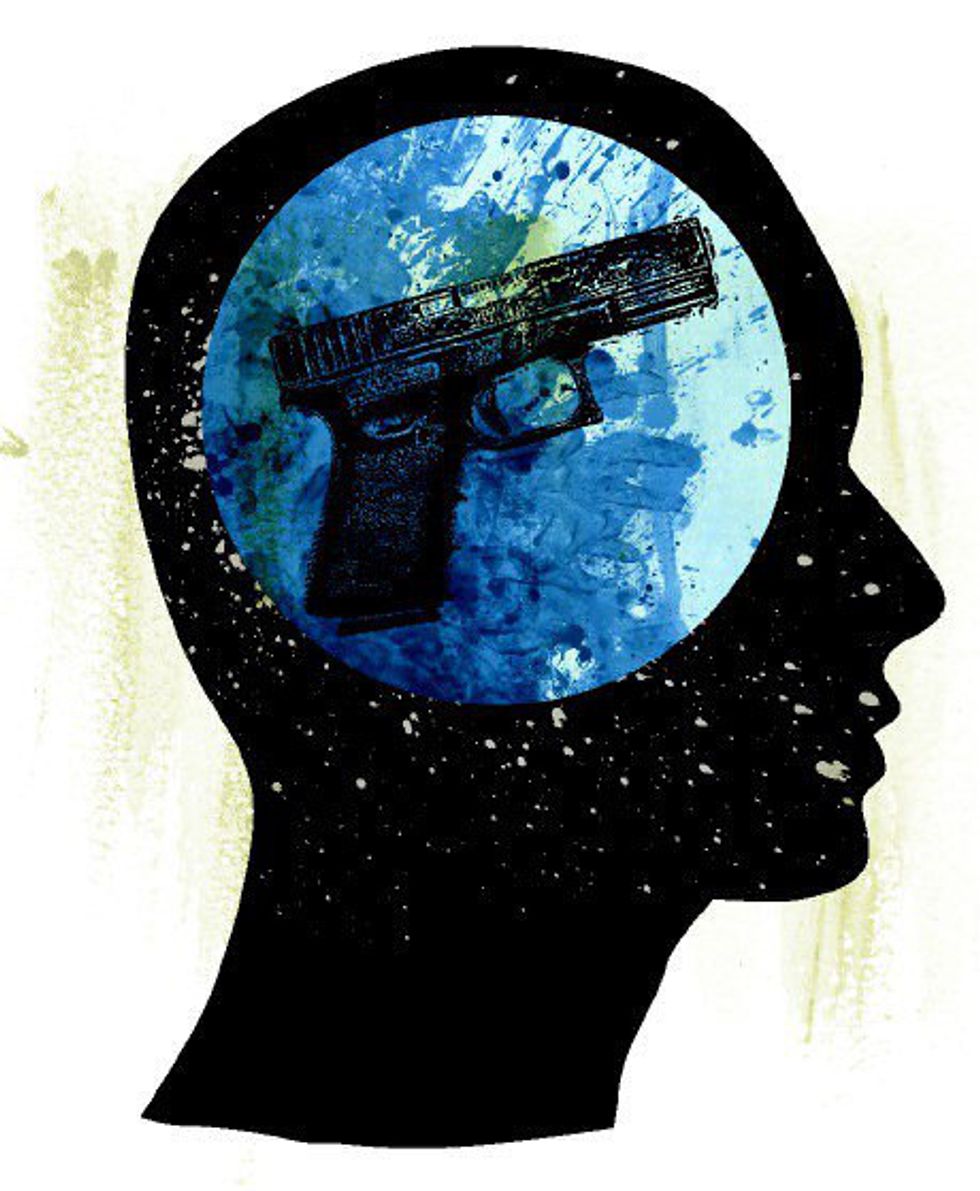
The connotation of a stigma suggests “shame,” which perpetuates silence. A silence that can marginalize an entire group of people and suppress them, promoting discrimination. An unfortunate reality that we experience is that when there is a mass shooting, the news media, and conversation makes hateful comments about mental illness and exasperates the idea that those who say depression are no different than the mass shooter. We hear erroneous rhetoric about how the shooter pulled the trigger in response to depression, anxiety, bipolar disorder, etc.. However, these comments are often made without thinking that there are millions of people in the world living with the same mental health condition who would never do anything like that or even anything violent for that matter. These comments essentially force individuals with mental illness to hide behind a thinly constructed veil of fake happiness so that the world will not perceive them as some suspect class who is likely to pull a trigger on a school group if they could get their hand on a gun. This is discrimination.
Systemic privilege is most always associated with gender, class, race or sexual orientation. However, what is less notably defined as “privilege” is mental health. To have a brain that produces the appropriate amount of serotonin, to cry without self-harming thoughts, to be sad without thinking of suicide, to get upset not as a result of anxiety, to sleep without fear of waking up, to eat without seeing it as a chore, to laugh without being broken, to express yourself equally inside and out is privilege. There is a notion that those living with mental illnesses are supposed to be fixed or are supposed to perform as if they were healthy. However, like gender, class, race and sexual orientation, mental health is a privilege. Those suffering from anxiety do not wake up in the morning with the thought “today I’m ready to have anxiety.” Rather they wake up with the thought, “I really hope I can get through the day without my anxiety getting in the way.”

Mental illness can distort someone’s ability for happiness. This distortion forces the general pubic to see people who face mental illness as deviating from the social norm. Those who battle these should not feel as if they are some suspect class that is completely marginalized from the rest of society. Understanding mental illness is the first step. However, we can not simply talk about mental illness when someone opens fire on a school or movie theater. We, as a society, give mental health the attention it deserves only when a tragedy resulting in death occurs. This is unacceptable. By doing this, we create a fallacy that all individuals with a mental illness have the capability of killing people, this is a stigma that is both disrespectful and wrong. This is a major issue in both our government and our society. We need to stop addressing mental health in relation to mass shootings or only when somebody dies. We are framing the conversation around mental health completely wrong and only enforcing a stigma that needs to be abolished. We see it as something we can prevent however, you can not prevent depression or anxiety. If you could, do you not think the people who have it would snap their fingers and make it disappear
We have the statistics to prove that the vast majority of people who commit acts of violence do not have a diagnosed mental illness. Conversely, those who have mental illness are far more likely to be the victims of violence than the perpetrators. The stigma is further enforced when seeking medical attention for depression or anxiety is viewed as stronger evidence of violent tendencies than going out and purchasing a firearm whose only intention is to take life. This is where the stigma ensconces itself. Forcing people to fear treatment simultaneously deviating from the social norm. Furthering the stigma are our own politicians like the Speaker of the House Paul Ryan who said, “People with mental illness are getting guns and committing these mass shootings,” after the shooting in San Bernardino, California. Blaming mental health problems for gun violence in America gives the public the false impression that most people with mental illness are violent and dangerous people. In 2016, it is time to change the conversation on mental health. Instead of focusing on the dangers of mental health, we must begin moving the conversation toward compassion and appropriate treatment. Speaker Ryan — mental health is not in itself the root of the problem, the lack of available treatment under your leadership is.