

Journalists are taught not to include the membership of criminal suspects to historically marginalized groups in their work unless it’s directly relevant to the story. Race is likely the most common example of where this comes into play but it extends far beyond that. The fear is that such coverage will further stereotype those groups, and needlessly. Despite this principle, coverage around Meechaiel Criner, charged with killing University of Texas freshman Haurka Weiser earlier this month, has focused strongly on the facts that he was homeless and under the custody of Child Protective Services.
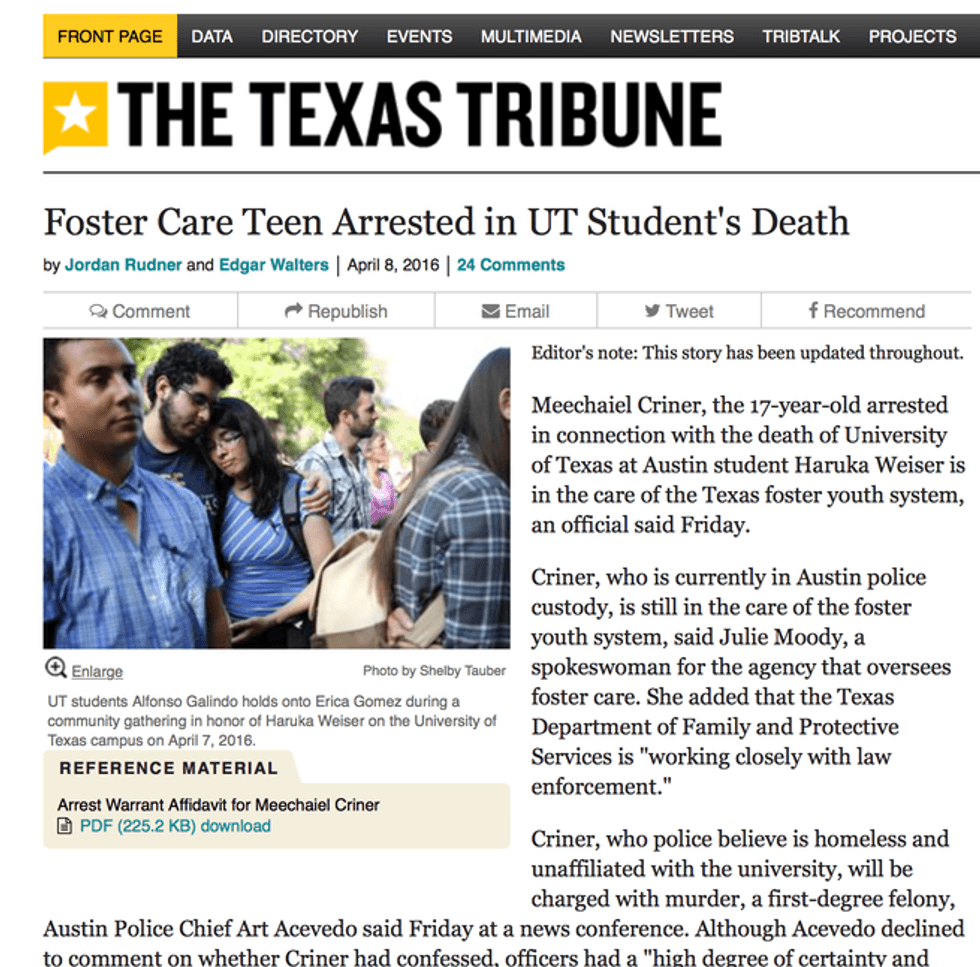
The result has been alarming. One student petition created last semester calling for the removal of the homeless from Guadalupe Street, an area directly across from campus, gained traction quickly after the incident, currently standing at more than 2,700 signatures. Comments on the petition like this one, group all homeless into a category with Criner, showing the impact of such coverage: “Despite previous outcries from UT students and parents, aggressive homeless people have been allowed to become a permanent part of the landscape where our students live and study. One student death by one homeless person is one too many. It's past time to stop putting our students at risk.” The first word of the headline on stories of Criner’s charge by the Daily Mail, The Dallas Morning News, Fox 7, People Magazine, and NBC News go right to his homelessness, just to name a few. Much of their coverage focuses on it as well. Some like The Texas Tribune focus on his CPS situation with their headlines instead, harping more on that in coverage. If it was easier to tell who is or had been under CPS custody, I suspect that similar calls would be occurring there.
While it makes sense to look at who an alleged killer is, in the interest of understanding them to prevent similar incidents from occurring in the future, I’ve seen nothing to link Criner’s homelessness and custody situation to the incident. It’s worth mentioning, but the outpouring of stories emphasizing these aspects of Criner has been too much. It’s time for the media to stop harping on these aspects of Criner’s life without the relevancy to back up the coverage, as it’s strongly adding to the stereotypes around these groups, needlessly putting them in danger.

















