So much of Donald Trump’s candidacy is rooted in anti-foreigner sentiments. He wants to build a wall along the Mexican border, he wants to ban Muslim immigration, and, above all, he wants to make sure people see the United States as superior to the rest of the world.
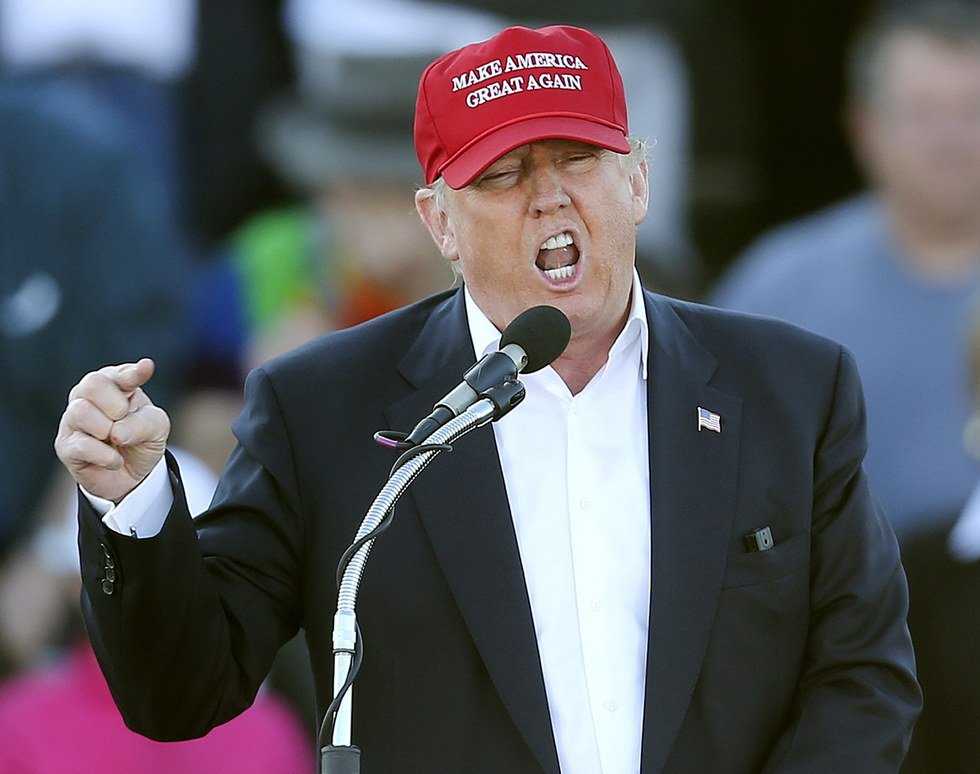
But so much energy is spent focusing on the broad campaign slogan claiming he will “Make America Great Again” that little time is spent by voters trying to figure out just how.
One of Donald Trump’s major policy proposals is to impose substantial protective tariffs on imported goods, effectively closing off our borders to international trade. In essence, this is a tax on goods we purchase from other countries. Let’s take our cars as an example. Free of a protective tariff, we can buy a Japanese-produced car in the United States for the same price as it sells in Japan (barring costs for transportation). And free of tariffs, the car produced in Japan will be cheaper than an equivalent car produced in the United States because it is cheaper to produce the same car in Japan.
So at this point, we might say that importing cars is better because it is more expensive to make quality cars in the United States.
Now let’s figure in a protective tariff, such as the one Donald Trump proposes. In this case, buying a Japanese-produced car will cost an American buyer the selling price plus the amount of the protective tariff. So in effect, a protective tariff raises the cost of foreign goods for consumers.
If you’re making inferences, you might be thinking that this is great. Since foreign goods are now more expensive, people will start to buy American-made goods. This will help our industries, particularly those most affected by trade (like manufacturing).
And this is the truth. In effect, protective tariffs work to strengthen domestic industries. This results in a chain reaction: The newly-strengthened industries hire more people who then spend more, resulting in even stronger domestic industries because of the reinforced demand.
In reality, however, this is at the expense of the consumer. Although more people may end up employed and salaries may increase, the cost of living will go up substantially.
Think about it: If we’re only strengthening our domestic industries by artificially increasing the price of foreign goods, it means that consumers must now pay more for those goods even when they buy them domestically. So all of those foreign-made electronics we depend on so much will either have to be produced here at a higher cost (simply because we just don’t have the same resources available here), or imported at a cost that is artificially high.
The underlying principle here is that protective tariffs strengthen domestic industries at the expense of a higher cost of living for consumers.
And let’s make something clear: Economists overwhelmingly agree that protective tariffs hurt overall economic well-being. And, at first, it may not be so obvious why.
One of the most basic economic concepts is called comparative advantage. What it essentially means is that a producer who can manufacture a good more cheaply than another producer should produce that good and then trade it with those who find it more expensive to make that good. This is mutually beneficial for the countries engaging in such trade; the producers of that good can focus on what they do best and most efficiently while the foreign consumers of that good can focus their resources on producing what they do best and most efficiently.
What this means is that when countries are free to trade, they will allocate their resources to producing the goods that are most cheaply produced and import the goods that are relatively more expensive. For example, if the United States was full of dairy farms only, and China was full of forests, it would make sense for the United States to focus on producing dairy products, and for China to focus on producing lumber products, not vice-versa.
It really is intuitive once you get the hang of it, which is why it's surprising that Donald Trump -- a graduate of the renowned Wharton School of Business with an economics degree -- argues for the opposite approach. It makes sense in that he is appealing to the frustrated blue-collar workers who have lost their manufacturing jobs to outsourcing, which is a perfect manifestation of the idea of a comparative advantage because it is cheaper to manufacture many goods in other countries. So by proposing these tariffs, he will likely win the vote of the disgruntled workers who may have been laid off from such manufacturing jobs.
But what is lacking in his policy stance is the recognition that, in a modern economy, protectionism just doesn’t maximize economic potential. It results in less-than-optimal economic outcomes that cause us not to produce to our full ability given the resources available. And our full ability does not mean producing a little of everything, but a lot of what we produce cheaply and effectively. So if we lose manufacturing jobs because we do better in financial services or technology, then it is for our economy’s best.
I’m afraid that Donald Trump may have gotten his campaign slogan wrong. It might be a little inappropriate to say he’s going to “Make America Great Again.” After all, how can our country truly be great if people can’t afford the goods that are essential to a modern economy? I hope if we have a President Trump, he rethinks his stance on free trade -- it is in all of our best interests.
But until then, correction to the Donald slogan: “Make America Expensive* Again.”