
CW: Alcohol, gambling, domestic violence
Minor plot spoilers
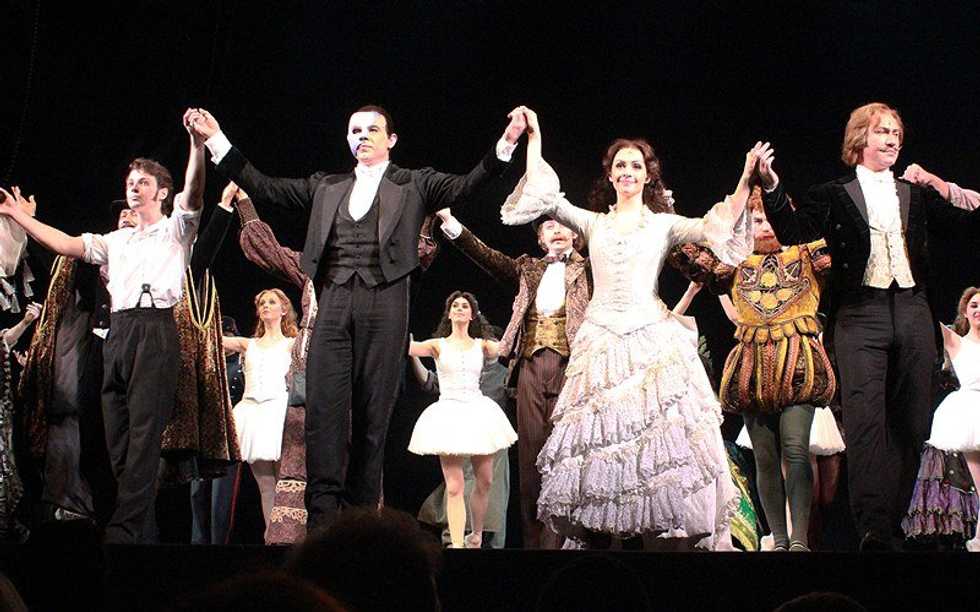
Few people know that The Phantom of the Opera has a sequel called Love Never Dies, set ten years after the events of the original production. A quick Google search will show scores of reviews saying how terrible the sequel is. With all due respect to the theater critics, I have to disagree. I think that this play has gotten an unfair treatment – it is truly worthy of your time.
Love Never Dies is set on Cony Island at a time when the “carnival freak show” was still a popular attraction. The Phantom is living and working there, assisted by Meg and Madame Giry. Christine – who does not know that the Phantom survived the mob at the opera house – has married Raoul and has a ten year-old son named Gustav. The play begins as the characters all converge on this point and meet again, setting in motion a new sequence of events.
The critique that I have heard most often of this show is that the character development is unrealistic – specifically Raoul's. In the ten years since we have last seen him, Raoul has become addicted to gambling and alcohol. He is never depicted on stage as physically abusive towards Christine, but that is hinted at. Without a doubt, he is a poor husband and father.
The critics say that this is not the Raoul that they know from Phantom of the Opera. It is not the character that they came to care for, respect, and believe that they understood. To that, all I can say is – I'm sorry, but it's been ten years. People change.
I understand that denial is a powerful force. It is so much easier to believe that Raoul only turned out this way because of shoddy writing. Otherwise, we have to step back and admit that this change is realistic, and not just for Raoul – in the real world. If we accept that Raoul became an addict and we didn't predicted it after The Phantom of the Opera, then what does that say about our predictive power in our own relationships? Raoul's character in Love Never Dies forces the audience to confront a slew of uncomfortable truths, and I applaud the decision of the creative team to go with that rather than with something easier. They risked alienating audience members to tell a story in desperate need of telling.
Related to the issue of Raoul's character development is the critique that Love Never Dies is sexist because Christine stayed married to him for the last ten years. Related to the idea that we could not have known what Raoul was going to be like ten years later just from what we saw in Phantom of the Opera (though there are some extremely clever tie-backs), Christine had no way of knowing either. She married a man that she loved, not one who was going to make her unhappy. Throughout the play, there are moments where the man that she married seems to be within reach. The idea of living for that hope, for those wisps of possibility that seem as though they might materialize into something solid and lasting — that is a very real situation.
The critique is that Christine has fallen victim to bad writing, but this writing is honest and true. It would have been easier for the audience to accept her if she had left Raoul, I think, but Love Never Dies reflects a real world in which not everybody leaves. Not only that — it validates that decision, without sugarcoating what Christine's life has become.
The Phantom's character has changed in more subtle ways, but it is gratifying to see him finally start to learn the difference between love and obsession.
The music of Love Never Dies is sublime – very different from Phantom of the Opera, but never forgetting its roots. The sets, too, are brilliant. Seeing Christine and the Phantom on stage together after all this time has passed for them is electric. In many ways Love Never Dies rights some of the narrative wrongs that were done to Christine in the original where she was so passive.
That's not to say that this play is perfect. I absolutely recommend the Australian production (which was recorded) over the original London cast because major edits were made for the better. Also, for a play set on Cony Island in the mid-1900s, there was a missed opportunity for engaging with the “freak shows” and how disability was understood. But these critiques – and other very fair ones – don't mean that this play should be allowed to fall by the wayside.
Love Never Dies is hard to watch. It will force you to confront uncomfortable ideas. It would be easier to turn away, to go with the initial instinct to say that “what I am seeing doesn't make sense to me, and so it can't be realistic”.
But for the sake of these beloved characters and for the sake of the real people who live or have lived any part of these dynamics, we must push past the comforting veil of denial. The characters are fictional, but the stories are true, and they deserve to be told.