Looking At The Wolf In The Mirror: Clinical Lycanthropy | The Odyssey Online
Start writing a post
Health and Wellness

Looking At The Wolf In The Mirror: Clinical Lycanthropy

From claws to transformation, clinical lycanthropy is no fun

117
Looking At The Wolf In The Mirror: Clinical Lycanthropy
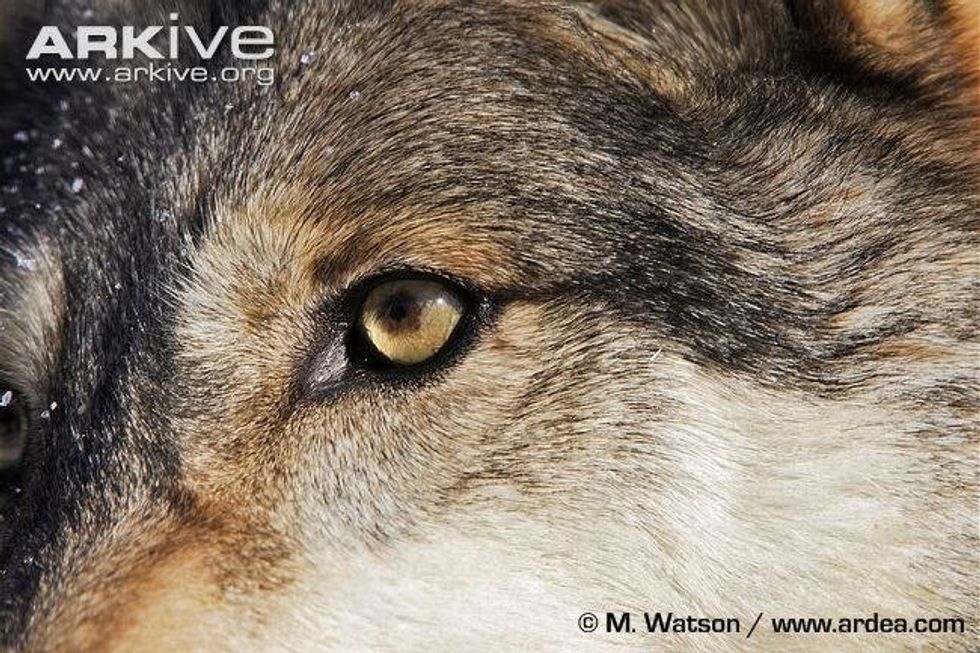
Great Plains Wolf, eyes detail by M. Watson

In honor of last week's super moon lunar eclipse (or if you live in Western Pennsylvania or Ohio, cloud cover with a slight reddish tint), in addition to the fact it's the start of October, I thought it might be fun to talk about werewolves. More specifically, let’s briefly discuss clinical lycanthropy and its potential origins.

Clinical lycanthropy in its broadest definition is a condition in which the patient believes they are capable of transforming into or have transformed into a nonhuman creature. A popular example of such cases are those in which people believe themselves to be able to transform into a wolf; however, those with clinical lycanthropy have been known to believe they can transform into a variety of other creatures. The patient may feel as if they are transforming into an animal or are developing animalistic characteristics, such growing claws. In addition, it is possible that the patient may even exhibit nonhuman, animalistic behaviors.

There are several possible explanations for what exactly causes clinical lycanthropy. The condition is often thought to be associated with mental illnesses such as schizophrenia or clinical depression. Another explanation is that clinical lycanthropy can be attributed to neurological factors. In his paper discussing clinical lycanthropy, Hamdy F. Moselhy discusses the possible neurological factors of clinical lycanthropy. In his first case study, he describes the case of a 59 year old woman who had been admitted to the hospital several times for severe depression. The during her last stay, the woman overdosed on the drug temazepam; she said she had done so in order to escape from the belief that claws were growing from her feet. An EEG supported that she had experienced temporal lobe epilepsy. Moselhy goes on to discuss that her diagnosis of epilepsy could have contributed to her partial lycanthropy. In addition, an MRI done on the patient also suggests her partial lycanthropy can be attributed to lesions upon the parietal lobe, an area of the brain in which is an important component of the brain that integrates sensory information from several areas of the body. Such information provides a medical origin to her condition.

Of course, this is just one study; several others have been published since discussing what causes clinical lycanthropy. An article published on the studies of Dr. Jan Dirk Blom last year examined several cases of lycanthropy. Blom also details how that certain areas of the brain that enable the individual to create a sense of physical existence and body schema are possibly responsible for cases of lycanthropy for certain patients, contributing to their belief that they are changing in physical appearance.

The concept of shapeshifting has been around for centuries, an interesting concept that has maintained interest throughout human history, especially with the ideas of the werewolf and lycanthropy. In popular culture, we see it all the time in horror and fantasy media, where the individual turns into a wolf or werewolf under the light of the full moon. For us, it’s cool and fun to imagine the idea of becoming a werewolf or really having the ability to transform into any creature we want to be. However, one cannot actually turn into an animal, and for those who suffer from clinical lycanthropy, it can be a terrifying, unpleasant experience.


Report this Content
This article has not been reviewed by Odyssey HQ and solely reflects the ideas and opinions of the creator.
Entertainment

Every Girl Needs To Listen To 'She Used To Be Mine' By Sara Bareilles

These powerful lyrics remind us how much good is inside each of us and that sometimes we are too blinded by our imperfections to see the other side of the coin, to see all of that good.

701954
Every Girl Needs To Listen To 'She Used To Be Mine' By Sara Bareilles

The song was sent to me late in the middle of the night. I was still awake enough to plug in my headphones and listen to it immediately. I always did this when my best friend sent me songs, never wasting a moment. She had sent a message with this one too, telling me it reminded her so much of both of us and what we have each been through in the past couple of months.

Keep Reading...Show less
Zodiac wheel with signs and symbols surrounding a central sun against a starry sky.

What's your sign? It's one of the first questions some of us are asked when approached by someone in a bar, at a party or even when having lunch with some of our friends. Astrology, for centuries, has been one of the largest phenomenons out there. There's a reason why many magazines and newspapers have a horoscope page, and there's also a reason why almost every bookstore or library has a section dedicated completely to astrology. Many of us could just be curious about why some of us act differently than others and whom we will get along with best, and others may just want to see if their sign does, in fact, match their personality.

Keep Reading...Show less
Entertainment

20 Song Lyrics To Put A Spring Into Your Instagram Captions

"On an island in the sun, We'll be playing and having fun"

601177
Person in front of neon musical instruments; glowing red and white lights.
Photo by Spencer Imbrock on Unsplash

Whenever I post a picture to Instagram, it takes me so long to come up with a caption. I want to be funny, clever, cute and direct all at the same time. It can be frustrating! So I just look for some online. I really like to find a song lyric that goes with my picture, I just feel like it gives the picture a certain vibe.

Here's a list of song lyrics that can go with any picture you want to post!

Keep Reading...Show less
Relationships

The Importance Of Being A Good Person

An open letter to the good-hearted people.

888488
Chalk drawing of scales weighing "good" and "bad" on a blackboard.
WP content

Being a good person does not depend on your religion or status in life, your race or skin color, political views or culture. It depends on how good you treat others.

We are all born to do something great. Whether that be to grow up and become a doctor and save the lives of thousands of people, run a marathon, win the Noble Peace Prize, or be the greatest mother or father for your own future children one day. Regardless, we are all born with a purpose. But in between birth and death lies a path that life paves for us; a path that we must fill with something that gives our lives meaning.

Keep Reading...Show less

Subscribe to Our Newsletter

Facebook Comments