

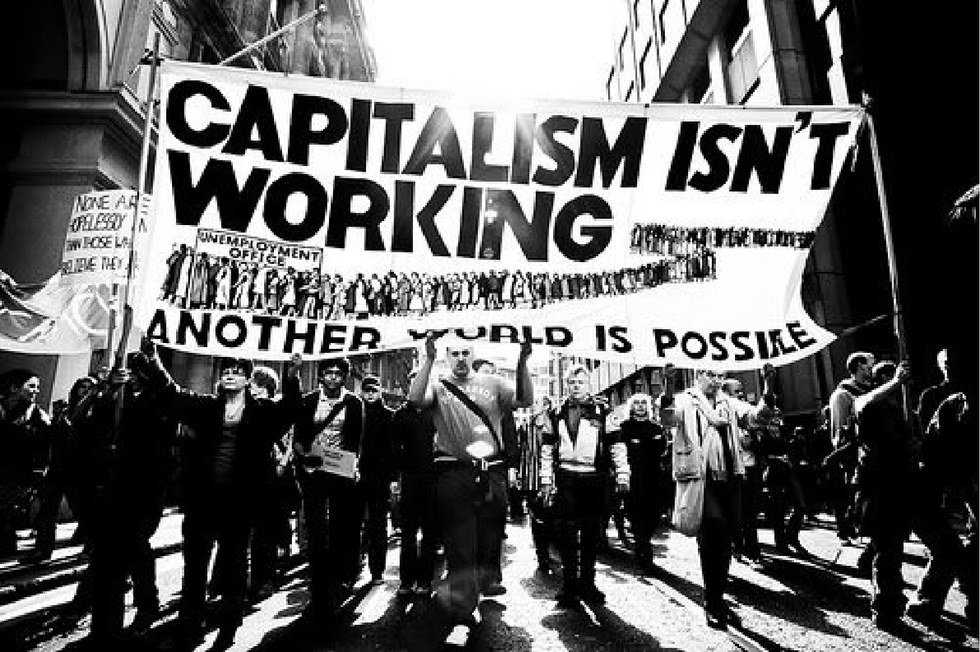
Income inequality, raising the minimum wage, labor rights abuses: all of these have been popular topics in the media for the past few years and are consistently surrounded by passionate debate. When we hear about these issues on the news, we have to realize that all of these problems stem from the same source: capitalism.
Most of us know capitalism as the economic system our society is modeled on that allows us to freely start up small businesses and earn the income we deserve to support ourselves. Criticizing capitalism, however, has become more accepted these days (somewhat far from the Red Scare of the 1950s), partly due to presidential candidate Bernie Sanders, whose attacks on Wall Street are a major part of his campaign platform.
Traditional Marxist theory defines capitalism as private ownership of the means of production (the resources used to create products) and most importantly, the exploitation of the working class. By looking at some of today's relevant issues through this lens, we can gain a new and interesting perspective on how the world works.
1. Climate change and other environmental problems.
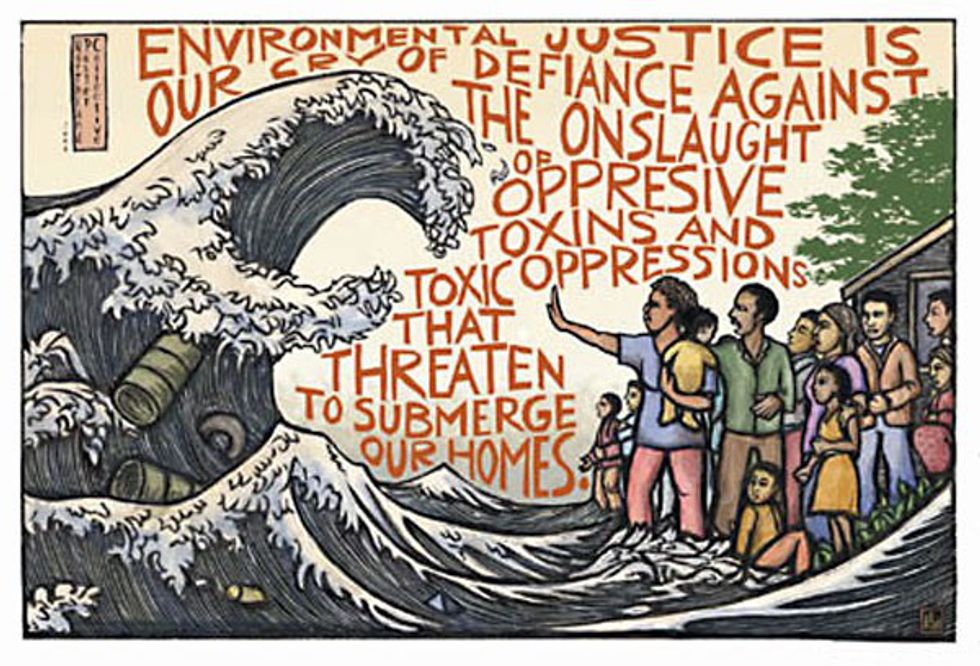
“Reduce your carbon footprint!” Individuals are always targeted when it comes to environmental campaigns, but large corporations and industries are really who contribute to most of the pollution and energy use in the world. These corporations often evade environmental regulations even though they are the ones with the greatest ability to change the fate of the planet. Environmental concerns also often impact underdeveloped regions across the globe more significantly than privileged communities.
Capitalism is not sustainable. Capitalism requires constant growth and use of resources, but our planet is limited. The need to make more profits leads to deforestation, the destruction of natural spaces and the degradation of our planet. Climate change won’t be stopped by switching off the lights or biking to work -- those who are actually primarily responsible must be held accountable, and the system that allows this to happen must be changed.
2. The mental toll of having to constantly be productive.
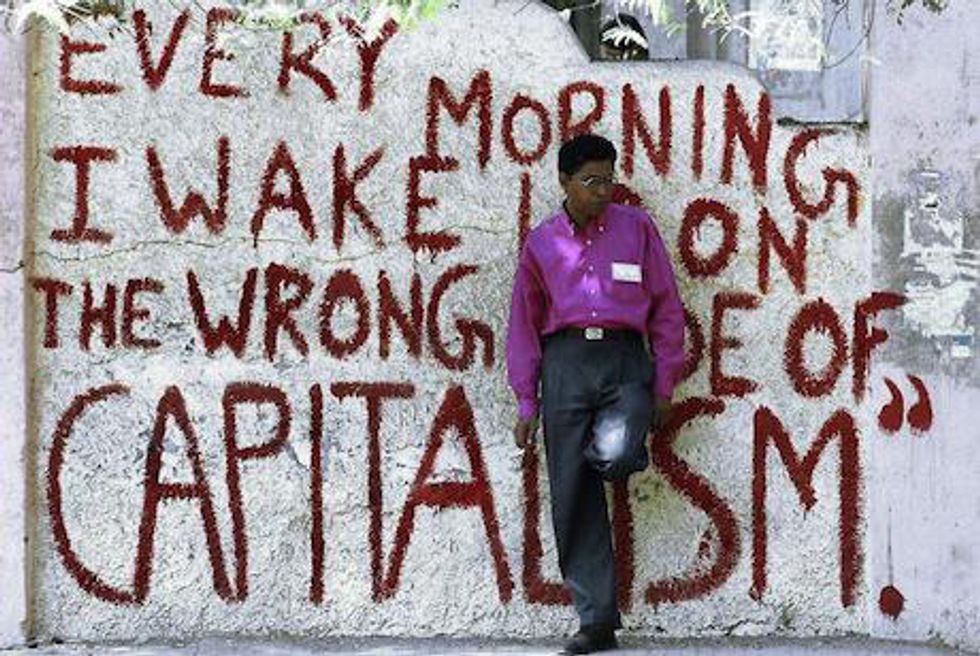
We all know that workers in the U.S. suffer from stress and exhaustion due to working 40+ hours a week, and that this stress can trigger greater mental illness. What also plays a role is the theory of alienation: the idea that workers feel exploited and disconnected from the products they create with their labor. In everyday terms, we can envision this as the typical middle-aged person who hates their job and thus suffers from an identity crisis or similar struggle because of it.
Capitalist society measures peoples’ worth based on how productive they are. This can exacerbate mental illness such as depression, leading people to feel worthless, which decreases their motivation and productivity and thus their worth in the eyes of society. The cycle is seemingly endless and can be applied to stress culture and the pressure to be perfect on our own college campuses. The notion that everyone must be constantly working with no days off is a product of capitalist values and can be highly dangerous.3. Our flawed healthcare system.

The fact that access to the care that would provide one with a safe and healthy life is considered a privilege instead of a right is kind of appalling. Not having a universal healthcare system conveys the idea that the lives of people who can afford health care are more important than those of people who cannot. Capitalism also leads to people like the “pharma bro”, who aggressively raised the price of a life-saving drug from $13.50 to over $700, leading him to make more money but sick people to be deprived from the chance to live a healthier life -- or in some cases to live at all. (Luckily, he has had a taste of his own medicine and was recently arrested.) Capitalism allows vast amounts of wealth to be put in the hands of one or a few people by keeping labor costs (the wages of workers) to a minimum so that profits can be maximized and kept by the people at the top, like CEOs.
4. Human rights violations of workers around the world.
Sweatshops are an iconic image of labor and human rights abuses. In places like China and Bangladesh, workers, who are mostly women and even children, are paid extremely low wages and are forced to work in life-threatening conditions. This happens similarly in the U.S. even, where mostly immigrants are employed in lamentable working environments with wages even below minimum wage. These workers cannot leave their jobs, of course, because they need the money to survive.
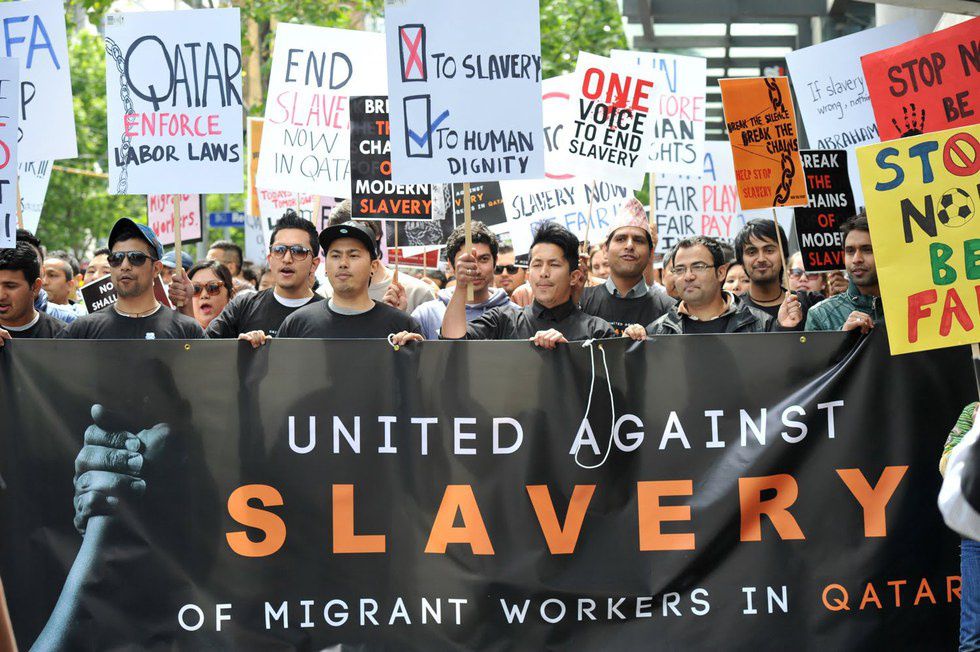
This is also shown through the well-known example of migrant workers in Qatar working on building soccer stadiums for the 2022 FIFA World Cup. Migrant workers from South Asia, who live in poverty in their home countries, often go to wealthy Gulf countries for employment and the ability to earn money for their families. Through exploitative systems that essentially put full control of the worker in the hands of the employer, these migrant workers make very little money, have very little rights and far too commonly, many have died.
5. The cycle of poverty.
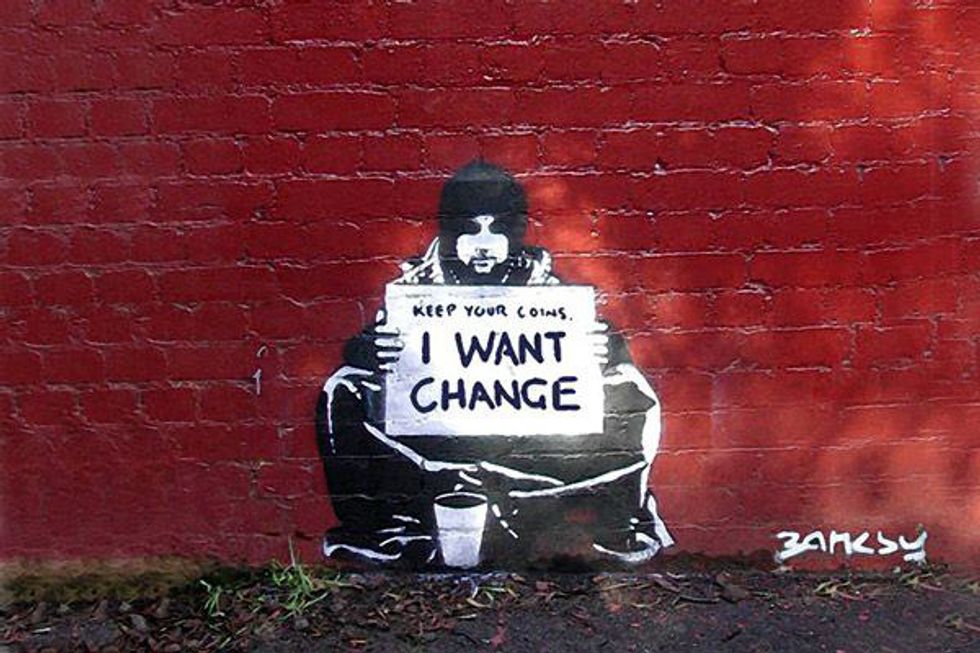
Capitalism cannot exist without poverty because the labor power to create products comes from an impoverished and exploitable working class. A number of factors go into maintaining the cycle of poverty, a phenomenon in which families continually live in poverty for several generations. As such, children who are born into poverty are highly likely to grow up and remain in the same socioeconomic class. In the U.S., they go to school in their impoverished area (and because public schools are funded by local taxes instead of a socialized system, bad schools persist in “bad” communities) and are likely to receive a sub-par education. The sky-high cost of going to university will often prevent them from going, and the subsequent lack of a degree will prevent them from getting a high-paying job and earning an income high enough to pull them out of poverty.
Poverty is also often blamed on the people who live in it. These people are criticized as being lazy or not hardworking enough -- which is another example of the aforementioned obsession with productivity that a capitalist society is so based on.
Capitalism affects every aspect of the world we live in, therefore, this article is by no means an in-depth analysis. It brushes the surface with the intent to urge everyone to dig deeper: especially when it comes to analyzing patriarchy, white supremacy and so on. Capitalism strengthens the power of these institutions. If we want to effectively fight against these powers, we have to re-incorporate class consciousness and a critique of capitalism into our social movements and activism.